

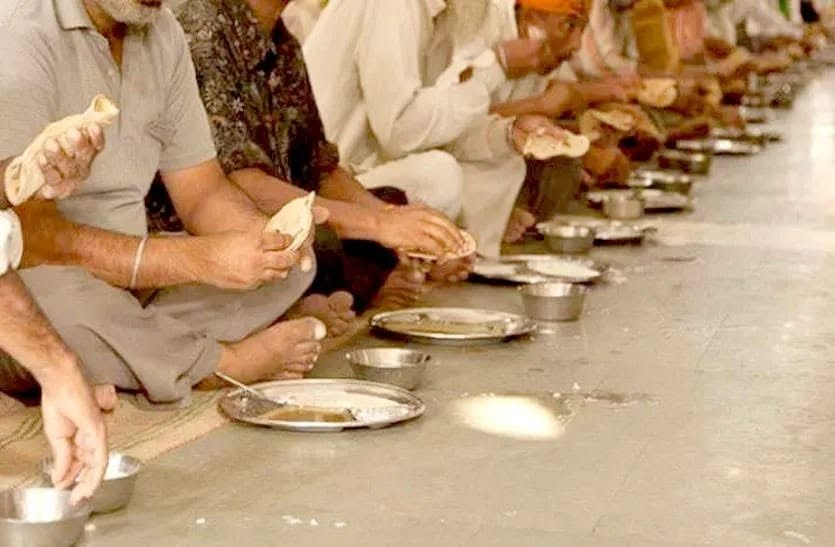
Saptari. After the death, the tradition of feasting at the house of the deceased is becoming distorted. Due to the tradition and culture of the Madhes, the death feast is more important than the pain of losing a person after the death of someone in the house.
After the death of someone in the house, it is obligatory for the housewives to participate in the preparation of the death feast along with the preparation of the rituals to be done according to the rituals. According to the caste and community, the compulsion to have three to five feasts within the period of 13 days after death is still the same. Some have been feasting on name, reputation and competition.
Most of the people have the understanding that Bhoj traditions are not only culture and customs but also our culture. Donating food is a virtuous act. It works to connect relatives and families. But former education minister Renu Yadav said that feasting under compulsion is a distortion in the name of culture.
He said, “There is a need not only to reduce but also to end the practice of compulsory feasting on death. As it is a tradition imposed by society, it is necessary for us to work together to reduce this practice.”
He said that it is important to have a feast voluntarily and not by tradition and compulsion. The Yadav community, which has the largest population in Madhes, has a tradition of having a gathering of 25/50 villages at a time.
Shyamsunder Yadav, the former chairman of the Mass Communication Authority of Madhes Province, said that it is sad to encourage extravagant gatherings in the name of death feasts. He said, “There is a need to discourage rather than encourage death feasts.”
Up to 50,000 Swajati relatives eat at one feast. A family’s life can last more than 10 years with the expenses incurred on the feast. He said that if the expenses spent on the banquet can be invested in the livelihood and education of the poor, it will help in building a capable and educated society along with a positive message. Durgadevi Rajak of Rajviraj Municipality-1 imposed a tax saying that the society must have a feast instead of not being able to feast when the mother-in-law passes away.
After that, I was forced to take a loan of three lakhs to have a feast. Despite paying the interest of that loan, she has not been able to pay the loan yet.
Durga is only a representative character of feasting on loans, said Shravan Kumar Dev, president of the Nepal Journalist Association Saptari, who is forced to feast on death by hundreds of families of Madhes who are forced to feast on loans.
There is no need for anyone to carry heavy debts in the name of feasting.