

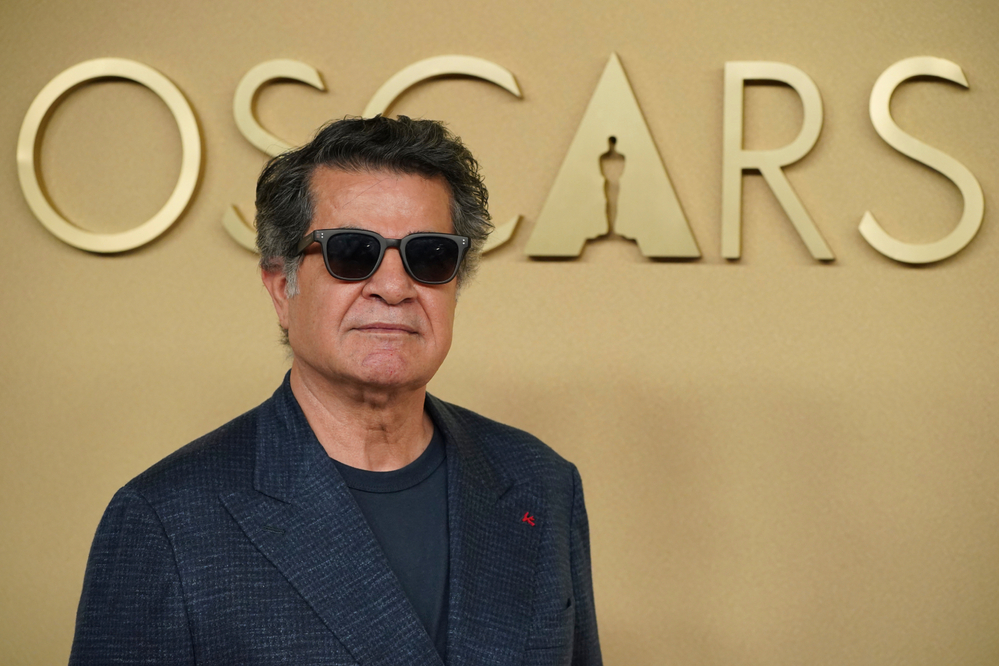
Cairo. Iran’s world-famous film director Zafar Panahi has been sentenced to five years and one month in prison again by a court in Tehran. Panahi, who returned to his country at the beginning of this year after the US and Israel launched an attack on Iran, was sentenced to a new imprisonment by the court.
His lawyer Mustafa Neely told the reformist news website “Imtedad” that the court in Tehran ordered the confiscation of all movable and immovable property in Panahi’s name in addition to the prison sentence.
Advocate Neely has not clearly revealed the charges against which Panahi has been convicted. However, Panahi, who returned to Iran last March, was previously convicted of ‘propaganda against the system’.
According to Panahi’s friend in Europe and Iranian rights activist Hossein Razzak, Panahi was talked to after the verdict and he has not been detained yet. “The way to appeal against this court decision is still open, but currently all his bank accounts have been frozen,” said Razzak.
Panahi has openly criticized the Iranian leadership in interviews given to international media in the past and condemned the violence against anti-government protesters.
In the past 20 years, Panahi, who is considered to be an influential figure in contemporary Iranian cinema in the world film world, has been jailed, banned from traveling and kept under house arrest. Despite that, he continues to make films secretly. Panahi, who was released in 2023 after being on hunger strike for seven months in prison, secretly filmed a film called ‘It Was Just An Accident’ in Iran. Which he later premiered at the 2025 Cannes Film Festival.
Who is Zafar Panahi?
A pioneer of contemporary Iranian cinema and world famous film director, screenwriter and producer, Panahi is considered to be the prime mover of the ‘New Wave’ movement of Iranian cinema. In his films, realistic problems of Iranian society, human rights, women’s rights and social anomalies are presented in artistic and documentary-style (docu-fiction).
66-year-old Panahi made his debut with ‘The White Balloon’ in 1995 after starting his career by making short films as an assistant to Abbas Kirostami. The June film won the Camera d’Or at the Cannes Film Festival of the same year.
Panahi is among the four such directors in the world of films, who have won awards at three of Europe’s most important and prominent film festivals: Cannes, Berlin and Venice. His ‘It Was Just An Accident’ (2025) won the Palme d’Or at Cannes, ‘Taxi’ (2015) won the Golden Bear at Berlin and ‘The Circle’ (2000) won the Golden Lion at the Venice Film Festival.
Panahi has become the eyes of the Iranian government since his third film ‘The Circle’, which is about the situation of women in Iran. From censoring the film to the band, Panahi suffered. Even after that, he was sentenced to 6 years in prison in 2010 and banned from making films for 20 years for being involved in anti-government activities and spreading confusion against the Islamic Republic.
Despite the government’s ban, Panahi did not stop making films secretly. He made ‘This is not a film’ in 2011, ‘Closed Curtain’ in 2013, ‘Taxi’ in 2015 and ‘No Bears’ in 2022. He has also been listed in the ‘Time 100’ by Time magazine this year.
Despite strict Iranian government censorship, travel bans, house arrest and repeated prison sentences, he has continued to make films in secret.
After being released in 2023 after seven months of imprisonment, he filmed ‘It Was Just An Accident’ secretly in Iran. This film has been nominated in four categories including Best Screenplay and International Feature Film at the Oscars and Best Film at the Golden Globes, Foreign Language Film, Direction and Screenplay. This film, which won the best film and director award at the Asia Pacific Screen Awards, has already won two dozen awards from various festivals.
Panahi, who is banned from making films in Iran, has presented the hardships and love story of directing films from a distance while staying in a border village in “No Bears”. Similarly, the film ‘Three Faces’, based on the story of three women of different generations in Iran, shows the social reality of rural Iran.
Panahi himself became a taxi driver in Tehran and recorded his dialogues and activities with passengers through a dashcam and prepared the film ‘Taxi’ when the film was banned. Ap