

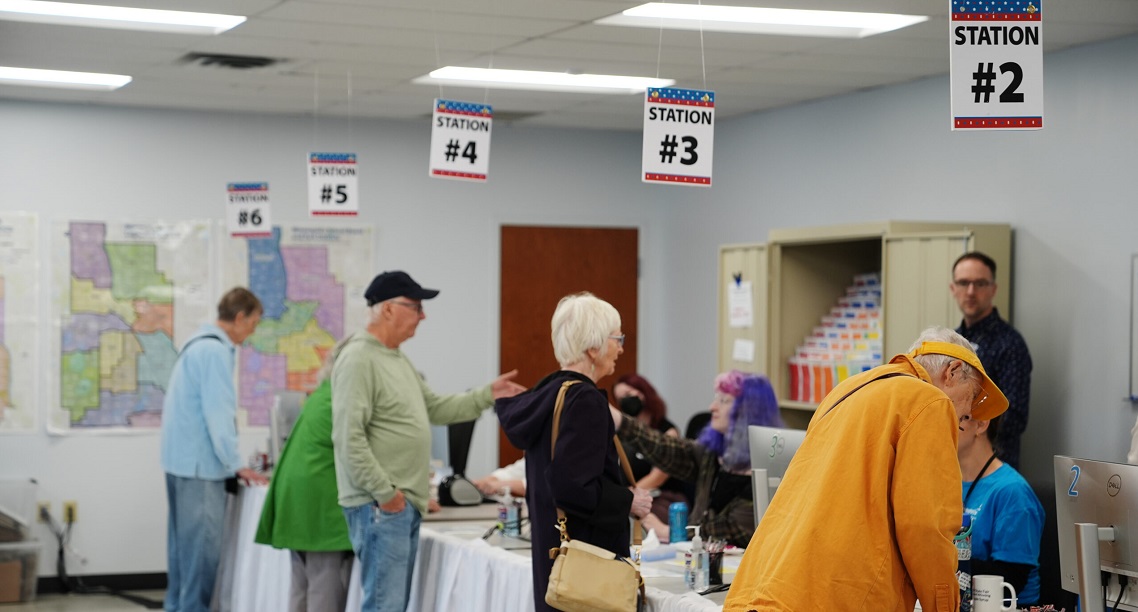
Kathmandu. Mid-term elections are scheduled for November 3 in the US. But early voting has already begun. So far, nearly 40 million Americans have voted.
President Donald Trump’s Republican Party is lagging behind in early polls, according to a Reuters and Ipsos poll. The opposition Democrats are getting 47 percent and the Republican Party 36 percent of voters.
Meanwhile, Trump has requested voter registrations from 30 US states. Trump is believed to be using this data to identify opposition voters and pressure them.
What is early voting?
In the United States, the facility to vote before the scheduled election date is called early voting. Voters can vote within the specified time without waiting for election day.
Voters can vote by going to a polling place or by mail in some states. The aim is to give as many people as possible the opportunity to vote.
The Trump administration has requested all voter information from 30 states. The Trump administration has also appealed the matter to the Supreme Court. The requested list contains information such as voters’ addresses, dates of birth and social security numbers.
The Trump administration said it sought the information to determine whether non-US citizens were voting. However, no concrete evidence of fraudulent voting has emerged so far. Experts speculate that this information may have been sought to identify those who voted against Trump.
One of the biggest challenges facing the Trump administration is public dissatisfaction with the economy. According to a Reuters-Ipsos poll, 65 percent of voters are dissatisfied with Trump’s economic decisions because of inflation. Forty-eight percent of voters think strict immigration policies are hurting America, and 45 percent say job opportunities are shrinking.
Even if the Republican Party loses the midterm elections, Trump will remain president. His tenure will last till 2028. However, without a majority in the Congress (Parliament), it will be difficult to implement his policies.
Decisions on issues such as tariffs, visas and immigration face opposition from Trump. In this case, he may remain a weak president for the remaining two years of his term.
In American politics, such a situation is called a ‘lame duck’. If Trump’s party loses the midterm elections, Democrats may become more vocal against him. Opposition leaders have already talked about impeaching him. Trump’s difficulties could increase if Democrats win the necessary number of seats in Congress.