

Palpa. Palpa’s historic Ranimahal once became a symbol of love and attracted tourists.
The palace is situated on the banks of the Kaligandaki river. The surrounding area was buzzing with people who came to see the beauty of the castle, take pictures and enjoy themselves on the banks of the river. However, the flood and inundation after the incessant rain on October 11 has changed the scene here.
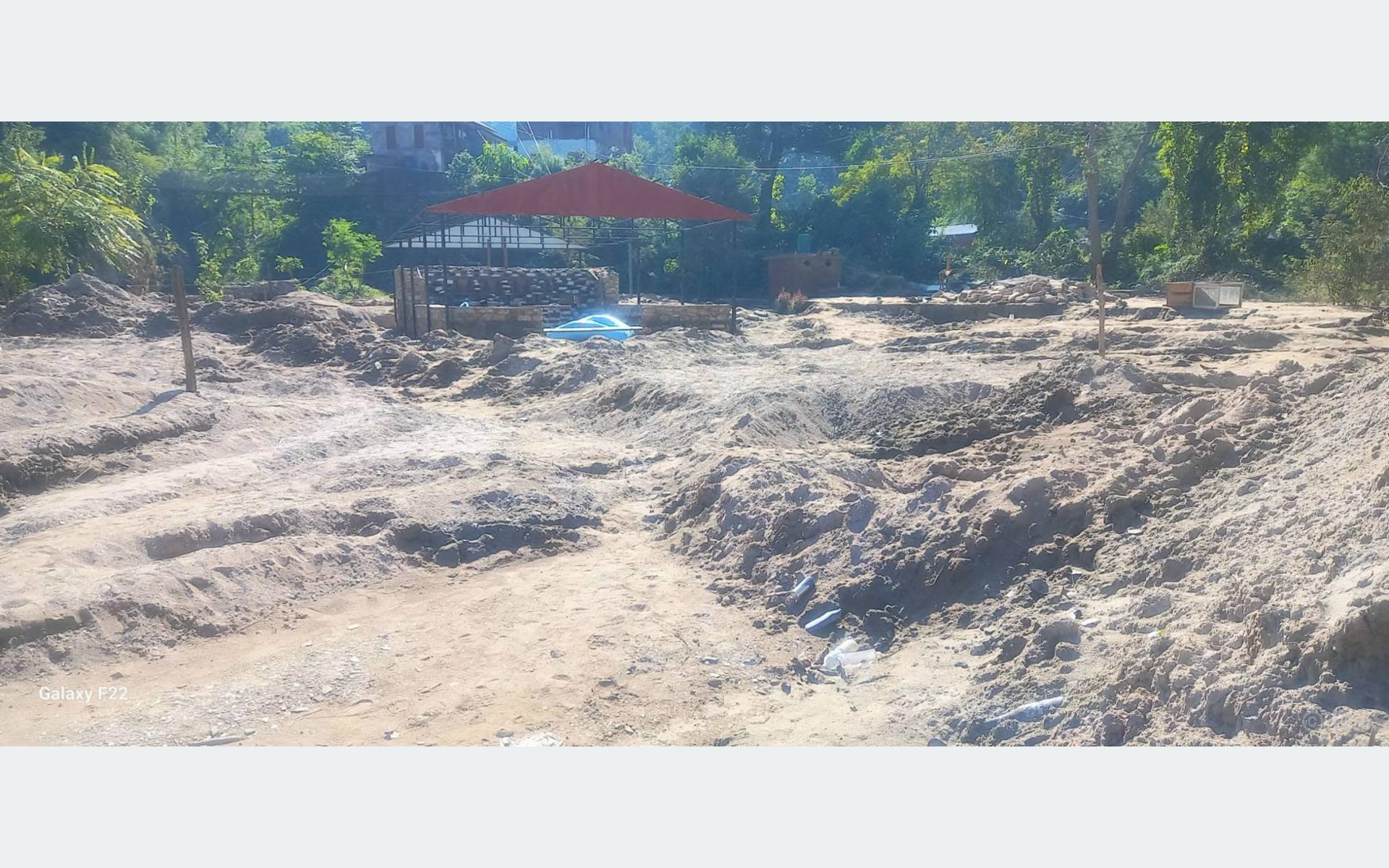
In the past, the area filled with human traffic and commercial activities is now covered with sand, gravel and stones. Flood damage is visible in the courtyard of Ranimahal, while the dreams of the surrounding locals are scattered.
Local businessmen who made their livelihood from the hustle and bustle of tourists who come to see the beauty of Ranimahl, known as a symbol of love, are now worried about re-running their business.
The flood has caused damage to the structures for conducting business to roads, parking lots and transportation infrastructure. More than a dozen commercial establishments around Ranimahal have been affected.
The natural calamity has not only affected the business, it has also hurt the investments made over the years and the hopes for the future.
Shankar Basyal, a local, said that the business was directly affected as the traffic of tourists was affected after the floods washed away the structures, roads and parking lots for business operations.
He said, “Despite running a business with huge investment, it is sad that the flood caused havoc. Every year, the number of tourists who come to visit Ranimahal during Dussein increases, but this time, the business operators have to suffer when the Ranimahal area turns into a swamp.”
He alleged that the local government did not pay attention to immediate cleaning, management of damaged structures and restoration of the affected areas after natural calamities. More than the damage caused by the flood, the fact that representatives of the responsible agencies did not come to understand their pain and observe the situation after the disaster has made them more disappointed.
Basyal said that the local government, which is active in tax collection, should show equal responsibility in the protection of tourist assets and rehabilitation after disasters.
Tansen Municipality, which is responsible for the protection and management of Ranimahal, has claimed that it has removed and managed the damaged structures within its scope.
The chief administrative officer of the municipality, Chetanath Giri, claimed that the damaged structures within the jurisdiction of the municipality have been removed immediately. According to him, there is no such chaotic situation in the Ranimahal Palace complex.
Giri said that some of the structures around Ranimahal that are in disarray fall within the area of Bagnaskali rural municipality and should be managed by the respective rural municipality.
On the other hand, Saraswati Chidi, chairperson of Bagnaskali Rural Municipality, said that the work was done to open the road immediately in coordination with Kaligandaki Rural Municipality of Syangja.
He said that the management work could not be carried out immediately because it was raining continuously after the flood and then the Dasain holiday.
President Chidi said that within the next day or two, dozers will be sent to remove the materials buried by the flood and work will be carried out.
The historical palace ‘Ranimahal’ is also known as the ‘Tajmahal’ of Nepal. It is located on the banks of the Kaligandaki River, about 13 km north of Tansen in the district. The then Rana Paschim Commander General Khadge Shamsher built Ranimahal in 1954.
After the death of his wife Tejkumari Devi, Khadg Shamsher built Ranimahal in her memory. Khadg Shamsher, who had promised to build a palace with a garden for the queen, brought an engineer from India and spent five years building the palace. -Rasus