

Belgrade. In Serbia, the party of Aleksandar Vucic, who has been in power for a long time, has been defeated in the general election by protesting young students. But the students do not have a declared leader. Most of the candidates in the closed list are not familiar faces.
According to the Election Commission, when about 99 percent of the votes were counted, 52.7 percent of the votes fell in favor of the students’ group ‘Student List’. On the other hand, Vučić’s Serbian Progressive Party (SNS) alliance received 39.2 percent of the votes.
With this result, students have secured 139 seats in the 250-member parliament, while the SNS alliance has shrunk to 97 seats. The rest of the seats went to small and minority parties.
In Serbia, which has a fully proportional electoral system, the students did not form any formal party. Instead, based on consensus, he submitted his list of candidates to the Election Commission as a civic campaign under the name of Student List.
Due to insufficient time for election preparation, they could not work on organization building and leadership selection. Because of this, Bhuchich was confident that his party would win this time as well. Which proved to be wrong.
There is no leader in this group as there is no formal organization. It is not clear who will lead the student parliamentarians in the future. As a result, the issue of how the new leadership will operate the government is now in discussion and confusion.
The list includes key figures such as cardiologist Ilia Sardanovic, former central bank governor Dejan Soskic and University of Belgrade professor Radomir Sajic. Ilia played a leading role in the student movement.
However, many of the names included in the closed list are not known to the general public. It includes names of university professors, artists, farmers, students, professionals, etc.
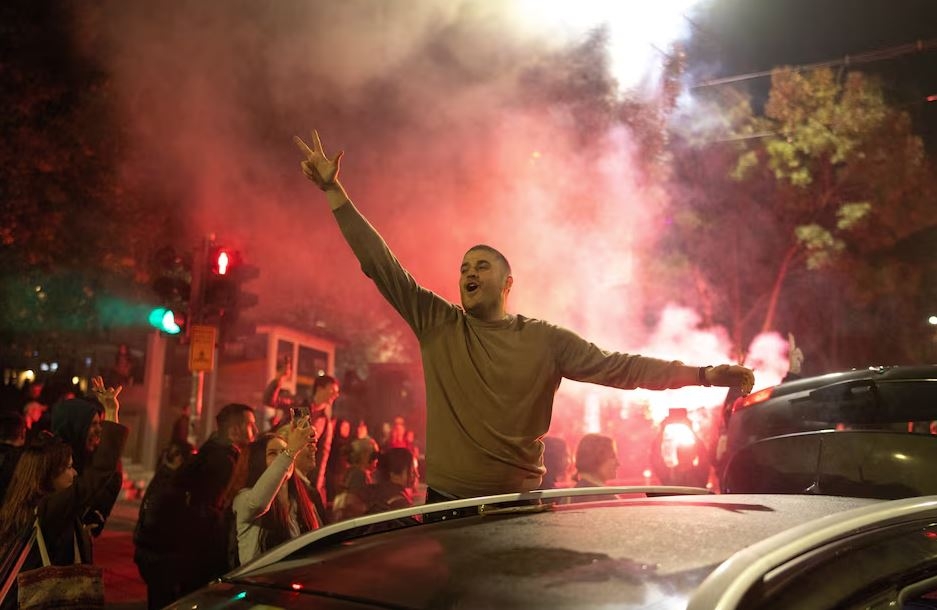
This election result has spread happiness all over the country. After Vucic accepted his defeat on Sunday night, thousands of people took to the streets in various towns and settlements in Serbia, including the capital Belgrade.
Populist leader Vucic has been the leader of Serbia since 2014, sometimes as Prime Minister and sometimes as President. However, two years ago, when the roof of a railway station in Novi Sad city collapsed, killing 16 people, his politics fell into crisis. The protest started saying that such a situation has arisen due to dilapidated infrastructure. The students accused the government of corruption in infrastructure construction. Eventually the movement spread across the country.
Vuchic and his party have repeatedly denied the allegations of corruption. They have also rejected the accusation of the students of suppressing the peaceful protest.
After continuous protests, at the end of last September, Vucic resigned from the presidency and announced new elections before the end of the parliament. The Speaker of the Parliament and former Prime Minister Ana Bernavik then took over the duties of the Executive President. In the proportional list of the election, Vuchich placed himself at number one on behalf of the SNS party.
Finally, he was defeated by the students. This victory of the students in this country with a population of about 6.5 million indicates a profound political change. It can also inspire students who are performing in other European countries. The students have made eradicating corruption and reforming the education system their main agenda.
Svetlana Karagkojidou, a 60-year-old insurance worker, said optimistically, “This corruption that has entered all areas of our lives will end now.” It will definitely change. We hope that we will gradually move towards a normal society. However, not everyone welcomed this change.
Senka Radaković, a 60-year-old civil servant, said, “I don’t like the idea of changing the country suddenly and all at once. I don’t even know who is behind it, who those people are and who will lead the country.’ Reuters