

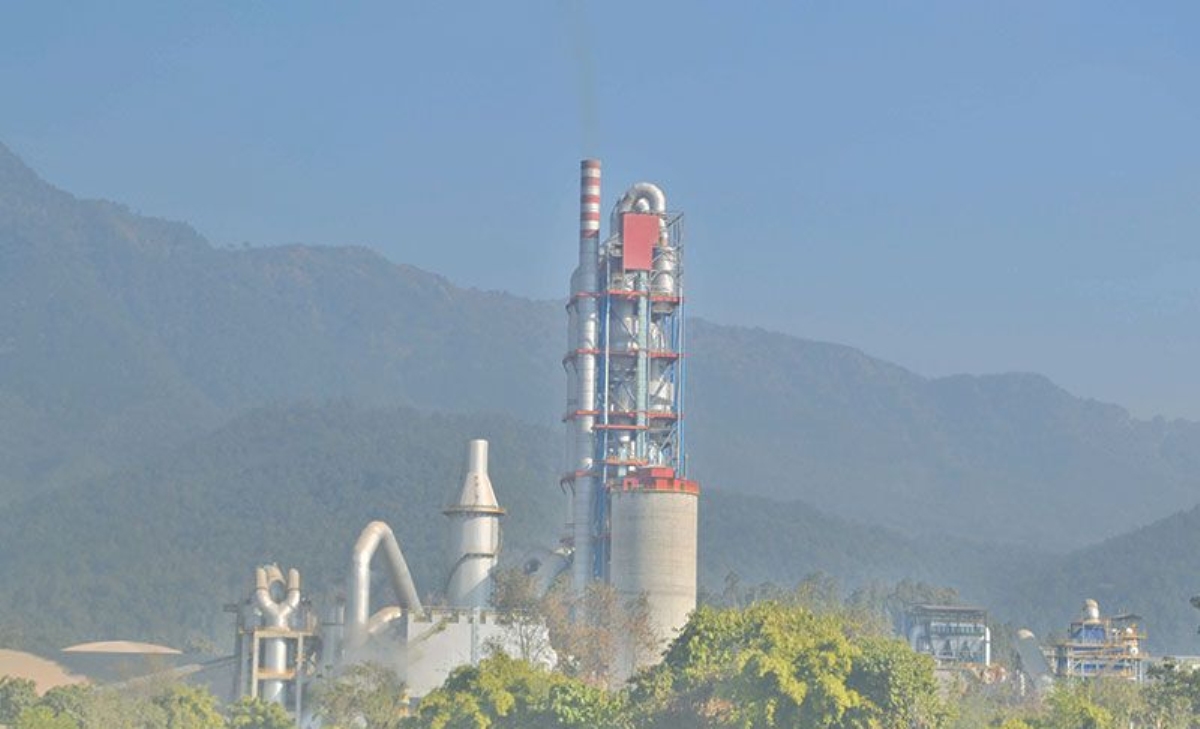
Kathmandu. In the two months of the current financial year, only Rs. 283.35 million worth of cement has been exported. Which is 170 million rupees less than the first two months of last financial year. According to the data of the customs department, in July and August of the last financial year, cement worth 45 crore 13 lakh 36 thousand was exported.
According to the data of the department, the export of ready-made cement has decreased, but the export of clinker has increased. In July and August of the current financial year, clinker worth Rs. 145.95 million has been exported. While during the same period of the last financial year, only 997 million 8 thousand rupees worth of clinker was exported. Stakeholders say cement exports may have declined due to delay in renewal of Bureau of Indian Standards (BIS) certificates required for export to India.
Rajesh Kumar Agarwal, the former president of the Confederation of Nepal Industry, said that despite the delay in BIS renewal, exports have decreased. He said that due to the delay in renewing the BIS certificate, even the cement that has been ordered cannot be exported. “To export cement to India, we have to get the BIS mark there. Earlier it was given for three years, now it is given only for one year. Renewal after one year is delayed. It takes two to three months. As a result, exports will decrease,” Agarwal said.
According to the data of the department, 923 thousand 376 tons of cement worth 2 billion 361 million 29 thousand rupees were exported from Nepal in the financial year 2082/83. In the financial year 2081/82, 3 lakh 56 thousand 473 tons of cement worth 2 billion 21 crore 94 lakh 29 thousand rupees were exported. According to this data, the amount of cement export has increased by 566 thousand 903 tons in one year. But the amount received from exports has decreased by 183.3 million rupees compared to the previous year. Although the export volume of cement has increased significantly, the income from it has decreased.
Although more quantity of cement was exported compared to the previous year, the total export income decreased due to sale at lower prices. There are mainly two types of products in cement, OPC and PPC. The cost of PPC cement is lower than that of OPC. Therefore, due to the increase in the share of PPC, although the export volume has increased, the price seems to have decreased,” he said. “There is no problem with the quality of our cement. We have not been able to deliver goods as per the order due to non-renewal of BIS.
According to Agarwal, the delay in renewing the BIS certificate is becoming a problem in exports. He said that if there is a delay in the renewal of the BIS certificate, there will be a situation where even the ordered goods cannot be exported. “I am exporting cement to India. But after the expiry of the BIS period, we cannot export even if there is an order, it can only be done after it is renewed,” he said.
According to Agarwal, if the quality standards between Nepal and India are recognized as equivalent, the problem will be solved in the long term. In the financial year 2080/81, 23 lakh 32 thousand 378 tons of cement worth 1 billion 97 crore 833 thousand rupees were exported from Nepal. In the financial year 2081/82, the amount of cement export decreased to 356 thousand 473 tons, but the income increased to 2 billion 21 billion 94 million rupees.
In the financial year 2079/80, 6 lakh 7 thousand 73 tons of cement was exported and the income was 358.9 million 51 thousand rupees. In 2078/79, 15 thousand 189 tons of cement was exported and the income was 1 crore 29 lakh 3 thousand rupees. In the financial year 2077/78, only 11 tons of cement was exported, from which the income was 83 thousand rupees.
Although clinker was first imported along with cement, now it has started to be exported. In the financial year 2082/83, 561 thousand 126 tons of clinker worth 7978 million 26 thousand rupees has been exported. In the financial year 2081/82, 490,272 tonnes of clinker worth Rs 697,378,000 was exported. Clinker export has increased by 70 thousand 854 tons i.e. about 14 percent.
According to the data of the department, the amount of export has increased by 10 million 448 thousand rupees. The mining and cement industries of the country have started producing clinker. Industries make their own cement from clinker. Excess clinker is sold to grinding units. Some quantity is also exported to India,” Agarwal said.
Cement and clinker produced in Nepal are mainly exported to the bordering Indian regions of UP and Bihar. According to Agarwal, Indian trucks carrying goods from Nepal are not allowed to return after loading cement in the same truck after emptying it in Nepal. “After emptying the goods brought by the truck, they have to return to India and pass the customs and come for reloading. Due to these complicated rules, the cost will increase and it will take time,” he said.
In recent years, Palpa Cement’s Tansen, Arghakhanchi, Balaji, and Bestash have started to be exported to India. Even about a decade ago, RMC Cement exported Portland Slag (PSC) cement to the frontier market of India. At that time, Nepal had to import raw materials from India. But cement export could not continue.
Currently, exports are increasing as raw materials are available in Nepal. According to the data of Cement Producers Association, there are more than 60 cement industries operating in Nepal. Out of them, more than 15 industries are producing both cement and clinker. The annual production capacity of this cement industry is estimated to be around 22 million tons. Dhruv Thapa, the former president of the association, says that cement exports have declined due to government subsidy cuts and delays in BIS renewal and difficulty competing in a large region like India. Ekantipur