

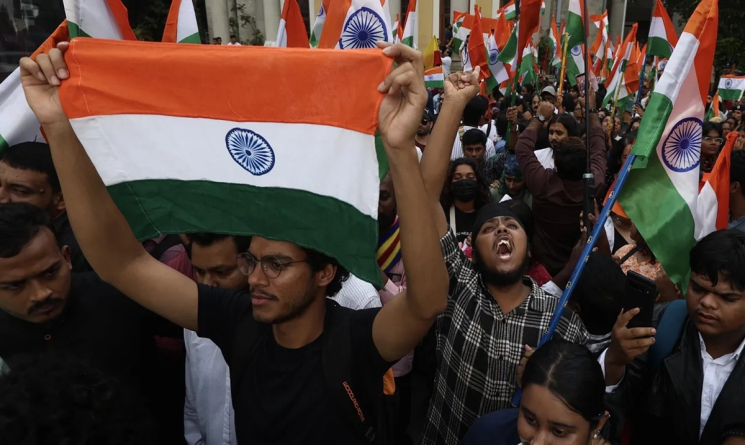
New Delhi. There has been a clash between protesters and the police in Arunachal Pradesh, India, who are protesting the proposed huge hydroelectric dam project in the Himalayan region bordering China. According to government officials, the protesters vandalized the police station, government offices and houses of public representatives and set fire to some buildings.
According to Chief Minister Pema Khandu, violence broke out on Friday night during a protest against the 11,200 MW capacity ‘Siang Upper Multipurpose Project’ proposed to be built by the government hydropower company NHPC. Khandu told reporters on Saturday that the mob had destroyed a large amount of property.
He informed that the protestors ransacked the police station and NHPC office and looted the house of the elected representative. About 40 policemen were injured due to the stones thrown by the protestors. The police fired tear gas to control the crowd. Chief Minister Khandu urged the locals who are opposing the project to shun the path of violence and negotiate with the government. India has been saying that its dam project is necessary in view of the possible impact of the huge hydroelectric project that China is going to build in Tibet.
It is said that the Chinese project, estimated to cost about 167 billion US dollars, could become the world’s largest hydropower project. India is concerned that the flow of water in the lower coastal areas of the Brahmaputra river may be affected due to the Chinese dam. New Delhi says that the water flow in the river can be maintained by building a huge reservoir in the proposed Indian dam. However, Beijing claims that its project will not have any negative impact on the lower coastal areas.
The local community has also been opposing the proposed dam project in India. They are worried that they will lose their house and land if the project is built. This dispute has further exposed the ongoing border tension between India and China in the Himalayan region. China has been claiming Arunachal Pradesh as part of southern Tibet, while India has been saying that the state is its integral territory.
Indian External Affairs Ministry spokesperson Randhir Jaiswal said on Friday that the officials of both the countries are in regular contact to manage the tension in the border area. According to him, tensions arise from time to time when the Chinese army conducts activities in the border area that are different from the established pattern of regular patrolling. He said that both sides are trying to resolve the remaining disputes through diplomatic and military mechanisms and to prevent tensions that may arise from misunderstandings.