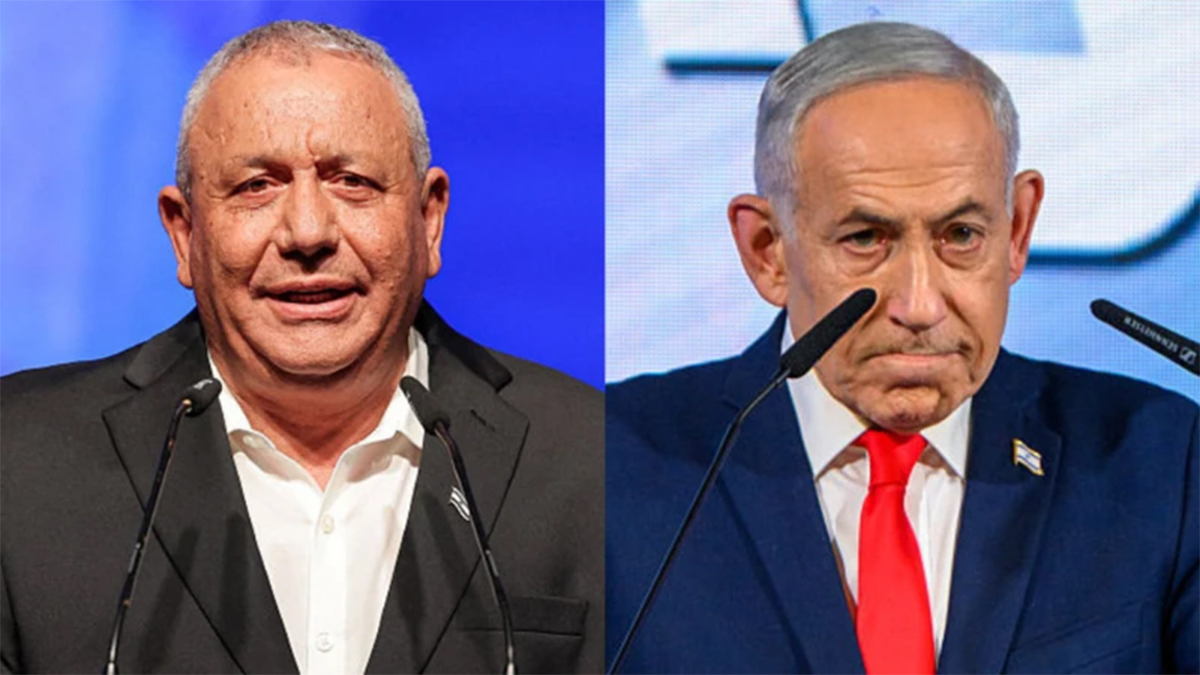
Israel. Former military chief Gadi Esenkot, who was given the responsibility of forming the government after Israel’s new parliament was sworn in, has prepared to reverse Prime Minister Benjamin Netanyahu’s key policies. He has introduced bills that include a government investigation into Hamas attacks, setting limits on the prime minister’s term and revoking the decision to curtail the powers of the judiciary.
Isenkot has been given six weeks to form the government. Although the formation of a coalition government has not been finalized, Netanyahu’s opposition parties have gained a majority in parliament. Isenkot has expressed his commitment to form a government that represents all citizens.
Meanwhile, Netanyahu has accused Arab-led parties of “stealing” the election and criticized opposition leaders who cooperated with them. He says that the parties of the Arab community, which make up about 20 percent of Israel’s population, cannot be trusted. Eisenkot said that the possibility of cooperation with the Arab party is open if the conditions, including accepting the identity of the Jewish state of Israel and considering Hamas as a terrorist organization, are met.
Calling Netanyahu’s expression divisive and hateful, Eisenkot commented that he is not fit to hold the position of Prime Minister. He also canceled a scheduled meeting with Netanyahu’s Likud party.
Meanwhile, the opposition MPs have started the process of removing the current Speaker, Amir Ohana. Matan Kahana, the leader of Yashar Party of Isenkot, has been proposed as the new Speaker. If the Speaker changes, it will be easier for the opposition parties to advance their bills.
Even if the new parliament is formed, Netanyahu and his cabinet will remain in office until Esencot can form a government. If Eisenkot fails, President Isaac Herzog can give Netanyahu the opportunity to form a new government.
Netanyahu pointed out the risk of an attack from Iran and asked to forget the political differences and form a unity government. However, if a government is formed without Netanyahu, it is likely that his political influence will weaken and the pressure of investigations into the corruption case and the failure to prevent the Hamas attack on October 7, 2023 will increase.