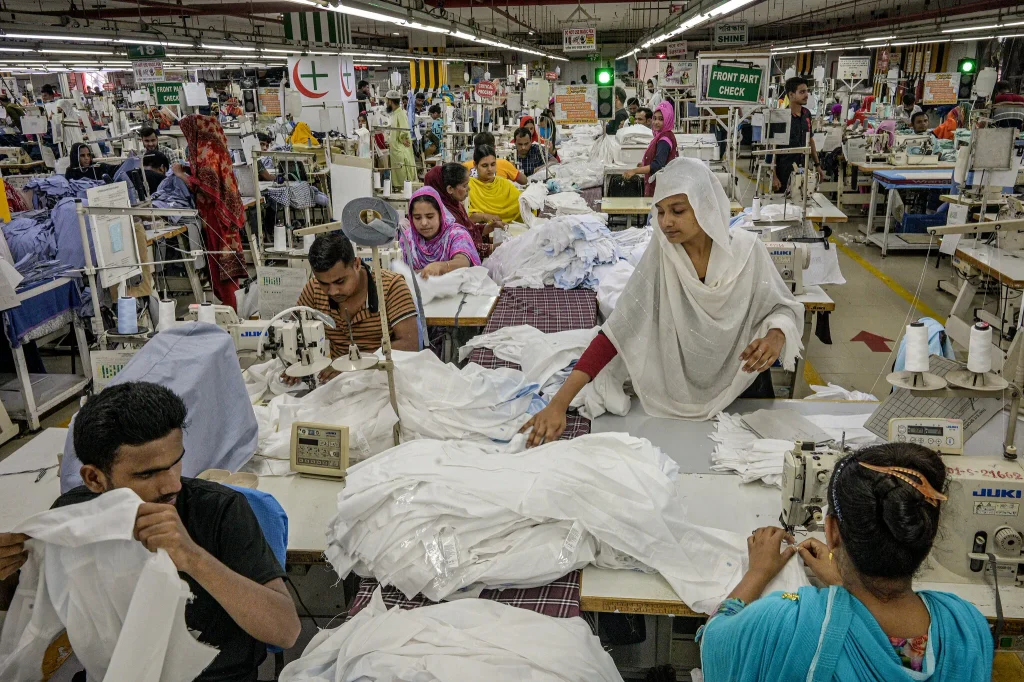
Dhaka. Garment industry workers in Bangladesh have agreed to increase the minimum monthly wage by 36 percent after long negotiations. According to the agreement reached on Wednesday, the minimum monthly wage of workers has increased from 12,500 taka to 17,000 taka.
In Bangladesh, the world’s second largest garment exporter after China, workers have been demonstrating widely since October demanding a salary increase. After the agreement, the labor representatives have asked the workers to return to the factory.
Labor representative Babul Akhtar said that although they are not completely satisfied, the agreement is not completely bad. According to him, previously wages were reviewed every five years, but this time there has been an increase in three years.
The workers initially demanded an increase in the minimum monthly wage from 12,500 taka to 30,000 taka, which is about 240 US dollars. They said that the existing salary is insufficient to meet the rising costs of food, housing, transport and health services.
Judge Syed Azad Subhani, chairman of the Garment Industry Wage Board formed by the government, informed that the majority supported the minimum wage proposal of 17,000 taka in the voting held on Wednesday morning. The new wage will be about 139 US dollars.
According to the Bangladesh Garment Manufacturers and Exporters Association, the industry has suffered a loss of around 40 million US dollars due to the protests. Likewise, orders worth 25.4 million US dollars have moved to other countries.
The disruption has further affected the industry as the busy Christmas trading season approaches.
Bangladesh’s garment industry, which supplies clothing to major international brands such as Fruit of the Loom and Levi Strauss, generates an annual income of approximately 3,800 million US dollars. This industry has been occupying four out of five parts of the country’s total export earnings.