

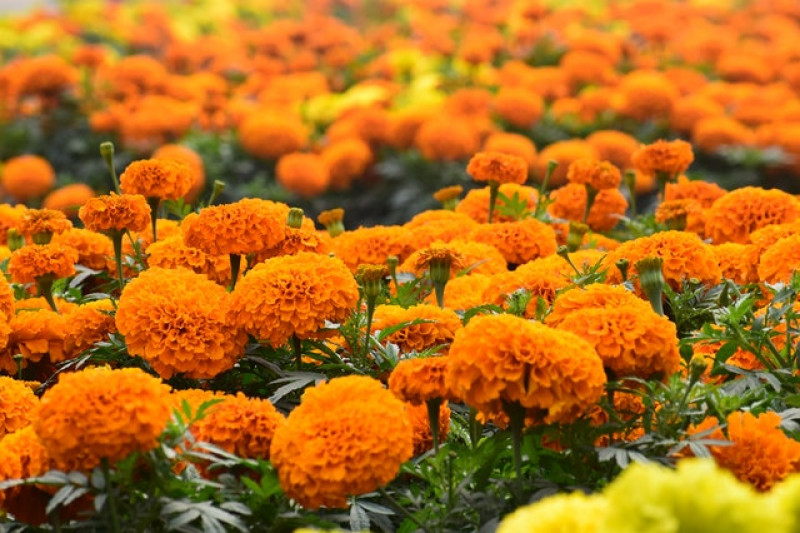
Jhapa. Farmers who grow 100-peti flowers in Jhapa are currently worried about how to preserve them till Tihar along with the flower picker. Before the coming of Tihar, after the flowers have bloomed, the farmers have started picking them and storing them in cold stores to prevent the quality from deteriorating.
Since there is a risk of spoiling the flowers if it rains, the farmers have intensified the work of picking flowers, picking garlands and storing them. Binod Rizal, manager of Agriculture Compass located in Buddhshanti-3, said that since Tihar is almost two weeks away, it is necessary to preserve the flowers.
“The flowers are picked in three days”, Rizal said, “we have started delivering the picked flowers to the Royal Coldstore in Birtamod to keep them safe.” He said that since there is no separate cold store for flower storage, we have to depend on the available facilities. “There is a separate cold store for flowers, but there is no such facility in Jhapa”, he said.
Ayush Mishra of Mishra Krishi Farm located in Arjundhara-10 also said that due to rain there was a risk of spoiling the flowers, so they had to pick them and store them. He informed that if it rains, the flowers will turn black and the quality will be affected.
This year, in Jhapa, 100-leaf flower cultivation has been done on more than 16 bighas of land just before Kankai Mai. Farmers and various groups in areas including Birtamod, Mechinagar, Bhadrapur, Damak and Shivsatakshi are producing flowers commercially targeting Tihar.
Demand for native flower market protection
Meanwhile, along with the challenge of keeping flowers safe, farmers are also worried about getting a proper market for the produced flowers. Farmers complain that due to flowers imported from India, local products may not find market and investment may be wasted.
A team of 20 commercial farmers under the leadership of Birtamod farmer Shushma Poudel met Chief District Officer Shravan Kumar Pokharel on Tuesday and submitted a seven-point demand letter. The farmers have demanded to give first priority to the indigenous syapatri in the local market and to control unauthorized imports from India.