
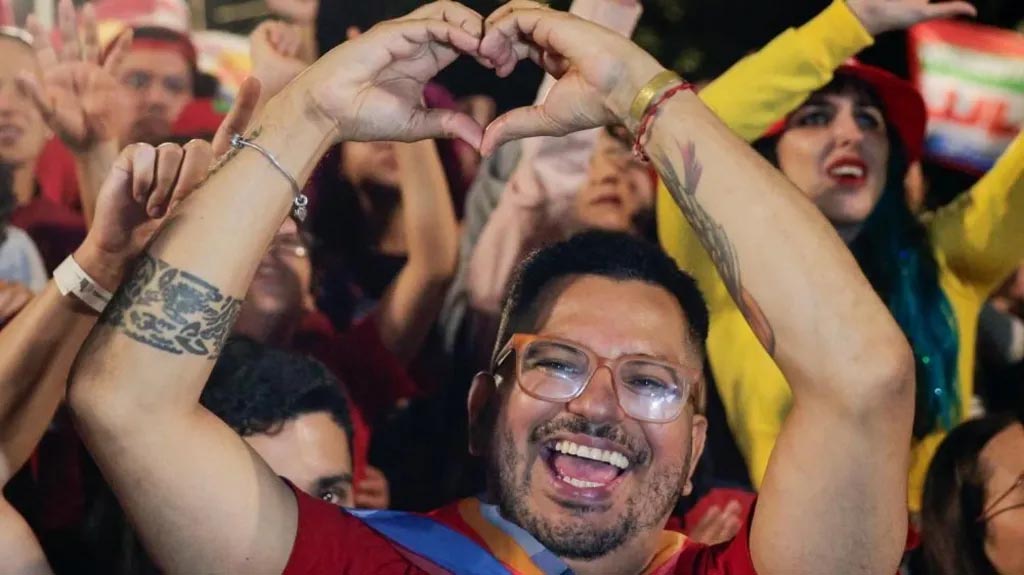
Kathmandu. Brazil’s left-wing leader Luiz Inacio Lula da Silva has been elected president for a fourth term after defeating right-wing senator Flavio Bolsonaro in the second round of elections.
Lula, who lost in the first round, won 51.79 percent of the votes in the second round. His rival Bolsonaro got 48.21 percent of the votes. In the first round of elections held on October 4, Flavio Bolsonaro got 47.03 percent and Lula 45.16 percent.
According to the election results, Lula won by a margin of about 4.4 million votes. This is the first case in the history of Brazil after the restoration of democracy that a candidate who came second in the first round won the second round of elections.
The WhatsApp channel ‘Lula’s Army’ created to support Lula da Silva’s re-election campaign has been credited by his supporters for playing an important role in his electoral comeback.
Lula, who is behind his right-wing rival Flavio Bolsonaro, turned the electoral contest in his favor within three weeks. While there were doubts that Lula would win the election, the number of members of the ‘Lula’s Army’ WhatsApp channel, run by the MP Andre Janones, increased rapidly to 18 million. The campaign mobilized supporters to share videos, promote hashtags and reach new voters.
The rapid expansion of the channel between the two rounds of elections was seen as a significant change in Brazil’s digital politics. Since the election of Jair Bolsonaro in 2018, conservative groups have been influencing platforms like WhatsApp and Telegram. Supporters of the campaign believe that the emergence of the “Lula’s Army” has shown that even the leftists can compete effectively in the digital arena.
The channel used to keep samples of ready-made messages that could be sent to friends and family. Janones would instruct supporters to make the video viral and promote the hashtag. He kept the team active with messages like “Friends, urgent!”, “Don’t sleep now”, “Don’t even eat before completing the mission! I have one more job before you leave.”
On the eve of the election, even when polls were pointing to Bolsonaro’s victory, Janones conducted a 24-hour live broadcast. Some members of the Workers’ Party expressed concern that his aggressive style might affect Lula’s moderate image. However, in his victory speech, Lula thanked Janones for keeping the morale of the team high, calling him ‘our general’.
The role of social media in relapse
It is difficult to measure how much influence the online campaign had on the election results. According to political scientist Danilde Holzäcker, the change in Lula’s strategy was the main basis for the comeback. She was able to connect digital campaigns with grassroots social mobilization.
Holzaker said that identifying weaknesses and changing the style of the campaign was the basis of Lula’s success. According to him, Janones worked to expand the influence of left-wing politics in Brazil through social media.
On the contrary, Flavio Bolsonaro entered the second phase because he was more confident of winning, so he was not able to convey the message effectively to his supporters, according to Holzacher’s analysis.
Mayra Goulart, a political scientist at the Federal University of Rio de Janeiro, said that Lula’s victory cannot be considered the result of social media alone. According to him, the online campaign and street level mobilization became complementary to each other. He said that the campaign based on physical presence has helped to reduce voter absenteeism and attract undecided voters.
In his victory speech, Lula also said that many lessons have been learned from the election and promised to increase people’s participation in the next government and give more importance to digital communication. BBC