
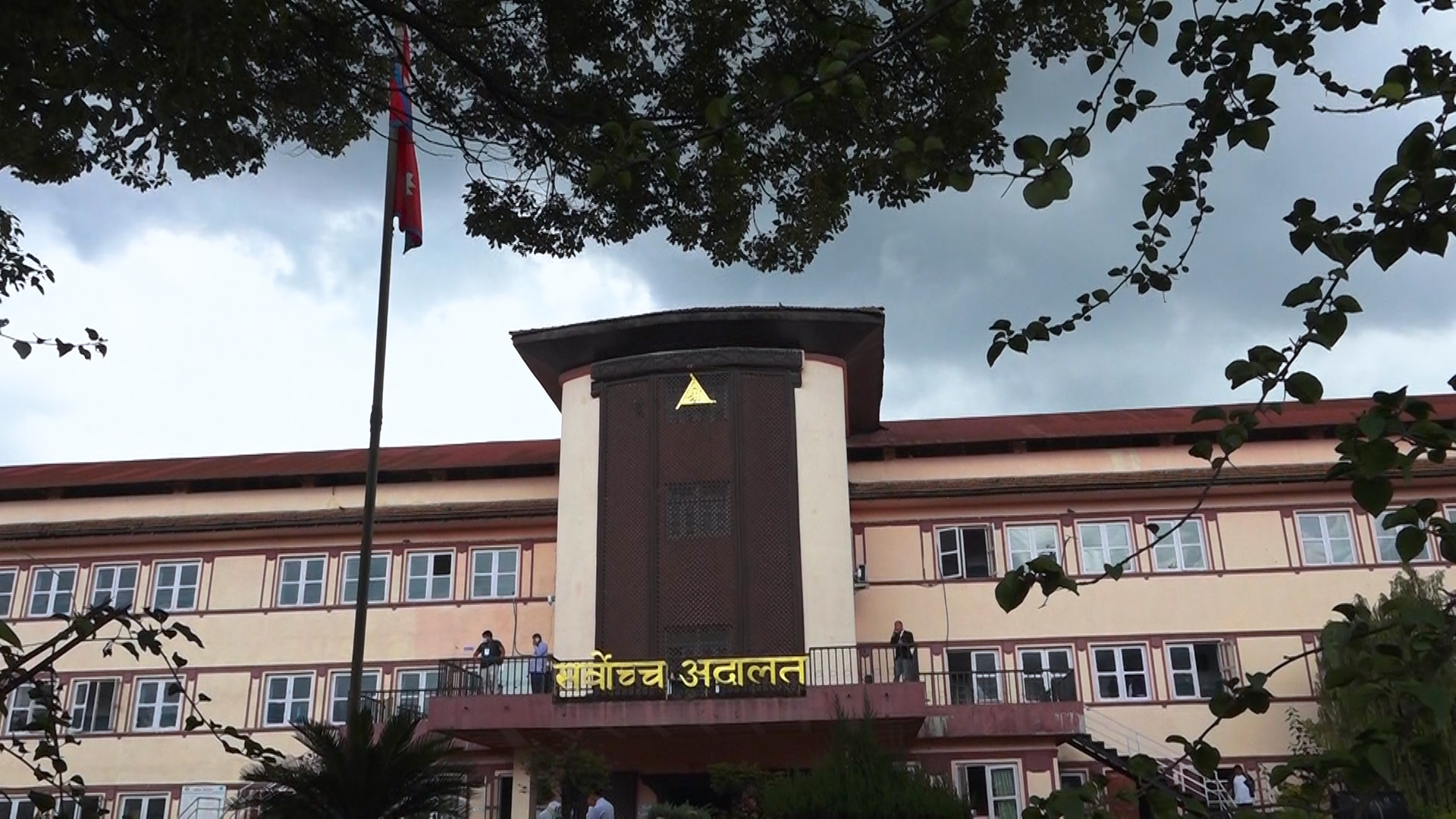
Kathmandu. Artificial intelligence (AI) is now being used in the courts as well. The ‘Full Court’ of the Supreme Court on Thursday passed the ‘Information and Communication Technology Policy of the Judiciary, 2083’ and cleared the way for the use of AI.
It is mentioned in the policy that the use of AI-based systems will be increased in order to assist in drafting, study-research. It is mentioned that AI cannot be used to influence judicial decisions. The policy also mentions that when using AI-related systems developed by internal or external bodies in judicial proceedings, it will be analyzed based on its reliability, transparency, non-bias and operational framework, and arrangements will be made to use it on the basis of appropriateness.
A database will be prepared in a machine-searchable format for the AI system when details and documents related to the case are entered in the case management system. It is mentioned in the policy that orders and judgments of courts across the country, including the Supreme Court, can be easily searched and read through AI.
In point No. 5.2 of the policy, it is said that ‘the possible areas of use of artificial intelligence (AI) as a tool of innovation in the judicial process will be identified and implemented’. According to the policy, a program will be conducted to raise awareness among internal and external users and stakeholders about the use of AI in court operations, its usefulness, risks, etc.
Supreme Court Chief Registrar Bimal Paudel said that the policy has been made to allow the use of AI for humanitarian aid. “Technology will be used to the highest extent for easy and quick administration of justice,” he said.
According to Joint Secretary Amit Upreti, who is involved in the formulation of Information and Communication Technology Policy, this policy has come as the first step to identify potential areas of use of AI and implement it. He said that the policy has been prepared so that most of the use of AI will be focused on legal research.
“We have taken care not to have the influence or pressure of AI on human decisions,” he said.
The Supreme Court is preparing to start the process of placing orders in the system with the help of AI. According to the Supreme Court, preparations are also being made to conduct training and awareness campaigns on the use of AI for the Nepal Bar Association, government lawyers, justice service and legal service employees to service users.
Before the appointment, Chief Justice Manoj Kumar Sharma promised to create an ‘e-court’ and make a policy on the use of AI during the parliamentary hearing. Chief Justice Sharma said that the policy decision made according to that promise will be a milestone in the work from study to case management. With the development of information technology, the court should also be technology-friendly and should be able to benefit from it, so the Full Court has made such a policy, in the future we will continue to modify it according to time, he said.
It is mentioned in the policy that the Judiciary can be partnered with government resources, domestic private and academic sectors and international intergovernmental development partners for the development, expansion and strengthening of the Judiciary’s information technology infrastructure.