
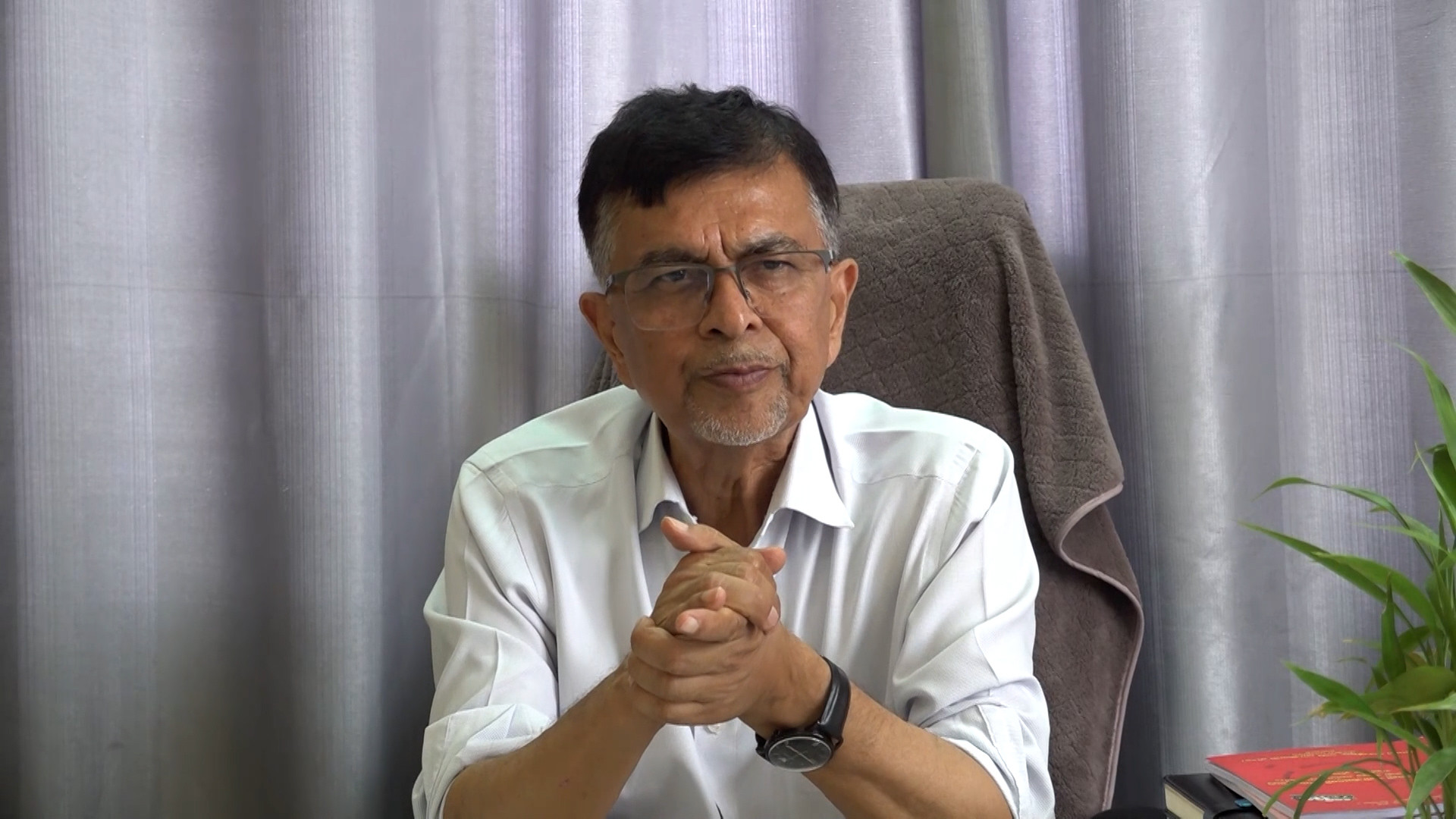
Kathmandu.Nepali Communist Party (NCP) leader and former minister Rajendra Pandey has said that although the Republic of Nepal is a great political achievement in the history of Nepal, the political parties have not been completely successful in improving the living standards of the people according to its essence.
He mentioned that the establishment of the republic was made possible by the sacrifices, sacrifices and long political struggle of thousands of people and claimed that the current dissatisfaction is not against the republic but against the political parties that failed to meet the expectations of good governance and people.
He recalled that he had been active in communist politics through the student movement since 2032. During his struggle against the autocratic Panchayat system, he had faced three Rajkaz cases and spent almost 6 and a half years in prison.
He said, “We have made great sorrows, sacrifices and sacrifices to bring the republic.” Thousands of people shed blood, many lost their lives. Only then have we arrived at this place.
According to him, the establishment of republic in Nepal was not possible due to the efforts of any one party. He said that the monarchy ended with the combined strength of the then seven political parties, civil society, common people and various movements.
He mentioned that the Nepali Congress was initially in favor of the constitutional monarchy, but over time, after the monarchy showed an autocratic character, it was forced to stand in favor of the republic.
He said, “After the king shut down the media, cut the telephone, and jailed the leaders, everyone came to the conclusion that the country cannot move forward by keeping this organization.” After that, through the movement of 2062-63, we removed the autocratic monarchy and established a federal democratic republic.
Pandey said that the biggest achievement after the republic is inclusive representation. He said that mandatory representation of women at various levels of the state has been arranged, Dalit women have also reached leadership positions at the local level and efforts have been made to include Madhesi, tribal and oppressed communities in the state structure.
“We got a big achievement from the movement. We have created a system for women’s representation in all sectors, 33 percent of women participate in the central parliament, one of the president and vice president should be a woman, one woman should be the speaker-deputy speaker, the speaker-deputy speaker of the national assembly should be a woman, they should be of different genders, and at the local level, we should have a woman as the president and vice president, mayor and deputy mayor at the ward level. In 6,743 wards, we have created a system where Dalit women are the only ones. We have achieved many such achievements,” he said.
But he admitted that along with political achievements, there is a weakness in solving problems related to people’s daily lives. He said that people were disappointed because they could not fulfill their commitment to improve the living standards of squatters, workers, workers and the poor.
He said that although the Kamaiya system was abolished, long-term arrangements for their residence and employment could not be made. Stating that the squatter problem has been going on for decades, he accused the state of prioritizing the use of force over human sensibilities.
He said, “We have not been able to do as much as we should in the problems of people’s daily life, especially in the problems of villages and housing.” Like, we have freed the Kamaiya system. We evicted Kamaiya from the houses of the feudal lords but we could not arrange a place for them to stay. The squatter problem continued since the Panchayat period. Today, the work of demolishing the slums of squatters with dozers has been going on for months. The squatters are kept in prison-like places called holding centers. This would not have happened if we had been able to work.
He interpreted the latest election results as people’s dissatisfaction with the old parties rather than anti-republicanism.
The current election result is an expression of anger. He did not like the party, he did not like the republic. The vote cast by the people is not against the republic. If they are against the republic, then they are looking for a monarchy? They did not vote that the monarchy should be revived,” he said.
According to Pandey, as the established political parties failed to provide the good governance expected by the people, the attraction towards new forces and independent candidates has increased. He said that the people have deep questions about corruption, procrastination and the lifestyle of the political leadership.
He said that due to the development of social media and technology, the weaknesses of the state have become public immediately.
It used to take many days to find out what happened in the first village. Now it reaches all over the world within an hour,” he said, “so now transparent governance and responsible politics have become inevitable.”
Speaking about the development after the republic, he claimed that there has been significant progress in the road, electricity, communication and transport sectors. He said that while there were about 6,000 km of roads during the Panchayat period, now more than 20,000 km of tarred roads have been constructed. He also mentioned the expansion of mobile and internet access as major changes.
He said, “Today, the headquarters of all 77 districts are connected to the road network. Electricity production has reached 3600 megawatts. Electricity has reached the village. Earlier, there were only 40,000 landline phones across the country, now more than 20 million Nepalese have mobile phones.
But he admitted that the expected speed in service delivery and administrative reform was not coming. He said that the delay in basic services like citizenship, passport, driver’s license has caused frustration among the people.
You have to wait for weeks to get citizenship, you have to stand in line for years for a license. When this happens, the people feel that the government is not in their interest,” he said.
Leader Pandey said that there has been a delay in the creation of laws necessary to institutionalize the republic. He said that federalism could not be effective if the necessary laws for the operation of the provincial structure were not made on time.
He said, “After the declaration of the Republic, many laws had to be made immediately, but the political parties were not serious about that work.” Important laws like the Civil Service Act are still stuck.
Pandey pointed out the need for generational change and youth leadership development within the political party. “Parties that can remove Rana rule, panchayat and monarchy should now strengthen democracy within their own party,” he said.
He believes that giving responsibility to the youth, strengthening internal democracy within the party and bringing the new generation to the leadership is now mandatory.
He mentioned that Nepal’s communist movement is now in a divided state and said that efforts are being made to unite various left wing forces.
On the occasion of the Republic Day, he opined that all political powers should be focused towards economic prosperity and good governance while protecting the Constitution, Federal Democratic Republic and people’s rights.