Kathmandu. Solidarity to End Gender-Based Violence: This year’s 16-day campaign against gender-based violence has started with the slogan of protecting victims, ending impunity and ensuring justice. On this occasion, it was said in the interactive program with the members of the House of Representatives held on Wednesday that the bill prepared by the government on sexual violence is incomplete and insufficient.
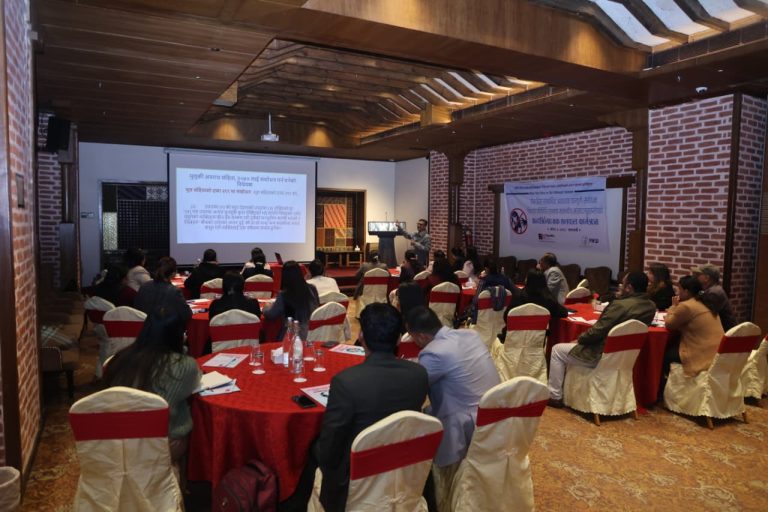
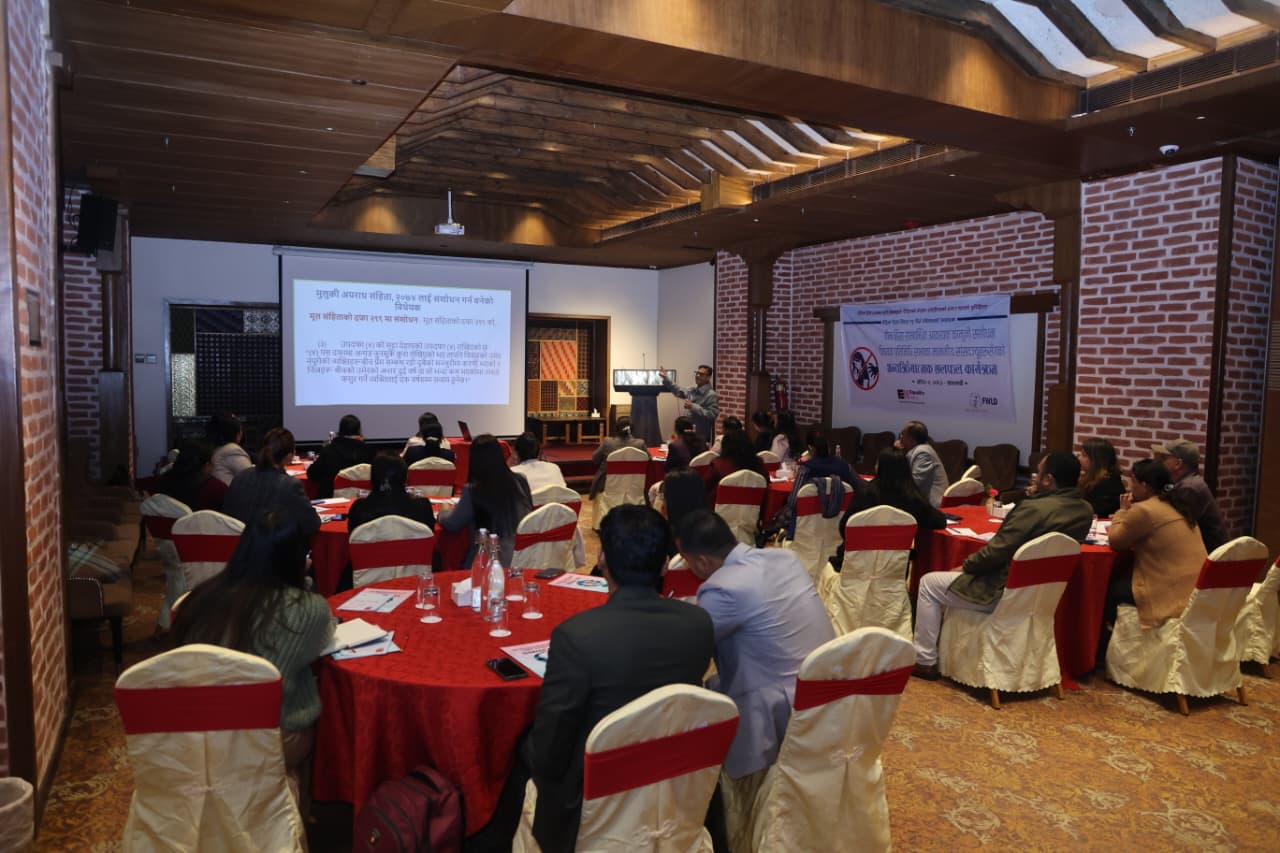
It has been pointed out that there is a need to improve five more points in the proposed bill in the discussion on the necessary law amendments related to sexual violence. In an interactive discussion program jointly organized by Women, Law and Development Forum (FWLD) and Equality Now, it was said that if five more points are not improved in the proposed bill, the future law will be incomplete and inadequate.
The proposed bill on sexual violence, current situation, international practice, points to be improved were presented by the executive director of FWD, Advocate Savin Shrestha. In the presentation, Advocate Shrestha mentioned that in the bill prepared by the ministry, the definition of coercion, the definition of consent, the exception related to close age group, marital rape and the proposed bill regarding limitation period need to be improved.
The presentation of the incidents related to sexual violence in Nepal in the financial year 2081/082 was discussed. The data reported to the Nepal Police was analyzed. There is data that 29 percent of the total crimes in the year are incidents of sexual violence. Data was presented that 78.5 percent of the accused were acquaintances of the victims and 62.4 percent were female victims.
It was mentioned in the presentation what the international practice is about sexual relations between age groups. Advocate Shrestha’s presentation on the decriminalization of sexual relations between two-year-olds in India, Bangladesh, Sri Lanka and European countries was clear.
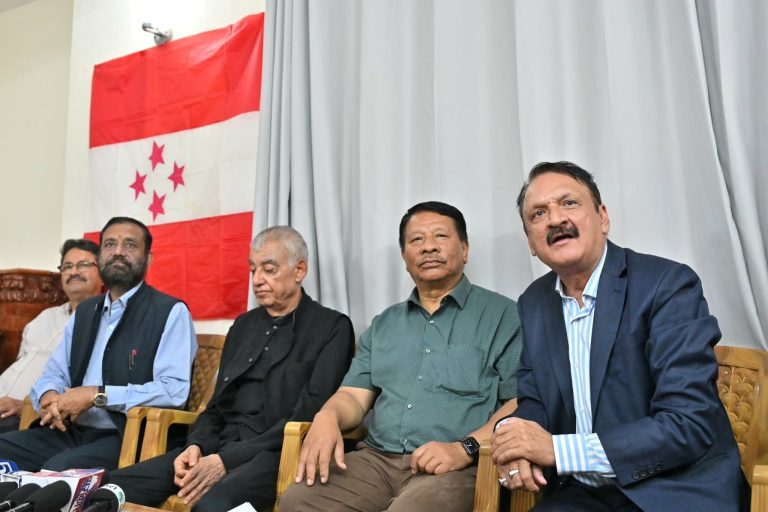
The parliamentarians expressed their opinion on the fact that sexual violence is more common at home, the number of girls involved in violence is high, and what kind of punishment should be given to the perpetrators of murder after rape. House of Representatives UML whip Nita Ghatani emphasized that laws should be formulated to cover the changing situation. He suggested strict punishment for the perpetrators.
Likewise, Saraswati Lama, MP of Rashtriya Prajatantra Party, said that since Nepal is a party to international treaties, the death penalty cannot be imposed. MP Lama emphasized that it is not enough to punish the perpetrators of sexual violence like other criminals, there should be a special punishment system.
CPN Member of Parliament Balawati Sharma also said that the constitution is an obstacle to the provision of death penalty for perpetrators of sexual violence. Article 16 of the Constitution has abolished the death penalty. MP Sharma said, “Since Nepal is a party to international treaties, it is not possible to create a law that imposes the death penalty, but strict punishment should be provided for such crimes.”
Most of the parliamentarians participating in the discussion emphasized that there should be no delay in enacting strong and strict laws to end sexual and gender-based violence. It was said in the discussion that the life imprisonment sentence for those who commit murder after rape is reduced. Those who have consensual sex between the same age group are in correctional facilities, it was said in the discussion that such an arrangement should be clearly defined by law.
Explaining the purpose of the program, Advocate Vinodchandra Devkota said that Women, Law and Development Forum (FWLD) has been celebrating the 16-day campaign against gender-based violence every year. Advocate Devkota said that the process for making the law should be carried forward only after extensive discussion on the proposed bill on sexual violence prepared by the government.
He said that since the issue of sexual violence is serious, it would be wiser to take the process forward after a comprehensive discussion before regretting by hastily making laws. Advocate Devkota says that five points need to be improved in the bill proposed by the government.
The Ministry of Law, Justice and Parliamentary Affairs has prepared a bill to consider sexual relations against or between sexual and gender minority persons as rape. It is suggested to amend the law to provide equal protection to all persons, regardless of gender or gender identity, as per the UN Model Rape Law, and to declare non-consensual penetration of a sexual nature into the vagina, anus or mouth to any extent by any body part or object.
Likewise, consent should be clearly and positively defined as consent given by free will and it should be strictly prohibited to infer consent based on the victim’s silence, lack of rebuttal, past sexual history, occupation or relationship.
It is suggested to amend Section 219(2) (b) instead of the wording of ‘not being conscious’ to clearly include unconsciousness, sleep and intoxication (narcotic substances, drug consumption) and have a clear standard of incapacity to give consent.
A new sub-section (4) has been proposed which provides for imprisonment of up to 1 year for consensual sexual relations between teenagers under 18 years of age with a gap of 2 years or less. Consensual sex should be completely decriminalized when both teenagers are at least 14 years old and the age difference is not more than 2 years. It has been suggested that cases of fear, threat, temptation, exploitation or abuse of power should be completely separated from this exception and brought under the scope of severe punishment.
In the amendment, it has been provided that if the husband forces his wife while the marriage relationship is still going on, he will be imprisoned for three to five years. It has been suggested that no matter what the marital status is, marital rape should be given the same punishment as other common rapes.
Similarly, in relation to the statute of limitations, it has been suggested to completely abolish the statute of limitations for rape crimes to ensure access to justice for the victims and to prevent the perpetrators from escaping.