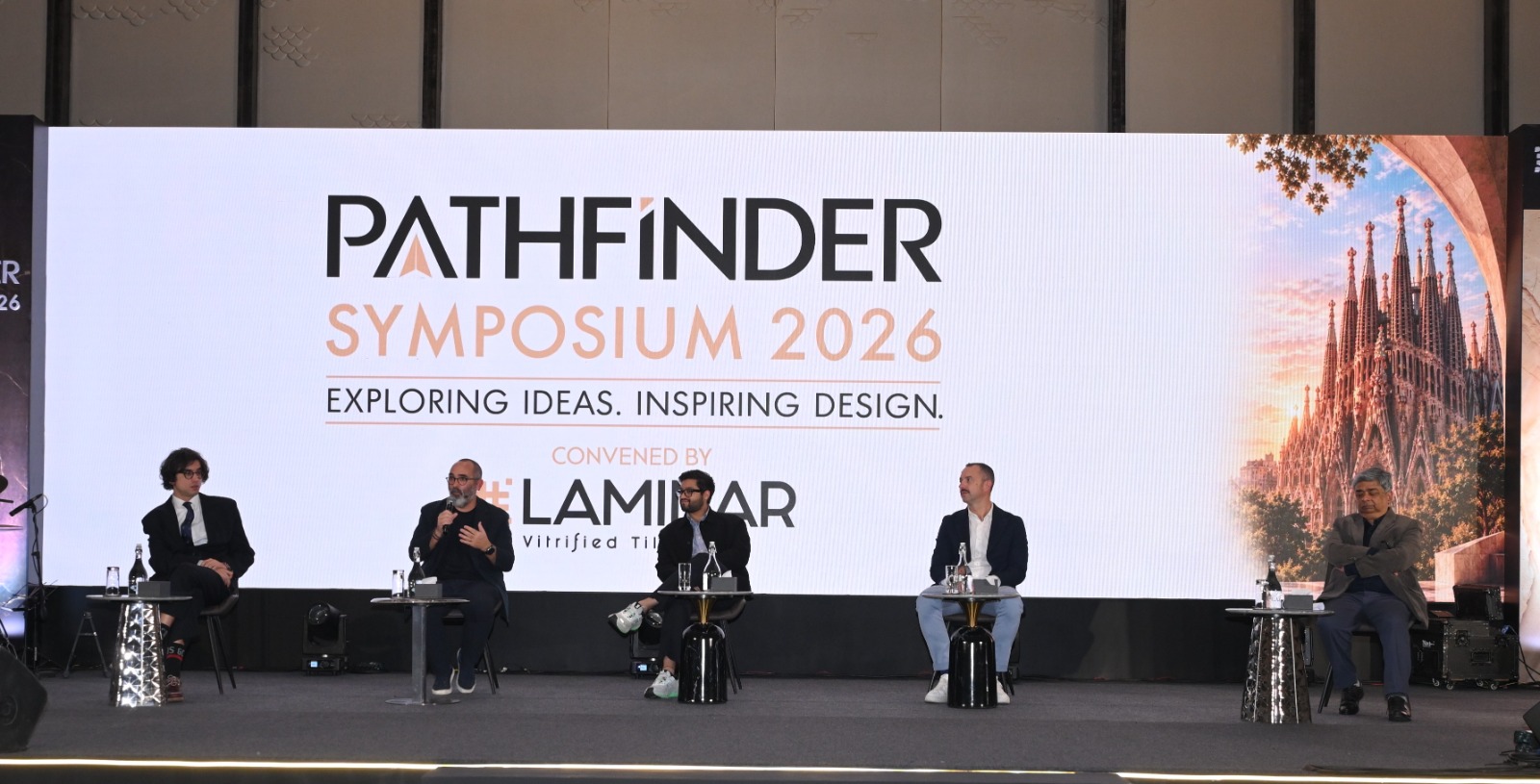
Kathmandu. The international architecture conference ‘Pathfinder Symposium 2026’ has been concluded, discussing the relationship between historical architecture, traditional craftsmanship and modern construction technology. Architects and technology experts from Spain, India and Italy as well as Nepal shared their experiences at the event held at Pulchowk in Lalitpur.
In the conference organized with the main slogan ‘Exploring Ideas, Inspiring Design’, ways to preserve the originality of historical heritage, new uses in construction materials and changes brought about by modern technology in design were discussed. Nepalese architects, interior designers, representatives of academic fields and various bodies related to infrastructure construction were invited to the program.
Spanish architect Pau Millet Lopez, the keynote speaker of the program organized by Victrified tile brand Laminar, narrated his experience in the construction of the world-famous Sagrada Familia Church in Barcelona. He worked as a chief architect in the technical office of the church for five years and was involved in the design and construction management of six central towers. He said that adopting modern engineering and construction methods while maintaining the historical concept is a complex but important task.
Sagrada Familia, which started construction in 1882, was designed by Antoni Gaudí. Even though Gaudí died in 1926, construction continues according to his vision. López mentioned that Gaudí took inspiration from the shape and structure of nature and emphasized that history and original identity should not be forgotten when creating new things. He said that Sagrada Familia is not only the achievement of one person, but the joint effort of many generations of architects, engineers and construction workers.
The topic of the completion of the outer structure of the highest tower of the church in 2026, which is the hundredth year since Gaudi’s death, was also raised in the program. López said that this construction, which has been going on for a long time, is an example of the commitment of working towards the same goal for generations. He narrated the experience of deciding the main purpose of the project in the midst of the challenges of time, resources and construction technology.
López said that the plaster patterns and geometrical studies used by Gaudi helped to understand the old design and connect it with modern technology. He presented the experience that even though some records were destroyed during the Spanish Civil War, it was possible to continue construction by digitally studying about 16,000 pieces of preserved models. He also clarified that planning, management and coordination between various experts are necessary for the success of large projects.
Lopez is also involved in the ‘Somaiya Kala Vidya Artisans University’ project in Kutch, Gujarat along with Indian architect Amey Dalal. He informed that efforts are being made to combine local construction materials and traditional skills with modern architecture in the said project. This experience conveyed the message that original craftsmanship and new technology should be considered as complements rather than substitutes for each other.
Nepali architect and urban planner Viresh Shah, who presided over the program, said that architects and designers should be aware of the changes in the production of construction materials. Mentioning the fact that the production of materials including high quality ceramic tiles is expanding in Nepal as well, he opined that new possibilities will open up through collaboration between technology, design and industry. According to him, the knowledge of the production process helps the designer to participate not only in the selection of materials, but also in the development of new products.
Francesco Piani from Italy’s System Ceramics gave a presentation on digital printing, automation and large-scale slab manufacturing techniques in ceramic production. He said that technologies such as Rotocolor, Lamzia, Superfast and Creadigit have expanded the range of sizes, designs and uses of ceramic materials. These materials, which were previously limited to floors and walls, are now being used in exterior cladding of buildings, kitchen countertops, furniture and various internal structures. He said that modern technology has made it easy to prepare materials of different colors, textures and sizes according to the needs of the project.
According to him, large ceramic slabs make joint lines less visible on a wide surface. Digital printing has made it possible to present the colors and patterns of marble and natural stones in a subtle way. Piani mentioned that in the future, the production system will be more automated and flexible and the possibility of preparing materials as per requirement will increase.
Likewise, Alessio Londi of Italy’s Colorobia Group gave information about the technology developed in the color, surface and texture of ceramic materials. He said that by using special glazes, grits and digital decoration materials, a surface that looks like natural stone, a three-dimensional texture and a design that gives different effects according to the light can be prepared. He mentioned that continuous research and collaboration between machine manufacturers, material producers, architects and designers is necessary for the development of new products.
Londi said that in modern ceramic design there is an increased interest in matte finishes, terracotta, terrazzo and surfaces inspired by natural materials. He pointed out that continuous testing, research and technical improvements are necessary to maintain product quality and reliability. He said that the work of developing a new design will proceed not only through the efforts of a single company but through the cooperation of manufacturers, technology suppliers and designers.
According to the organizer Laminar, the company has been using CreDigit digital printers of System Ceramics and glazes, grits and digital decoration materials of Colorobia Group in tile production. It connected with the conference the context of international level production technology being used in Nepali industry as well.
After the keynote presentation, there was an interaction between Lopez, Indian architect Amey Dalal and President Shah. In the discussion, views were exchanged on the preservation of historical architecture, the use of local craftsmanship and the appropriate selection of new building materials. According to the organizers, the purpose of the conference is to introduce Nepali architects and designers to international experience and increase dialogue about the opportunity to use new technology according to Nepal’s needs and identity. More than 300 architecture and construction experts participated in the program.