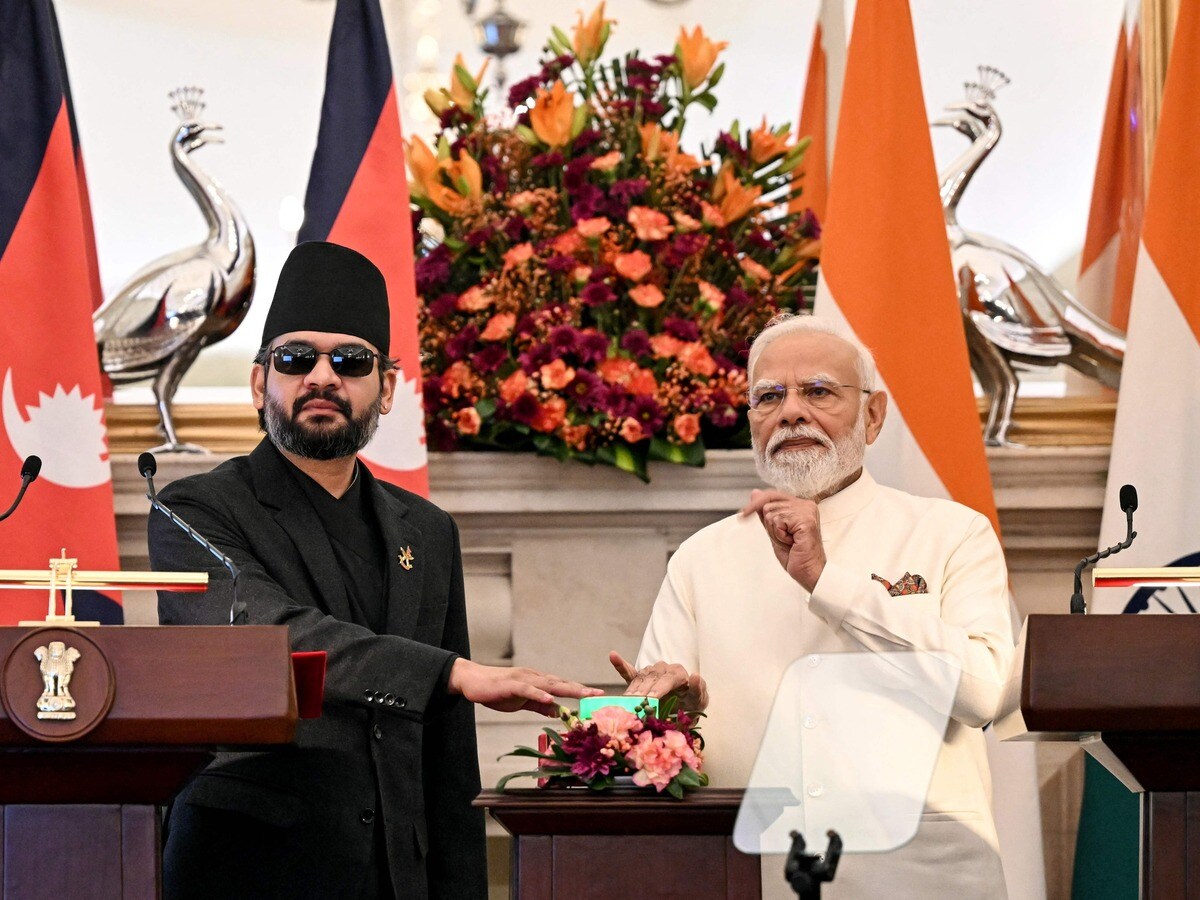
New Delhi (India). Prime Minister Balendra Shah and Indian Prime Minister Narendra Modi jointly laid the foundation stone of the Lower Arun Hydropower Project with a capacity of 669 MW today. Prime Minister Shah and Indian Prime Minister Modi, who are on a state visit to India, laid the foundation stone of the project through ‘virtual’ technology.
The project, which is to be built under Nepal-India energy cooperation, is located in Chichila rural municipality and Khandbari municipality of Sankhuwasabha. The estimated cost of the project is Rs 92.67 billion. The goal is to complete the construction within five years.
The project launched with the aim of expanding energy cooperation between Nepal and India and increasing Nepal’s hydropower production capacity will be developed under the construction, ownership, operation and transfer (BOOT) framework.
According to the project development agreement, Nepal will receive 21 percent of the total electricity produced by the project for free. After the 25-year commercial operation period of the project is completed, the project will be handed over to the Government of Nepal free of charge.
The Lower Arun Hydroelectric Project is being developed through a subsidiary of Sutlej Jalvidyut Nigam (SJVN), an Indian government company. The project development agreement was completed on June 1, 2023 between the Investment Board of the Government of Nepal and the project development company.
The project will be operated in a system connected with the Arun-3 hydropower project. After generating electricity from Arun-3, it is planned to take the water coming out of Arun-3 through a 17.3 km long tunnel to the lower Arun power house to generate more electricity.
Land acquisition for the construction of the project and distribution of compensation to the affected families has been progressed. According to the project development company, out of 268 families directly affected by the project, compensation of Rs. 999.8 million has been distributed to 253 families.
It is expected that Nepal will get free energy, royalty, tax and other financial benefits from the project. During construction, it is expected to contribute to job creation, local infrastructure development and expansion of economic activities.