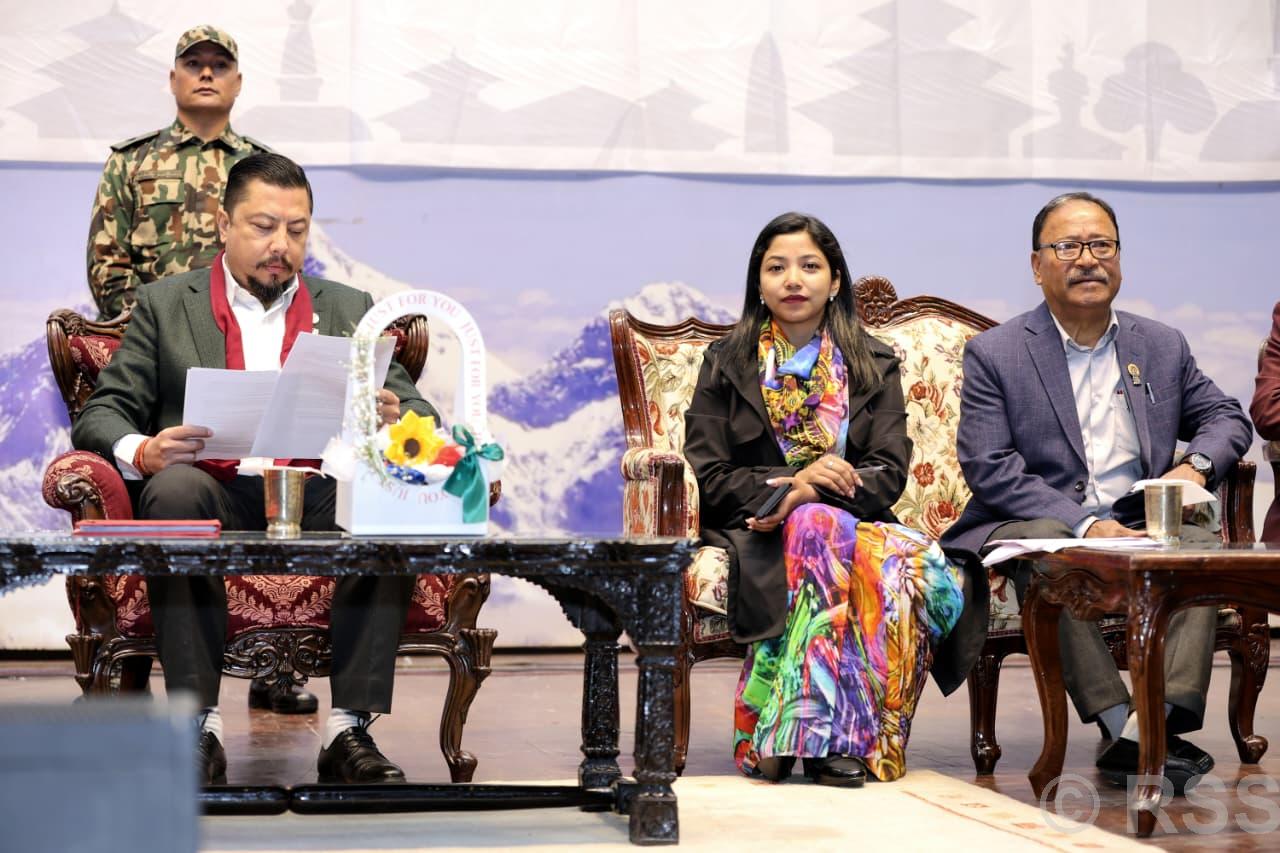
Kathmandu. Energy, Water Resources and Irrigation Minister Virajbhakta Shrestha has expressed his commitment to clean Bagmati and Bishnumati rivers and develop Kathmandu as a safe and livable city.
Addressing the ‘Kathmandu Climate Action Week’ today, Minister Shrestha, who is also the Member of Parliament for Kathmandu Region No. 8, informed that a solid action plan has been announced by the federal government for river protection, flood control and urban environment improvement.
He mentioned that due to construction of haphazard concrete structures, fields, ponds and open land have been washed away, the temperature of the city has increased and the risk of flooding has increased due to the lack of land to absorb rainwater. He said that the condition of centuries-old temples and heritage is deteriorating due to dust and smoke.
Stating that climate change has added to the crisis, Shrestha said that floods with large stones and rocks, avalanches and melting of glaciers in various river corridors in a few days are a serious warning.
He praised the Kathmandu Metropolitan City, Acting Chief and Ward Chairman for playing a role in protecting the underground water reservoir by reviving the old Dhungedhara (Hiti) and Rajkulo, which were about to disappear in the last four years.
He informed that the plan to cooperate with the metropolis and other cities in rain measurement, urban flood modeling and early warning system through the Department of Water and Meteorology will be installed so that the wards and households can get information before the flood.
Appreciating the youth’s activeness in new technology, Minister Shrestha gave an example of how students of class 12 prepared a communication system to send disaster information without mobile network.
Minister Shrestha, who is also the Acting Prime Minister, said that cool roads full of trees, historic tolls that can be reached within 15 minutes’ walk and restored, stolen statues returned, clean Bagmati-Vishnumati corridor with bicycle lanes and chirping of birds, ecological balance of forests and national parks around Kathmandu have been envisioned.