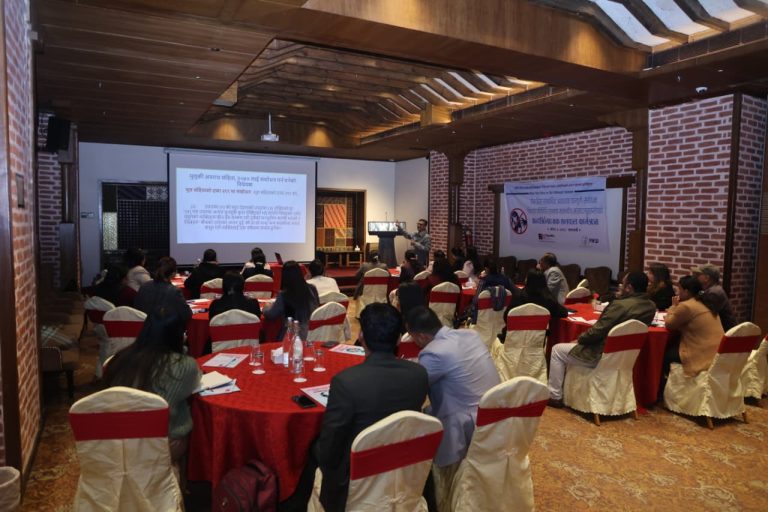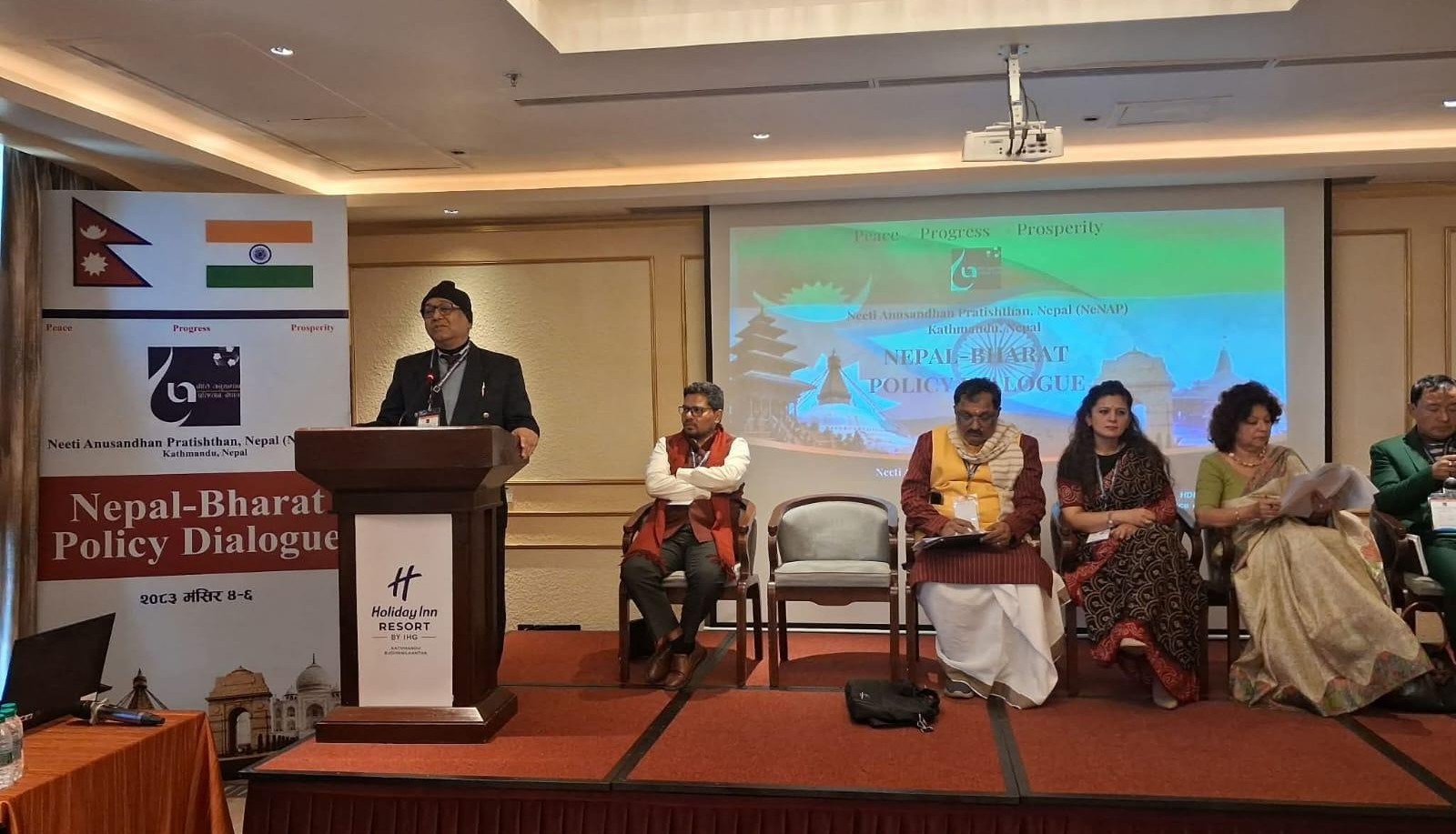
Kathmandu. It has been emphasized that cultural relations between Nepal and India should be redefined according to the thinking and aspirations of the new generation. Culture-related bodies and stakeholders of both countries expressed this opinion in the presentation on Asian cultural heritage held on Sunday as part of the Nepal-India policy dialogue.
India Foundation’s Rami Niranjan Desai said there is a need to redefine the cultural relationship between Nepal and India. He said that there should be necessary changes in the policies in the context that the thinking and aspirations of the new generation are affecting the youth of both countries.
Ashok Rai Payasi, a researcher from Nepal, said that the youth should be made aware of their own culture as there is also a transfer of culture along with the transmission of generations. He said that Nepal and India can work together to make the youth creative and efficient.
Srinivas Barkhedi, a professor at the Central Sanskrit University of India, said that the culture that started in Nepal and India and is still practiced and practiced is illuminating the whole of Asia. He emphasized that its purity should be maintained.
Professor Madhuri Sukhija from India said that cultural, educational and sports relations should be institutionalized between Nepal and India. She emphasized on the need to move forward by creating a joint educational program.
Sukhija, who is also the head of the Indian Council for Cultural Relations (ICCR) for Kathmandu University, said that the cooperation in the field of education and sports has strengthened the relationship between the two countries. He said that with the rapid development of technology, a new policy is needed to strengthen the relationship between the new generation. “In the changed situation, inheritance alone is not enough, new policies should be made to strengthen the relationship”, she said.
Professor Sarup Prasad Ghosh, director of India’s Maulana Abul Kalam Azad Institute of Asian Studies, said that both countries should focus on youth employment and skill enhancement. He said that although the current government of India has given priority to efficiency enhancement, the challenge of talent flight and migration is increasing. He said that policy initiatives are necessary to reduce the negative impact of the problems seen in the social sector on the young generation.
Anand Kumar Srivastava, director of India’s Vidyan Ganga Basin Foundation of Research and Sustainable Policy, said that since Nepal and India have more than 40 percent youth population, maximum benefit should be taken from it. He said that the challenge of talent flight among the youth is a common problem of both countries and should be faced together.
He said that since there is a stable government in Nepal, it has become an easy environment to work together with India. He said that there is a possibility of cooperation between the two countries and India is ready for it. Mentioning that the organic products of Nepal can have access to the Indian market, he suggested to encourage the youth in that direction.