Kathmandu. Under the United Nations Convention on Climate Change (UNFCCC), it has been agreed to establish a two-year program on mountains and climate change at the 31st Conference of Parties (COP-31) held in Antalya, Turkey.
If this agreement is formally passed, for the first time mountains, mountain ecosystems and communities dependent on glaciers will have a separate formal place in the United Nations climate change negotiation process.
According to the UNFCCC secretariat, although the parties participating in the conference have reached an agreement on the issue of mountains, its formal approval and declaration is yet to be completed by the full meeting.
It is considered an important achievement to get the recognition of the Himal issue, which Nepal has been raising in the international climate forum for years. In paragraphs 22 and 23 of the proposed decision, it has been accepted that the Himalayan region, ecosystems and communities dependent on glaciers are at high risk from the adverse effects of climate change.
After the implementation of the agreement, the ‘Himalayan and Climate Change Program’ will be conducted for two years under the Subsidiary Agency for Implementation (SBI) and the Subsidiary Agency for Scientific and Technical Advice (SBSTA).
The program will focus on climate adaptation, disaster risk reduction, building resilience, strengthening statistics and observation systems and early warning systems.
Similarly, ‘Himal and Climate Change Dialogue’ will be organized in the 66th and 68th meeting of SBST. The report with the conclusion of the dialogue will be submitted to the COP-33 and the Tenth Meeting of the Parties to the Paris Agreement (CMA-10). At COP-32, it has been agreed to organize a high-level dialogue on mountains and climate change under the guidance of the presidency.
Achievement of sustained diplomatic initiatives
The Ministry of Agriculture, Forestry and Environment has said that this achievement is the result of continuous lobbying and diplomatic efforts of various stakeholders including Nepal.
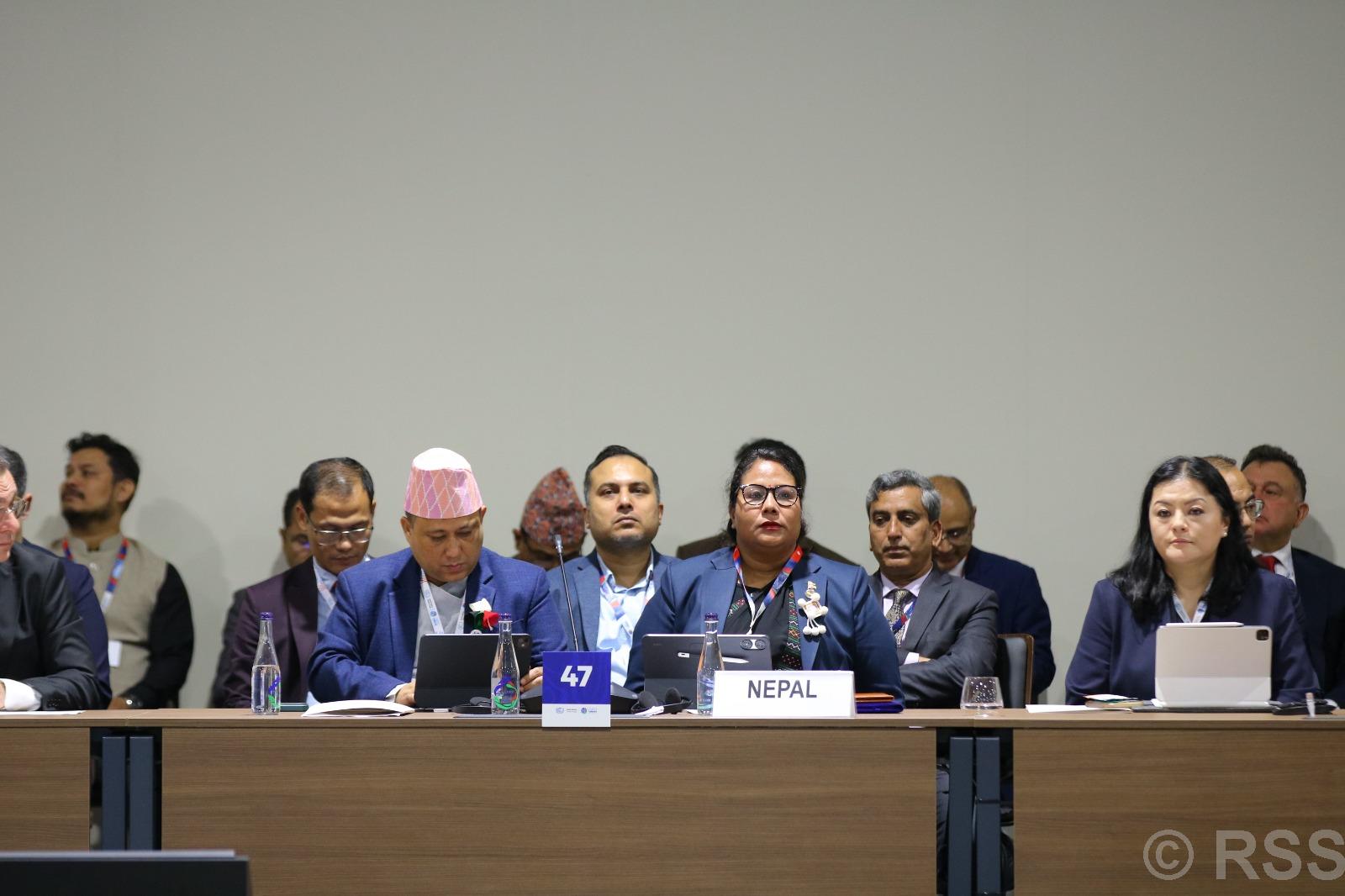
In the first week of the conference, Foreign Minister Shishir Khanal, leading the Nepali delegation, raised the issue of the Himalayas to the world leaders at the leadership level summit held in Antalya. After that, Forest Minister Geeta Chaudhary, leading the Nepali delegation, promoted Nepal’s proposal through various talks, programs and bilateral meetings.
Before the conference, Nepal and Bhutan submitted a joint formal proposal on the mountains. Under the leadership of Minister Chaudhary, Nepal, Bhutan and the Kyrgyz Republic put forward a joint proposal, while Nepal also made a separate proposal for high-level political dialogue.
The ministry said that Nepal’s demands have been continuously raised during the presidency of COP-31 and bilateral meetings with ministers of 14 countries and ministerial consultations. Minister Choudhary took a special initiative to advance Nepal’s proposal to establish a separate mountain program under the subsidiary body. After that, topics related to mountains and climate change were included in the agenda of the conference.
The secretary of the ministry Dr. Rajendra Prasad Mishra, Joint Secretary Dr. Maheshwar Dhakal, Deputy Secretary Dipa Oli, Abhishek Shrestha, Advisor to Minister Chaudhary, Babita Bista, Advisor to Finance Minister and expert Anand Mishra, etc., assisted.
According to Shrestha, the minister’s adviser, Prime Minister Walendra Shah’s speech at the United Nations General Assembly, the guidance of the political leadership and the united support of the speaker and MPs of various political parties also played an important role in this achievement.
Similarly, he said that the efforts of climate technical experts Manjit Dhakal, Tungabhadra Rai and Raju Chhetri and officials of the Ministry of Forests, Foreign Affairs and Finance, interlocutors, state and local governments, youth, women, indigenous tribes, Himalayan communities and civil society have contributed.
Nepal has expressed its gratitude to Bhutan, Kyrgyz Republic, group of least developed countries, landlocked and mountainous countries, small island nations and other supporting countries for supporting this initiative.
Forest Minister Chaudhary explained this achievement as a common victory not only for Nepal but also for the Himalayan communities from the Himalayas to the Andes and the communities in the lower coastal areas that depend on the water of the Himalayas.
“Now it is our responsibility to turn this program into real work, finance and advance notice,” she said.
Foreign Minister Khanal also said that this decision shows that important achievements can be achieved through principled and patient diplomacy. He said that Nepal will continue to cooperate with all parties to strengthen the voice of Himal in COP-32 and subsequent international negotiations.
Now Nepal will have to prepare for the high-level dialogue and COP-32 to be held in the 66th and 68th meetings of the SBSTTA. For this, coordination will be done with the States Parties, the UNFCCC Secretariat and other partners.
Nepal has said that it will continue this achievement in the country by linking it with the ‘Living Everest’ mountain strategy and national adaptation efforts.
The flood that occurred in Rasuwa-Bhotekoshi area on August 10 showed that the changes in the Himalayan region could seriously affect the life, livelihood and infrastructure of the lower coastal areas. Based on this reality, Nepal’s message of ‘From Mount Everest to the Sea’ has tried to establish the issue that the future of the world and the mountains are connected to each other on the international stage.