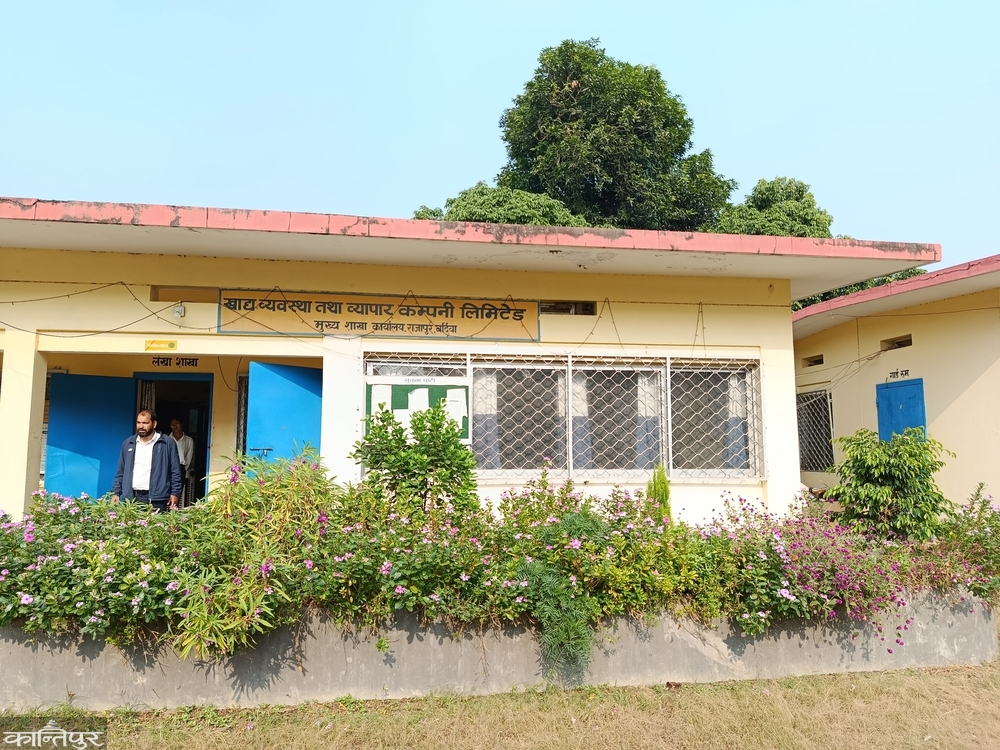
Bardia. Rajapur, a government-owned food management and trading company, has belatedly started purchasing paddy. Food has started purchasing paddy from Friday. Most of the farmers have already sold the rice to private traders at a low price due to food shortages.
The government has set a support price of Rs 3,660 per quintal for coarse paddy and Rs 3,860 per quintal for medium paddy. However, due to the delay in the purchase of paddy, most of the farmers have already sold coarse paddy to private traders at Rs 2,800 per quintal and medium paddy at Rs 3,200 per quintal.
Food has distributed coupons to 400 farmers under Rajapur on Thursday for the purchase of paddy. Kamalraj Pandey, head of the main branch office of the Food Management and Trading Company, Rajapur, said that the purchase of paddy from the farmers who were distributed coupons has started. “Purchase of rice has started in Rajapur and Barbardia municipalities,” he said, “There are preparations to purchase rice in the municipality that manages the warehouse.” He said that rice will be purchased at the rate of 20 quintals from each farmer.
According to the Rajapur food management and trading company, the target is to purchase 30,000 quintals of paddy in the current financial year. The target is to purchase 25,000 quintals of coarse and 5,000 quintals of medium rice. It is said that 3/3 thousand quintals will be purchased from all the eight municipalities in the district and the rest will be purchased from the Rajapur main branch of the food company.
According to Integrated Agriculture and Livestock Development Office, 50,150 hectares of rice is cultivated in Bardia. Kamala Adhikari, head of the Integrated Agriculture and Livestock Development Office, said that no rice production data has been received from the local level so far this year. According to him, 225,675 metric tons of rice was produced in the district in the last financial year.
Last year too, food had purchased only 30,000 quintals of paddy. As the production is high and the quota of rice purchase by the government is low, most of the farmers are forced to sell the rice to private traders at a low price. The demand of the local farmers is that the government should determine the quota of rice purchase according to the production.