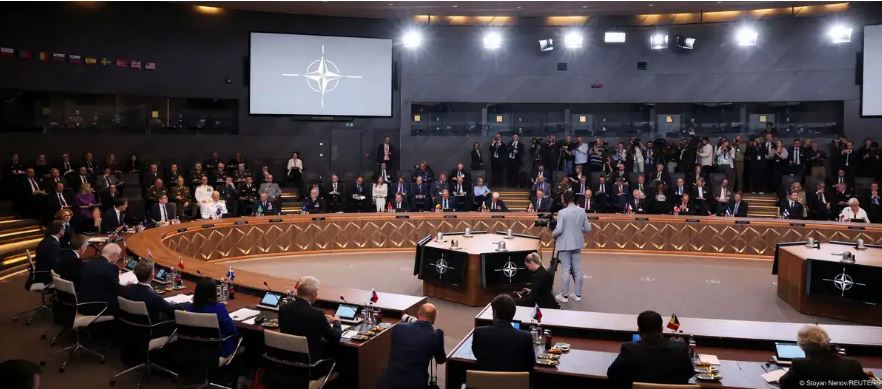
Kathmandu. During the talks in Abu Dhabi on ending the Ukraine war, Russia has demanded that NATO’s eastern expansion be reversed and returned to the situation before 1997. Russian representatives made such a proposal through a document dated November 10, The New York Times reported.
Russia’s demand is not limited to stopping the supply of Western arms to Ukraine, but it also proposes that the military presence, troops and military bases expanded by NATO in Eastern Europe after 1997 should be withdrawn.
Russia has been interpreting the year 1997 as the situation before NATO’s first eastern expansion. At that time there were 16 member states in the alliance. Eastern expansion began after Poland, the Czech Republic and Hungary joined NATO in 1999.
After that, more countries from Central, Eastern and Southeastern Europe joined NATO. Recently, Sweden and Finland also joined the alliance. Currently NATO has 32 members from Europe and North America.
If Russia’s proposal is implemented, NATO’s air defense system in the Baltic states will be affected. Since those countries do not have their own fighter planes, NATO has been conducting air patrols.
It is said that the deployment of Germany’s Lithuania brigade, which is aimed to be fully operational by the end of 2027, may also be affected. In addition, the expansion of the Mihail Kogalnisianu Air Base in Constanta, near the Black Sea in Romania, may also be affected. Eastern European countries have rejected Russia’s proposal. According to Article 5 of NATO, an armed attack on a member state is considered an attack on all members and other members must cooperate.
Did NATO promise Russia not to expand eastward?
In the NATO-Russia Founding Act of 1997, both sides declared that they do not see each other as enemies. Keeping in mind the security situation of the time and the near future, NATO adopted a policy of ensuring collective defense through the mobilization and reinforcement of troops as needed without permanently deploying a large number of combat troops.
However, the Act did not give Russia veto power over NATO decisions. It is said that there is no written and legally binding agreement not to include the former Warsaw Pact countries in NATO.
Previously, in November 1990, the member states of the Conference on Security and Cooperation in Europe (CSCE), along with the Soviet Union, signed the Paris Charter. There was a commitment to respect the freedom of each country to choose its own security system.
In the Budapest Memorandum of 1994, Russia, the United States, and the United Kingdom pledged to respect the independence, sovereignty, and existing borders of Ukraine and not to use force.
The memorandum, which was linked to Ukraine’s decision to give up the nuclear weapons it received from the Soviet Union, did not oblige the US or the UK to defend Ukraine militarily in case of an attack. At that time, the issue of Ukraine’s NATO membership was not even raised.
Why did Russia repeat the old demand?
Two months before launching a full-scale attack on Ukraine, Russia presented two draft agreements to the US and NATO. In that document, it was demanded to stop further eastward expansion of NATO.
In the proposed agreement with NATO, it was also proposed that Russia and the member states that joined the alliance until May 27, 1997 will not keep more troops or weapons in other European countries than the military deployment maintained on that date.
In the Abu Dhabi talks, post-war security assurance and Europe’s future security structure were also discussed. It seems that Russia is trying to increase the pressure of its negotiations by connecting the issues of NATO expansion and military presence in Eastern Europe with the talks to end the Ukraine war.
For a long time, Russia has been maintaining the position that the “root causes” of the war should be addressed. He has considered the expansion of NATO and the alliance’s military presence in Eastern Europe as one of the main causes of the war. So far, none of the major Western powers have indicated that they will accept Russia’s demands. DW