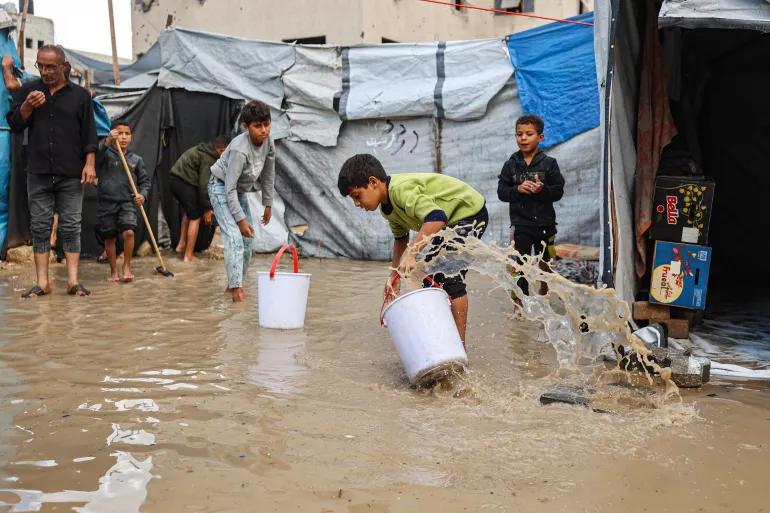
Kathmandu. The United Nations and partner humanitarian agencies have stepped up to help more than 200,000 civilians who may be affected by flooding following heavy rains in Gaza over the weekend. Due to the damage to the temporary shelters, toilets, health institutions and roads of the displaced families due to the flood, the work of water drainage, sanitation and relief distribution has been intensified in the affected areas.
According to the United Nations Office for the Coordination of Humanitarian Affairs (OCHA), more than 40,000 family shelters, more than 900 toilets and nine health facilities have been damaged as of Monday. Heavy rains have made the situation especially difficult for displaced families.
According to OCHA, there are not enough shelters to move people living in flood-affected and war-damaged buildings to safer places. The office says finding safe havens and managing displacement in most of Gaza has been difficult since Israeli authorities are restricting Palestinian access to areas behind the so-called ‘yellow line’.
According to OCHA, the affected families have not been able to get the necessary relief in time due to the limited capacity of humanitarian aid partner organizations. As of Monday, about 750 families, i.e. 4,500 people, have been helped. Tents, tripals, blankets, plastic sheets, bedding, food, water containers and hygiene materials have been distributed to them.
Similarly, 245 shelters and 23 roads in Gaza and the northern Gaza Strip have been identified as needing immediate improvements using heavy equipment. A building in a precarious situation in Gaza City was demolished on Tuesday morning. After the 10 families living in the building were voluntarily relocated, basic shelter, water and sanitation facilities were provided to them at alternative locations.
Organizations working on water and sanitation have mobilized the very limited heavy equipment available in Gaza to clear water, clean drains and clean land in 25 displacement sites. It is estimated that around 3,700 families have benefited from this.
In addition, other partner organizations have cleared blocked sewer pipes and rainwater drainage structures at 60 locations. According to OCHA, about 30,000 families have benefited from this work. Such work has been prioritized to remove water that has accumulated in the displacement areas due to rains and to reduce the risk of further flooding.
Meanwhile, more than 7,800 children have been distributed essential clothes for the winter season under the Child Protection Service. Similarly, financial assistance has been provided to 300 children. About 1,700 children and parents have been made to participate in safety awareness activities.
According to OCHA, more heavy equipment, engine oil and essential spare parts need to be brought in immediately to make the relief and rescue work effective in Gaza. Water drainage, street cleaning and other essential works are being affected due to limited equipment. There is also a shortage of vehicles, equipment and materials needed to keep generators producing alternative electricity in operation.
The office has called on all concerned parties to allow shelter materials and other humanitarian aid to enter Gaza before the onset of the winter season. In addition, it stressed the need for permission from the Israeli authorities to import the necessary materials and the immediate provision of humanitarian aid funds.
OCHA said that providing safe shelter and basic services to the affected families is very important for saving lives as they face more rains and adverse conditions during the winter season.