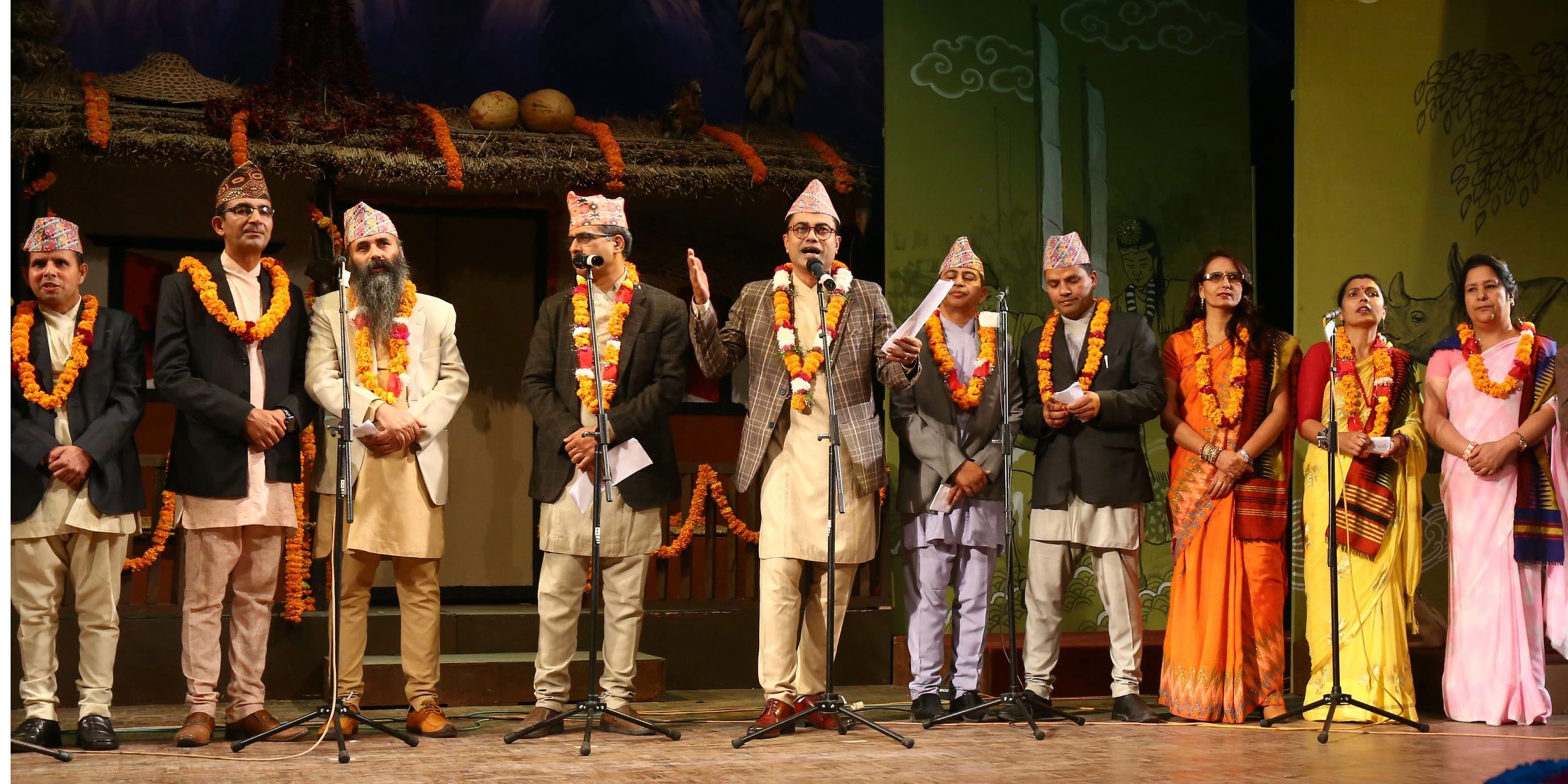
Lamjung. As soon as you say Tihar, the image of Deusi Bhailo comes. The old tradition of gathering in the courtyards of village houses and singing original songs, dancing and playing Deusibhailo to the rhythm of Madal, Jhyali and other traditional instruments is now gradually changing.
With the increase in the use of modern technology, there has been a change in the style of playing Deusibhailo, instruments and music. Until a few years ago, during Tihar in Lamjung villages, friends and young people used to gather together and play madal and cymbals and sing, dance and dance original songs related to Tihar. Deusibhailo was not only a means of entertainment but also an opportunity to transfer customs, culture and traditions to the new generation.
When playing Deusibhailo from house to house, it was customary for the house owner to welcome the group and give them food, money and other materials according to their collection. The group playing Deusibhailo also used to pray and bless the family wishing for happiness, peace and prosperity. It also contributed to increase mutual harmony, cooperation and intimacy in the village. According to 75-year-old Budhishan Shrestha of Dordi Rural Municipality, earlier, friends used to gather in one place and play traditional instruments and sing original songs of Tihar.
He said that in Deusibhailo, it is customary to sing songs related to Baliraja, explain the importance of tradition and bless the family with happiness, peace and prosperity. “Earlier, there was a tradition of singing their own original language and traditional songs in Deusibhailo, now that style is decreasing”, he said. According to him, modern songs that give priority to entertainment and dancing have started playing more than the original songs related to Tihar. In some groups, the influence of foreign songs has also started to be seen.
He says that it is rare to find a group that dances and sings in original language by playing Madal and Jhyali. With the use of modern technology, the change in the style of playing Deusibhailo has been viewed by the younger generation as easy and fun. According to Purna Bahadur Gurung of Masryangdi Rural Municipality, the use of deck, ufer and mic has increased in Deusibheilo. It has made it easy to play music and give group performances. He says that the lack of people who know how to play Madal and the lack of interest in it among the younger generation is also one of the reasons for the decline in the use of traditional instruments.
He says that nowadays it is easy to play songs from the deck and Ufer and to use the mic, so the attraction towards modern equipment has increased. He said that although modern equipment has made Deusibhailo easy and entertaining, the interest and knowledge of the young generation towards old songs and songs is decreasing. He says that it is necessary for the youth to understand the importance of traditional songs, dances and culture related to Tihar to preserve the originality.
He is worried that if all classes and groups do not come together for conservation, the original Deusi Bhailo may disappear in a few years. Ram Bahadur Ghimire, an expert on local folk culture, considers Deusibhailo as a cultural practice connected with traditional customs, social harmony and mutual intimacy along with entertainment.
According to him, Deusibhailo works to spread the message of happiness, peace and mutual harmony in the society by providing happiness and entertainment even to the citizens who are suffering. The traditional aspect of wishing and blessing the family is also attached to it. He says that the increasing use of modern technology is weakening the practice of traditional songs, bhaka and bazagaza.
He emphasized that for the preservation of the original culture, the local level should make the young generation aware of its importance, provide training on traditional songs, speech and bazagaza and encourage cultural groups.
He says that the original culture can be preserved only if the new generation is made aware of it. Although it is natural to change with time, it is equally important to preserve its original identity.