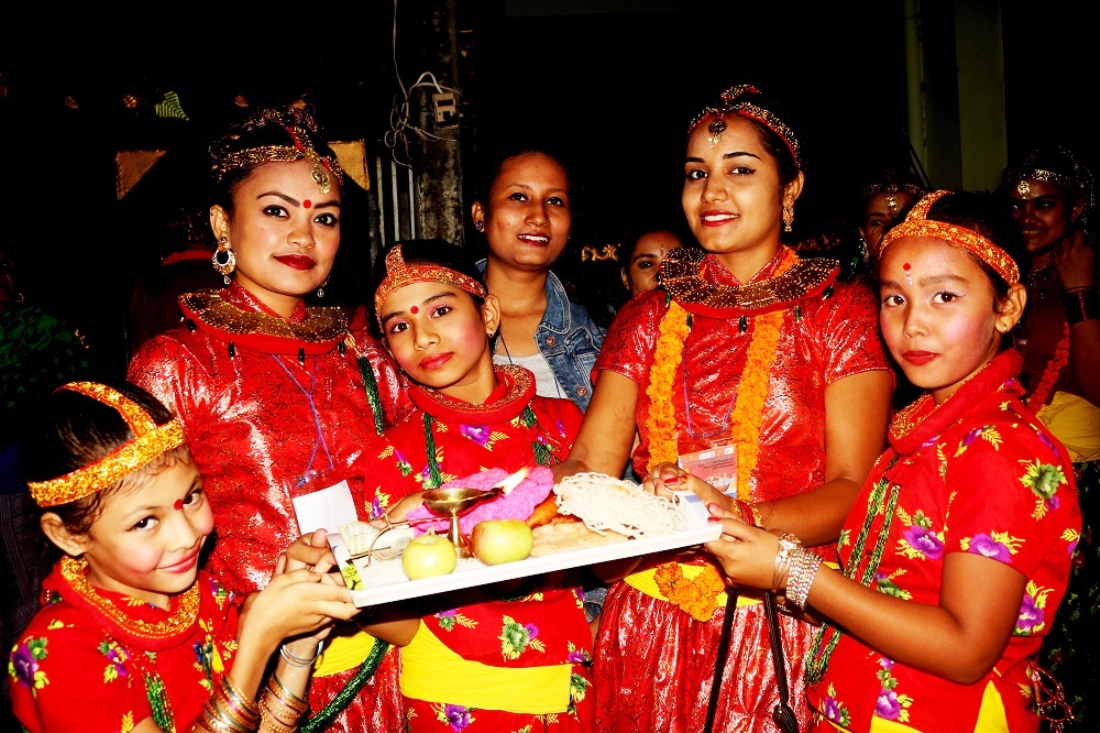
Dadeldhura. As soon as Tihar is mentioned, the scene of lighting clay lamps in the house, playing Deusibhailo in the group and resounding songs in the original folk language comes to mind. But with the recent change in the style of celebrating Tihar, the original Deusibhailo tradition of the Far West is gradually disappearing.
Locals have experienced that the charm of traditional Deusibheilo is diminishing due to the increasing attraction towards modern flickering lights, DJs and new means of entertainment and the migration and migration of young people. 70-year-old Saraswati Bhatt of Alital rural municipality-3 in Dadeldhura still remembers the old festival.
According to him, before Tihar, there was a custom of lighting up the main door of the house, the courtyard, the Tulsi monastery and the shed by lighting clay lamps. After evening, the light of the lamps and the original voice of Deusibhailo would add a special excitement to the village. She says that now the place of mataka diyo is being replaced by flickering lights and traditional speech is also less heard.
Similarly, Shanti Kunwar of Navdurga Rural Municipality-4 also remembers the collective fun of Deusibhailo. She says that there is a custom of forming a group with friends, going from house to house in the village and singing songs and giving rice, rice, corn and dakshina according to the number of families. The grain and money collected in that way were used to enjoy together with friends. He says that such traditions and collectivities are decreasing now.
According to Sudhir Jairu, a local folk and Deuda singer, earlier in Deusibhailo, local folk songs, traditional bazagaza and Bhatyaan style were given special importance. The song was used to wish for happiness, peace, prosperity and progress of the family. But now, with the increasing tendency of DJs to play modern songs and dance, the identity of the original Bhailo is getting weaker, he says.
Deusibhailo is not only a means of entertainment and collecting Dakshina but also a tradition connected with social harmony, mutual relations and cultural identity. It has been working to connect people of different age groups together in the village. Cultural expert Kailas Kumar Pandey says that although it is natural that the style of celebrating festivals changes with time, the original tradition should not be forgotten. He said that the new generation should be informed about the cultural importance of the old bhaka, bazagaza and deusibhailo, and emphasis should be placed on its practice and preservation.