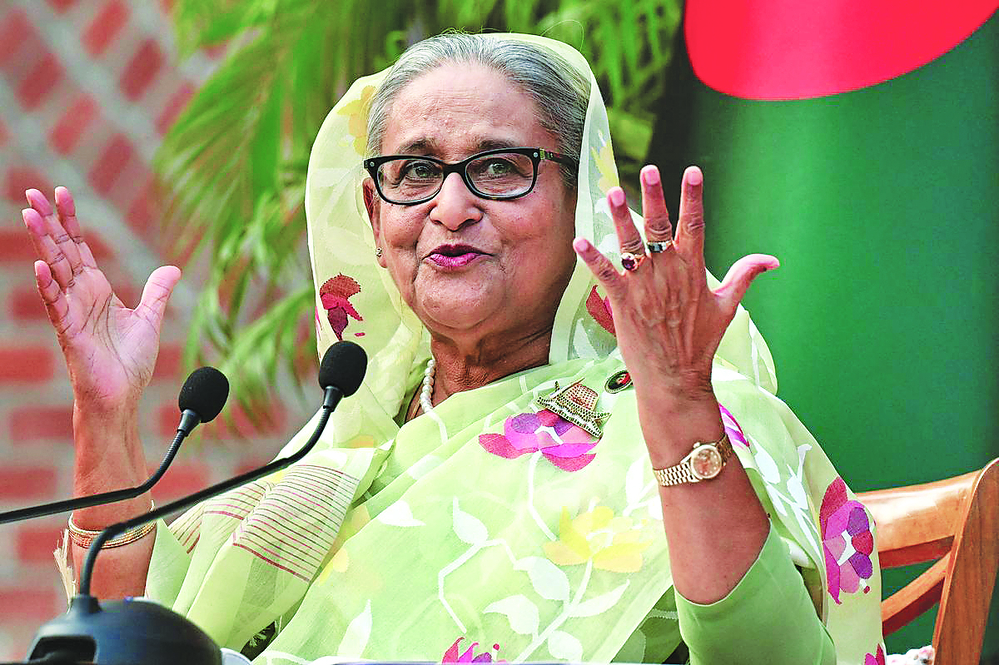
Kathmandu. Bangladesh’s former Prime Minister Sheikh Hasina’s plans to return home has brought political and diplomatic turmoil. Only a few days ago, she said in an interview with Reuters that she will return to her country by December under any circumstances.
Hasina, who is seeking refuge in India after being overthrown due to student protests in 2024, has sent a formal letter to the Bangladeshi embassy in Delhi through a London-based law firm to get a Bangladeshi passport and national identity card.
This move, which was made public for the first time after the overthrow of power, made it clear that he is preparing to return to the country next December. However, the Bangladeshi interim government flatly rejected his request.
Bangladesh’s Minister of State for Foreign Affairs Humayun Kabir termed Hasina a terrorist and a fugitive criminal and made it clear that the government will not provide passports to such people. Last year, a court ruled that he had ordered to suppress the student movement and sentenced him to death in absentia.
According to the extradition treaty with India, Bangladesh wants to bring him back to the country and bring him under the legal framework. According to Hasina’s aides, she wants to return home to surrender before the court. However, she said that she wants to return in a dignified manner and for this she needs a passport and identity card.
His party, Awami League, which has been in power for two decades and has been banned, still has supporters in Bangladesh. Therefore, there are concerns that his possible return could lead to new tensions and polarization in Bangladesh’s internal politics.
On the other hand, analysts believe that this development could take a new turn for improving the strained Bangladesh-India relations after India granted him asylum. At a time when India is considering Bangladesh’s extradition request, what effect Hasina’s future move will have on the diplomatic equation between the two countries is also being watched with interest. Reuters