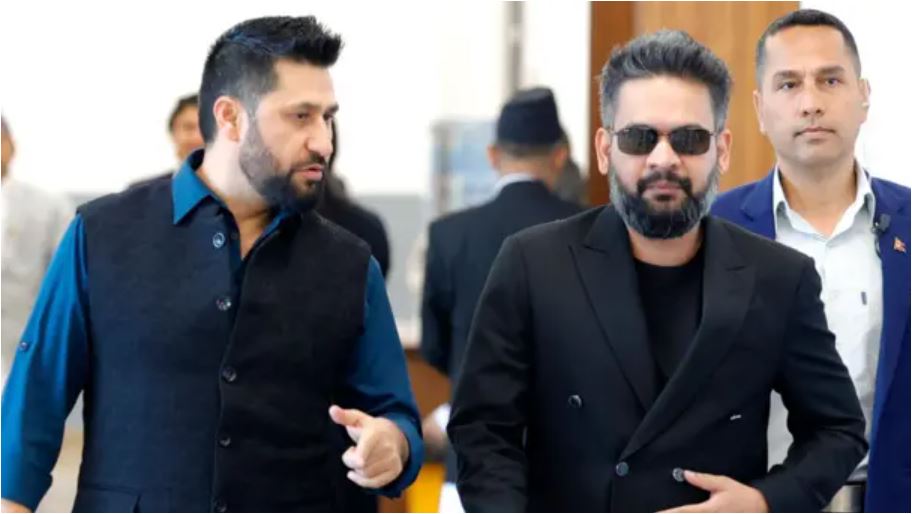
Kathmandu. The differences between Rashtriya Swatantra Party (RASWPA) Chairman Ravi Lamichhane and Prime Minister Balendra Shah (Balen) regarding the balance of power, the style of government and the role of the party have created a new political debate within the ruling party. While the Prime Minister is being accused of neglecting the direction and coordination of the party leadership in the running of the government, the senior leaders of the party have also started expressing their public dissatisfaction with the functioning of the government.
RSVP has got a mandate to run the government for five years with almost two-thirds of the popular vote. The people, who have experienced the power struggle, instability and mutual disputes of the old political parties, have given an opportunity to the RSVP as a new force with the expectation of political stability and a new political culture. However, less than nine months after the formation of the government, signs of distrust and power struggle between the party and the government have naturally become a matter of concern.
Prime Minister Balen wants complete independence in running the government, while Ravi, as party president, wants to make the government accountable to the party’s political policies, commitments and decisions. Not only Balen, but also Home Minister Sudhan Gurung does not attend party meetings regularly, which seems to increase the distance between the party and the government.
In such a situation, it is not easy for Ravi to take strong action against Balen. Because it can affect not only the future of the government, but also the organizational unity of the RSVP, its political future and the outcome of the upcoming elections. After all, why is Ravi unable to confront Balen immediately? There are five main reasons for this-
Risk of party splits and government collapse
The biggest challenge for Ravi is the potential split within the party. Turning the disagreement with Prime Minister Balen into a political confrontation risks creating two power centers within the RSVP. One might be based on the power of Center Party President Ravi and the other on Prime Minister Balen’s popularity and government power.
If the party tries to control the Balen-led government and the prime minister rejects it, factional politics may start within the party. Those who are dissatisfied with Balen’s working style may support Ravi, while another group influenced by the Prime Minister’s popularity and the working style of the government may stand in favor of Balen.
The political history of Nepal has also shown that the power struggle within the party can lead to serious consequences. From the conflict between BP and Matrika group in Nepali Congress to the group of 74 and 36 after 2047, the disagreement within the party affected the national politics itself. The UML’s dispute over the Mahakali Pact and the struggle within the Maoists over the constitution-making and the direction of the popular uprising also created a situation of party division and political instability.
The upcoming local elections and the fear of losing public opinion
Another important reason why Ravi could not take immediate action against Balen is the possible impact on the upcoming elections. The public opinion received by RSVP was not only based on the organizational strength of the party. New leadership, youth attraction, dissatisfaction with the old parties and the influence of popular figures like Balen have also contributed to the political rise of RSVP. Balen is still popular among a large section of people. His popularity has also become the political capital of RSVP. In such a situation, if Ravi Balen takes steps to remove him from the prime ministership, disobey the government or create excessive pressure on his work style, then the negative message can be sent to the public.
Especially in the upcoming local elections and subsequent political contests, there is a risk that RSVP will lose the public support associated with Balen. The people may perceive the power struggle within the party as a continuation of the style of the old parties.
RSVP has been presenting itself as an alternative to the old political culture. However, if the government becomes unstable due to the dispute between the party chairman and the prime minister within nine months of the formation of the government, public confidence in the new political power may weaken. So for Ravi to immediately sever ties with Balen could be a politically costly decision. Although he is dissatisfied with the way the government works, he is not in a position to ignore the possible reaction of public opinion.
The political impact of Balen’s popularity and international support
Another important strength of Balen Shah is his personal popularity and international interest and support for the government. The political recognition he gained as Prime Minister extended beyond the formal structure of the party. He is seen not only as the Prime Minister of RSVP but also as a symbol of change, youth leadership and new political style.
In such a situation, if Ravi tries to weaken Balen, its influence will not be limited only within the party. It can also cause a big reaction at the public level. The move to create political pressure on Balen may be interpreted by some as a conspiracy to undermine popular leadership rather than an attempt to establish control over the government.
On the other hand, the international community’s interest and positive expectations towards the Balen government may also have strengthened its political position. Ravi also has to politically consider the expectations of international partners with the new government and the possibility of expanding relations.
When making any political decision regarding international relations, national interest, diplomatic relations and stability of the government must be taken into consideration. If the conflict with Balen raises questions about the continuity of the government, it may affect the international image of Nepal. Therefore, for Ravi, challenging Balen is not only a matter of power struggle within the party, but also a matter connected with national and international political messages.
Ravi’s own legal case and political risk
One of the most sensitive aspects for Ravi Lamichhane is his own legal dispute. Controversies related to his cooperatives, government documents and passports have continuously affected his political life. A confrontation with the prime minister could further increase his political exposure while these matters are yet to be fully resolved through the legal process.
If the relationship with Balen deteriorates, the relationship between various government agencies and political mechanisms may also be affected. In such a situation, Ravi may have to face more political and public pressure regarding his legal matters. However, the legal process against any person should be free, fair and based on evidence. It is not acceptable for a democratic governance system to proceed or stop someone’s legal case just because of political disagreements.
However, in the political reality, Ravi cannot afford to ignore the risks arising from his legal situation. He may feel that his political and legal future will become more complicated if he escalates unnecessary conflict with Balen. This is the reason why even though Ravi is dissatisfied with Balen, it can be analyzed that he does not want to go to the strategy of face-to-face confrontation immediately.
Along with Balen, Sudhan’s power and influential group within the government
Another challenge for Ravi is not only Prime Minister Balen. The influential presence of Home Minister Sudhan Gurung in the government is also important. Sudhan’s role and influence in the political power balance that emerged after the Zen-Ji movement cannot be ignored. It can be analyzed that both Balen and Sudhan want independence in the administration of the government and prioritize the work of the government over the regular political activities of the party. The absence of the Prime Minister and the Home Minister in the party meeting has made the distance between the party leadership and the government more clear.
Sudhan Gurung’s return to the Home Minister’s responsibility despite various allegations and controversies being made public shows his political influence within the government and his relationship with Balen. This may have made it more difficult for Ravi to create pressure on the government. If Ravi puts pressure on Balen, the impact may not be limited to the prime minister. Another influential group within the government may also oppose it. In such a situation, there is a possibility that the dispute between the party president and the government will turn into an institutional conflict.
conclusion
Ravi is now in a state of real political crisis. On the one hand, as the party chairman, he has the responsibility to run the government according to the party’s policies, decisions and political commitments, while on the other hand, the popularity of Prime Minister Balen Shah, the balance of power within the government, the upcoming elections and his own legal challenges seem to be preventing him from taking immediate drastic measures. They cannot even leave Ravi Balen completely free, because doing so may raise questions about the political legitimacy of the party leadership. On the other hand, an attempt to control Balen or remove him from the government could lead to a split within the RSVP, the risk of losing public opinion and even the blame for political instability.