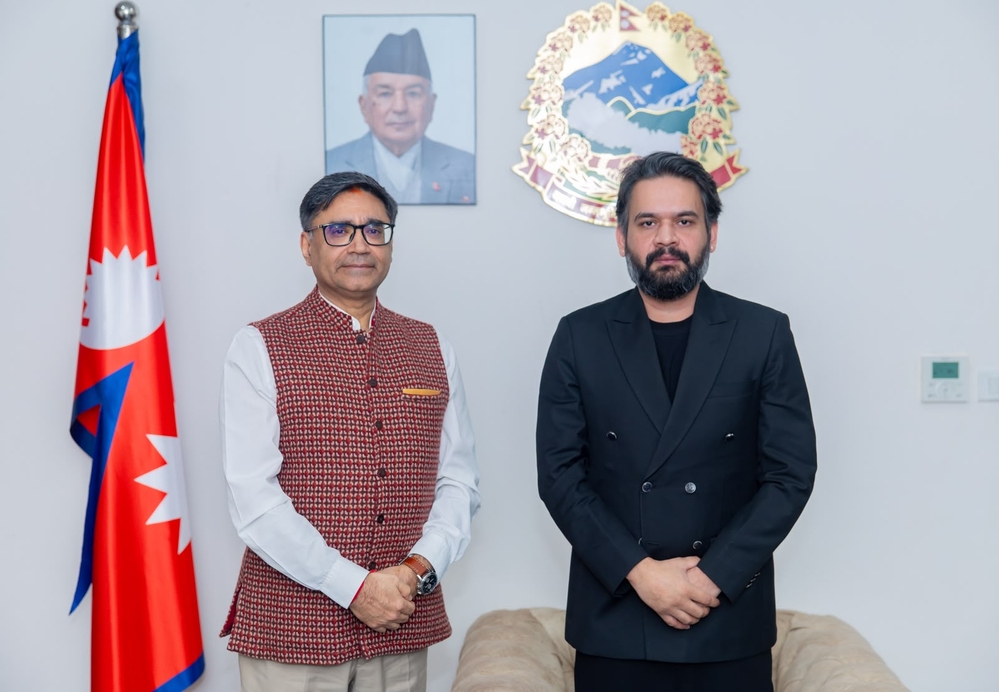
Kathmandu. Nepal and India have intensified the preparations for Prime Minister Walendra Shah’s first official visit to India. This visit is expected to give a new direction to the relationship with India for Nepal, which is looking for a balance between development priorities and long-standing geopolitical sensitivities.
Prime Minister Shah’s four-day visit to India has been proposed to start from November 6. The Prime Minister’s visit is coming at a time when Nepal is expecting huge financial support from India for post-disaster reconstruction. In addition, Nepal is also urging New Delhi to address old concerns related to air connectivity, water resources, trade and transportation. Despite repeated commitments made between Nepal and India at the highest political level, some big projects have not been able to move forward for years.
This visit is also the first opportunity for Shah, who took over as the Prime Minister on March 13, to test the government’s foreign policy priorities. In addition, this visit will also clarify whether the government can transform the political dialogue with the Indian leadership into concrete economic and strategic achievements. On the other hand, due to Nepal’s geographical location, economic dependence and strategic importance, this visit will be an opportunity for India to further strengthen its relationship with the new political leadership.
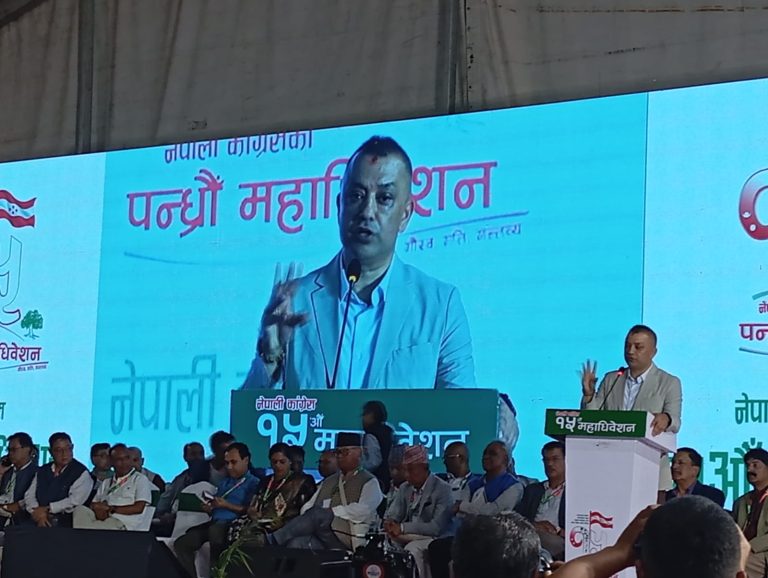
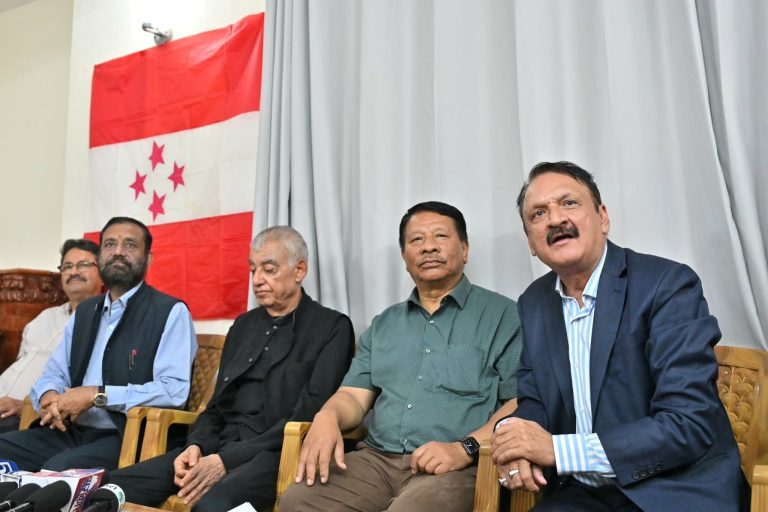
The proposed date of Prime Minister Shah’s visit to India has been decided during the two-day visit of Indian Foreign Secretary Vikram Misri to Kathmandu. During the visit that ended on Thursday, Misri met with high officials including Prime Minister Shah, Foreign Minister Shishir Khanal, Finance Minister Swarnim Wagle and Energy Minister Virajbhakt Shrestha. He also met with RSVP President Ravi Lamichhane and Congress President Gagan Kumar Thapa.
According to the proposed date, there will be a delegation-level discussion between Prime Minister Shah and Indian Prime Minister Narendra Modi on 7th November. After the talks, some important agreements are scheduled to be signed. On the same occasion, India is also expected to announce a special economic aid package for Nepal. During the visit of the Indian Foreign Secretary to Egypt, possible achievements and new initiatives were discussed regarding the upcoming visit of the Prime Minister of Nepal to India, according to a statement issued by the Ministry of Foreign Affairs.
During the visit of Prime Minister Shah, one of the main priorities of Nepal is to collect assistance worth about 3 trillion rupees (2 billion US dollars) from India. Nepal has formally offered $1 billion in concessional loans, $500 million in grants, and $500 million for reconstruction of the damage caused by Bhotekoshi and more than $2 billion in aid. A proposal has been submitted from our side. Now it is India’s responsibility to decide on this,” said a senior official of the Ministry of External Affairs.
This amount offered by Nepal has exposed the economic needs of the time after the disaster. The Bhotekoshi flood caused extensive damage to the infrastructure and also disrupted trade relations with China. His upcoming decision will be an important signal for how India is preparing to support Nepal’s reconstruction and development priorities.
During the visit of the Indian Foreign Secretary to Egypt, the Indian officials said that they are ready to consider proposals for assistance in the reconstruction and rehabilitation of Nepal. Initial bilateral discussions on this matter have already taken place, and more detailed discussions are expected during Prime Minister Shah’s visit.
According to the Nepali officials, Misri said, “The difficult situation after the Bhotekoshi flood has given an opportunity to demonstrate bilateral partnership.” He said that India will give special consideration to the reconstruction proposal, citing the huge damage to Nepal’s infrastructure. During the meeting, Prime Minister Shah praised India’s role in immediate rescue, providing relief materials and deploying rescue teams after the floods. Shah also thanked Indian Prime Minister Modi for expressing his solidarity over the phone after the disaster.
Apart from the reconstruction assistance, Nepal is seeking progress on two issues of strategic importance: getting more air access from India and advancing the long stalled Pancheshwar multi-purpose project. Since 2014, Nepal has been asking India for more air access routes for the smooth operation of Gautam Budh and Pokhara International Airports in Bhairahawa. Due to the lack of suitable international air routes, it is difficult to operate these airports at full capacity and attract international airlines.
Before Prime Minister Shah’s visit to India, civil aviation authority officials of both countries are preparing to hold a meeting within the next 10 days to decide on this matter. According to two senior officials of Nepal, although India is positive towards Nepal’s proposal, the final agreement has not been reached. Both sides have agreed to hold a technical level meeting regarding air entry permission for Gautam Buddha International Airport.
Getting more air routes for Nepal is not only a matter of civil aviation but also an issue related to the commercial potential of the international airport, expansion of tourism and overall international communication network. It also highlights the fact that Nepal’s access to the international market is geographically affected by its dependence on Indian airspace.
Another important project on the agenda of the visit is the Pancheswar Multipurpose Project. This project under the Mahakali Treaty signed in 1996 is still limited to paper after decades of negotiations. However, recently, some progress has been made between the two countries regarding the sharing of construction costs. During the discussion, there was a discussion about the possible structure where Nepal would bear 25 to 30 percent of the total cost and India would bear 70 to 75 percent. However, the dispute regarding the distribution of benefits (water and electricity) from water resources has not been resolved yet.
“The difference of opinion between Nepal and India on the cost sharing of project construction has decreased, but the main issue is the sharing of water,” said an official who participated in the discussion. It has been agreed to hold one more round of technical discussions on this matter before Prime Minister Shah’s visit. According to the spirit of the Mahakali Treaty, it is intended to finalize the Detailed Project Report (DPR). Pancheshwar project is strategically important for Nepal in terms of power generation, water flow regulation and irrigation facilities. But due to differences in the method of calculation and distribution of benefits, its progress has been stopped time and again.
Although economic cooperation and infrastructure development will be given priority in the proposed visit, there are still some sensitive political issues that are complicating Nepal-India relations. In particular, the border disputes related to Kalapani, Limpiyadhura and Susta are yet to be resolved. According to the Nepali officials, these issues did not enter into any of the talks with Egypt. However, it is expected that these topics will be included in the main agenda during the Prime Minister’s visit to India. It is a big challenge for Nepal to vigorously advance its claims related to regional integrity while maintaining constructive and cordial relations with its neighbors.
Similarly, trade and transportation are also areas of old concern of Nepal. Although India is Nepal’s largest trading partner and a major source of foreign investment, the burgeoning trade deficit is creating great pressure on Nepal’s external economy. Although these issues did not receive much priority during Misri’s stay in Kathmandu, the matter was raised in a meeting with Finance Minister Wagle and Foreign Secretary Amrit Bahadur Rai.
Nepal is heavily dependent on Indian routes for international trade and transit with third countries, which has naturally made the relationship between the two countries somewhat unequal. Although Nepal has tried to diversify other communication routes including the northern border, the use of alternative routes has not been as easy as expected due to lack of infrastructure and difficult geography.
Recently, the Bhotekoshi flood blocked Rasuwagadhi, Nepal’s main trade port with China, again exposing the vulnerability of Nepal’s cross-border supply chain. This incident has made clear the need to develop more options for trade and transportation instead of depending on limited ports. Against this background, Nepal has adopted a policy of expanding contact and cooperation with both neighboring countries without creating unnecessary geopolitical complications.
On the other hand, India also has its own strategic and economic interests in Nepal. In particular, India has been directly interested in hydropower development, cross-border energy trade, infrastructure connectivity and regional security. During the visit to Misri, the practical challenges faced by the Indian hydropower projects operating in Nepal were also discussed. It has also been agreed to intensify cooperation in energy, roads, bridges, railways, petroleum pipelines, transmission lines and expansion of digital communication.
During Prime Minister Shah’s visit to India, there is a program to jointly inaugurate and lay foundation stones of some big projects run with Indian assistance. The prime ministers of both the countries are preparing to jointly inaugurate the Nepal Police Academy at Panauti in Kavre, the border bridge at Darchula, the integrated check post at Bhairahawa and the concrete bridge over the Mahakali river. Similarly, it is expected that the joint foundation stone will be laid for the integrated check post at Dodhara Chandni, the Lower Arun hydropower project and the construction of the petroleum pipeline extending from Siliguri in India to Jhapa in Nepal.
Meanwhile, India has informed Nepal that preparations have been completed for the operation of train services between Ayodhya and Janakpur. According to Indian Foreign Secretary Misri, a successful test has already been done on the railway on Thursday. This rail link will promote religious tourism and strengthen the cultural and historical ties of the people.
The Indian side has also offered Prime Minister Shah a visit to Ahmedabad in Gujarat, apart from New Delhi. Gujarat is Prime Minister Modi’s home state. But Nepal has not yet decided on this proposal. In accordance with the policy of cutting wasteful expenses, Prime Minister Shah has instructed to make his tour team small (less than 15 people).
More than 40 bilateral mechanisms are active between Nepal and India on issues such as border management, trade, security, water resources, hydropower and communication expansion. Foreign Secretary Misri informed that the regular meetings of that mechanism have been completed recently. However, the main challenge is to quickly implement the agreements reached in those mechanisms. According to senior officials of the Ministry of Foreign Affairs, the Prime Minister’s visit to India is an important opportunity for the new government to take the relationship with New Delhi to a new height and achieve a firm commitment on issues that have not been resolved for years. From Ekantipur