
Kathmandu. Madhesh-centric parties have expressed displeasure that the Rashtriya Swatantra Party (RASWPA) has brought forward the debate on abolishing the provincial assembly in the Chitwan convention. On Thursday, they met with the Constitution Amendment Working Group chaired by Prime Minister’s Political Advisor Asim Shah and warned that the government will retaliate if the government formally moves forward with the proposal to dissolve the Provincial Assembly.
The leaders of the Madhesh party have demanded that along with the government, the National Independent Party should also make clear what their views are. These parties, who had a big movement in the Madhesh Terai for federalism, have expressed the view that the resolution of the RASPA should be postponed in a conversation with Kantipur.
In principle, even if we can agree on the restructuring of the province, the abolition of the provincial assembly will weaken the federalism, according to JSP Nepal, Janmat and Civil Liberation Party.
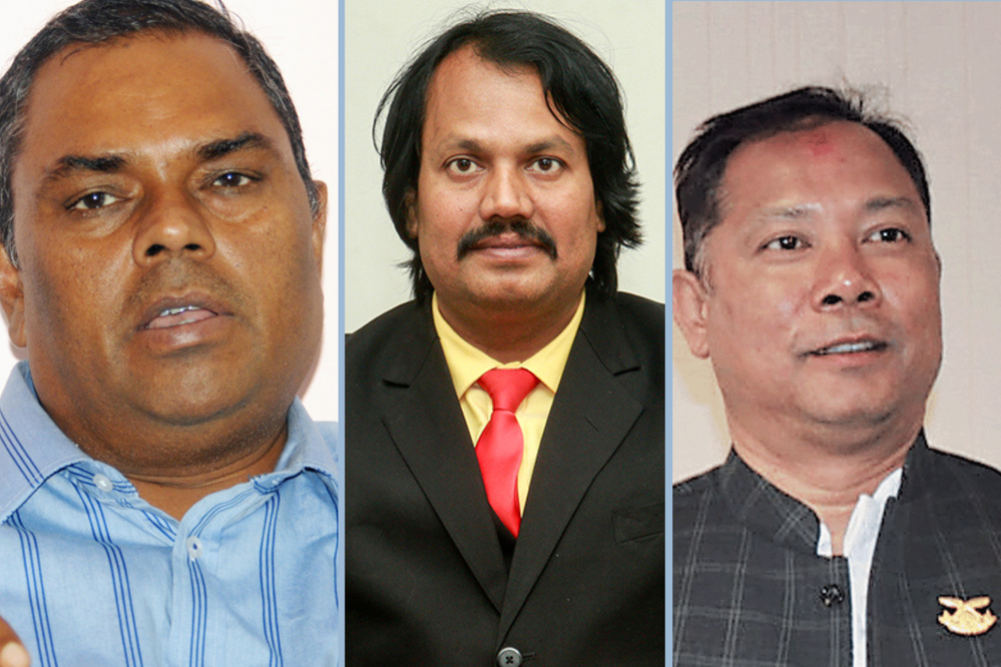
Jaspa Nepal President Upendra Yadav has said that he will retaliate if the federal democratic republic, state system and inclusiveness are attacked. He said that ‘federalism is an achievement achieved by the sacrifice of hundreds of Madhesi people’ and said that federalism cannot happen without the Provincial Assembly. Chairman Yadav said that the government’s decision will be important now that the government did not have the proposal in the RSWP convention. “We will discuss the amendment of the constitution after the government brings a concrete proposal,” he said.
Janamat Party President CK Raut said that it was political dishonesty to bring a resolution against Prime Minister Shah’s statement in Janakpur during the election assembly. “The people of Madhesh won the RSVP with the expectation of strengthening federalism, now bringing the proposal to abolish the provincial assembly is political dishonesty,” he said.
Laxmanlal Karna, a member of the Constitution Drafting Committee released in 2007 and the leader of JSP Nepal, said that provinces without provincial assemblies have no meaning. The proposal to abolish the provincial assembly is serious when the government working group is discussing to draft a discussion paper on the amendment of the constitution. Provinces cannot function without a Provincial Assembly. It will kill the spirit of the state,” he said. “The state assembly can be remodeled.”
According to the Madhesh-centric parties, the proposal to abolish the Provincial Assembly has raised doubts about the intention of the RSVP to weaken the federalism achieved by the people’s movement, armed struggle, Madhesh, Tharu, and tribal movements. They are preparing to make a common opinion as much as possible after internal discussion on the proposal of RSVP.
In the election assembly held in Janakpur on January 5, Walendra Shah said that the provinces should not go to Kathmandu to seek rights. He said that the provinces will be empowered. “You don’t need to go to Kathmandu to ask for rights, go to Pashupati and Swayambhu,” he said in Maithili language. But in order to break it, the resolution of the state assembly was proposed in the RSWP convention.
RSVP Vice-Chairman Swarnim Wagle submitted a proposal to restructure federalism along with abolishing the Provincial Assembly. His proposal was passed by the Congress as a supplementary proposal of the Chairman Ravi Lamichhane. “Directly elected Prime Minister, the system of MPs not becoming ministers, partyless local level and reducing the number of 753 municipalities by one-third, reorganization of federalism with the abolition of the Provincial Assembly, radical reform of other constitutional organs including the Judicial Council and transparent funding of recognized political parties have been introduced by the Raswapa for debate,” said Wagle’s report.
Jaspa Nepal leader Jitendra Sonal, who is also a member of the Madhesh state assembly, said that federalism was established through the movement, struggle and sacrifice of the oppressed Madhesi, tribal, Muslim, and Tharu communities, so he opposes the act of weakening it. “The provinces have an identity, the rights and the accountability of the people have been protected,” he said, “The cancellation of the provincial assembly will lead to another conflict.”
Resham Choudhary, the guardian of Civil Liberation Party Nepal, also says that one cannot even think about abolishing the federalism and provincial assembly that came from a great movement, sacrifice and sacrifice. “The model of provinces is being discussed, to strengthen it, the number of provincial assembly members can be reduced,” he said, “the proposal to abolish the provincial assembly will cause problems.”