

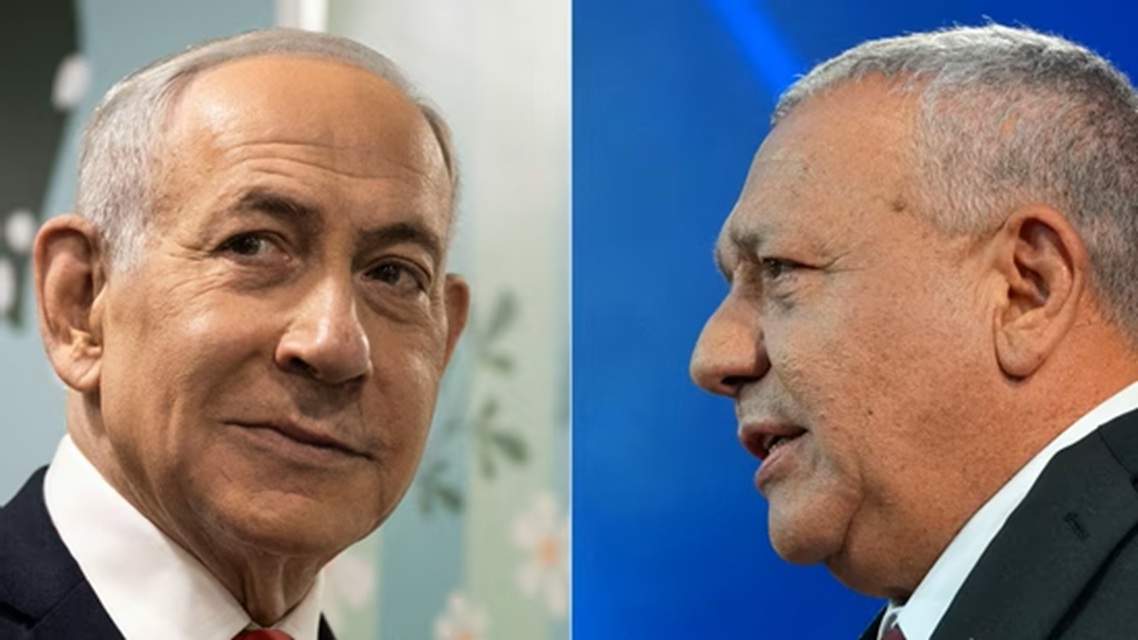
Kathmandu. In order to end the current political deadlock in Israel, the opposition parties (Change Bloc) have started discussing the issue of advancing the law to implement the direct election system of the Prime Minister. According to the Israeli media ‘Channel 12’, the opposition parties named this proposal ‘Netanyahu Model-2021’.
After the inconclusive elections in March 2021, when the attempt to form a coalition government failed, then Prime Minister Benjamin Netanyahu also put forward a similar proposal.
According to the proposal, voters will be able to elect the Prime Minister separately from the parliamentary elections. However, if there is a direct election, it has not been decided who will be the candidate from the opposition alliance. Currently, Gadi Eisenkot of Yashar, Naftali Bennett of Beyachad and Avigdor Lieberman of Yisrael Betenu have claimed for the leadership.
In Tuesday’s election, anti-Netanyahu parties won 67 seats in the 120-member Knesset. Among them, the Jewish-led “Change Bloc” got 48 seats and two Arab parties got 19 seats. Netanyahu’s outgoing coalition won 53 seats. However, no party has a clear majority to form the government.
Change Bloc sources have confirmed that discussions are underway to advance the law on direct elections. However, it is mentioned in the report that this is only one of the options under consideration and is not a final decision.
In the proposed system, the directly elected Prime Minister will be able to form a minority government without a majority in the Knesset. However, according to Israel’s Basic Law, a vote of confidence must be obtained from the Knesset before forming a government. Therefore, the implementation of the direct election system requires the support of at least 61 MPs to amend the law. It is said that with the support of the Arab parties, the opposition coalition can reach the required number.
Israel practiced a system of direct election of the prime minister in the 1990s. In 1996, Netanyahu defeated Shimon Peres and became Prime Minister through direct elections. However, Israel returned to the old system after five years saying that this system increased political fragmentation and expanded the influence of small regional parties. The last direct election for the Prime Minister was held in 2001.



