

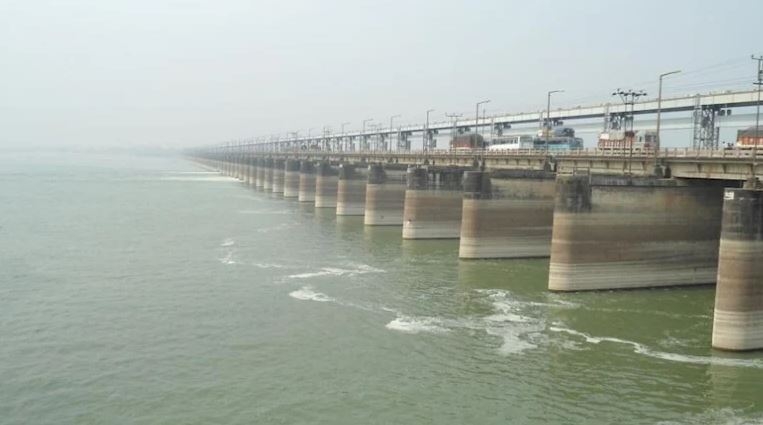
Dhaka. As the 30-year-old treaty between India and Bangladesh regarding the sharing of water in the Ganges River is about to expire on December 12, Bangladesh has taken initiatives for a new agreement. Concerns have been expressed that if the treaty is not renewed, water scarcity will increase, agricultural production will decrease and the livelihood of millions of people will be affected.
In the drought-prone Barind region of Bangladesh, the decline in the flow of the Ganges river has affected the production of rice and wheat. According to the local residents, the farmers and fishermen are in trouble after the water and fish in the river have decreased. Local resident Vikas Soren said that two farmers committed suicide after the crops were spoiled last season.
The 1996 treaty provides for the sharing of dry season water at Farakka Barrage in India. Bangladesh said that the new agreement should be based on mutual benefit and respect. Bangladesh says that India has not responded to the request for renewal of the treaty. India has said that river issues will be discussed through the Joint River Commission.
India and Bangladesh have been discussing the water sharing of 54 transboundary rivers for a long time. The proposed agreement on the Teesta River has also not been finalized since 2011.
According to Sheikh Rokan, an environmentalist from Bangladesh, in the past, when the flow of the Ganges decreased during the non-treaty period, some rivers had dried up. Due to lack of water, the area of Ganga-Kobadak irrigation project has also decreased. To reduce the water shortage, Bangladesh has launched the Padma Barrage project costing 2 billion 800 million US dollars and it also includes a 113 megawatt hydropower project.
Due to climate change, water scarcity in dry season and increased risk of floods in monsoon have further affected Bangladesh’s agriculture and riverside settlements. 50-year-old Rehana Khatun, who lost her home due to river erosion, is now living in a temporary bamboo shelter.
For Bangladesh, the renewal of the Ganga Water Treaty has become an important issue related to agriculture, livelihood and environmental balance. Concerns have been expressed that the situation may become more difficult if a new agreement is not reached in time when the demand for fresh water is increasing in both countries.AFP