

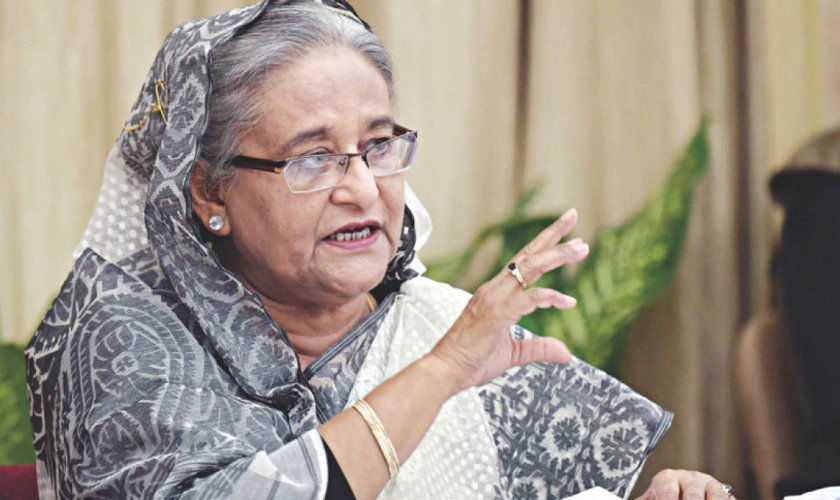
Dhaka. Bangladesh’s former Prime Minister Sheikh Hasina has said that she will return to her country on December 16 from her exile in India. However, as he was sentenced to death in absentia for crimes against humanity, he is likely to be arrested and jailed upon his return.
Hasina left Bangladesh for India on August 5, 2024, after a 15-year rule ended after a student-led uprising. He was prosecuted for his involvement in the incident in which hundreds of people died during the demonstration. Rejecting the death sentence handed down by the court, Hasina has been saying that she will fight a legal battle after returning to her country.
Abu Abdullah M Saleh, Press Secretary of Bangladesh Prime Minister Tariq Rehman, said that Hasina has been found guilty by the court and the government has asked India to extradite her. He said that the government will not change its position on this matter.
Hasina announced her plan to return to the country on Tuesday, December 16, and asked Prime Minister Rehman to make arrangements to return to Dhaka from Delhi by national flag carrier aircraft. His spokesman, Syed Mozammel Ali, has said that since he went to India on a Bangladeshi plane on August 5, 2024, the government should also make arrangements for his return journey.
December 16 is Bangladesh’s Victory Day. This day commemorates the independence of Bangladesh after the war with Pakistan in 1971. According to Hasina’s aide Abu Obaida Arin, she wishes to return to her country on this day, honoring the historic victory achieved under the leadership of her father and the founding leader of Bangladesh, Sheikh Mujibur Rahman. He also expressed the belief that after the return of Hasina, the country will move on the path of peace, stability and prosperity.
Earlier this month, in an interview with the Associated Press, Hasina said that she would return to the country in December at any cost. He said that even death could not stop him from returning home.
A prosecutor had previously said that Hasina had missed the deadline to appeal against the death sentence and that there was no legal basis to stay the sentence. Although there is a provision in Bangladesh to receive pardon from the President, Hasina has not requested for it. She has been continuously rejecting the court’s decision.
Nobel Peace Prize laureate Muhammad Yunus took over the leadership of the interim government three days after the fall of Hasina. His government banned Hasina’s Awami League party from participating in the February elections. After that, the elected government led by Tariq Rehman took over the power.
The Jamaat-e-Islami party, which supported Pakistan’s military leadership in the 1971 war of independence, returned to active politics with the February elections. Now the party has become the main opposition party in Bangladesh. During Hasina’s rule, several top leaders of this party were executed on charges of war crimes.
Hasina’s father Sheikh Mujibur Rahman led the freedom movement against Pakistan. He and most of his family members were killed during a military coup in 1975. As they were out of the country at that time, Hasina and her younger sister managed to survive.



