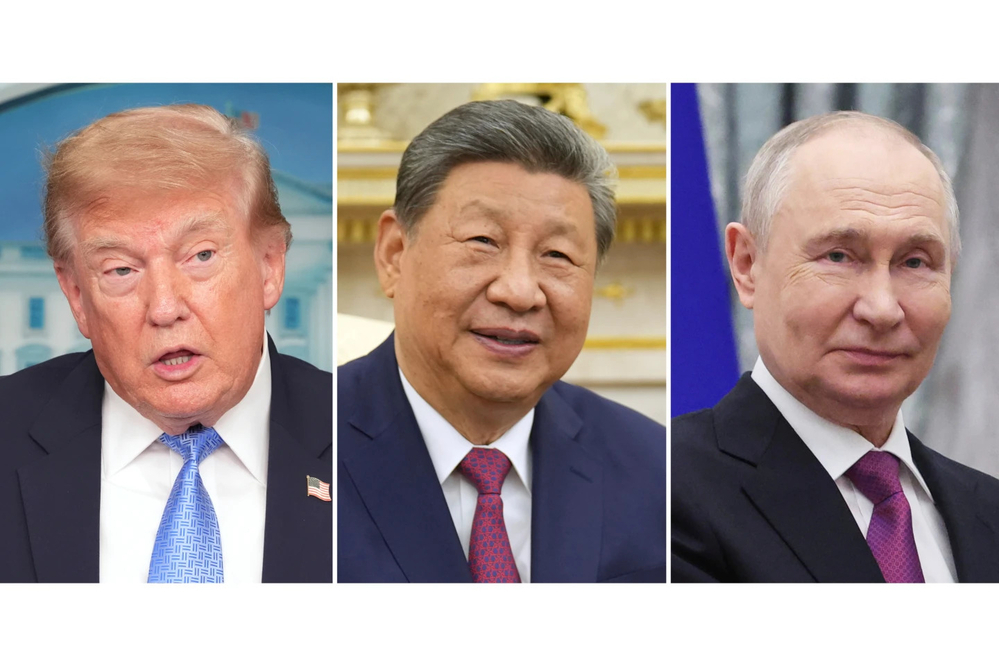
Beijing. China’s foreign ministry said on Monday that the tripartite meeting between Xi Jinping, Donald Trump and Vladimir Putin in Shenzhen, China this week will have “historic significance” and promote world peace and stability. The three leaders are going to have a sideline meeting on Thursday at the venue of the APEC conference.
The White House said last week that Trump would raise nuclear arms reduction efforts at the meeting. China has refused to discuss nuclear weapons with the US and Russia, which have the largest nuclear stockpiles.
Chinese Foreign Ministry spokesperson Mao Ning told reporters in Beijing that the heads of state of China, Russia and the United States are going to sit in a face-to-face tripartite meeting for the first time.
“They will hold deep discussions on issues of maintaining world peace and promoting strategic stability among major powers, which have historical significance,” she added.
Mao said that with the current situation, the three countries have an important responsibility to help each other to deal with global challenges and promote world peace and stability. Mao added, “It is in the interest of all three countries to have a strong dialogue between China, Russia, and the United States, manage mutual differences, and stabilize relations.”
She said that it will also meet the expectations of the international community and help to “stabilize the global situation and promote dialogue and cooperation”. Mao did not give any details about what exactly will be on the agenda of the tripartite meeting.
Speaking in Manila on Monday, UN chief Antonio Guterres said the UN is ready to support any disarmament efforts that may emerge from the summit meeting of the three countries. China has been saying that since Russia and the US have huge nuclear arsenals, it is more appropriate for them to talk directly.
The United Nations has long advocated for nuclear disarmament, warning that rising geopolitical tensions and increased competition between major power nations have increased global nuclear risks. Reuters