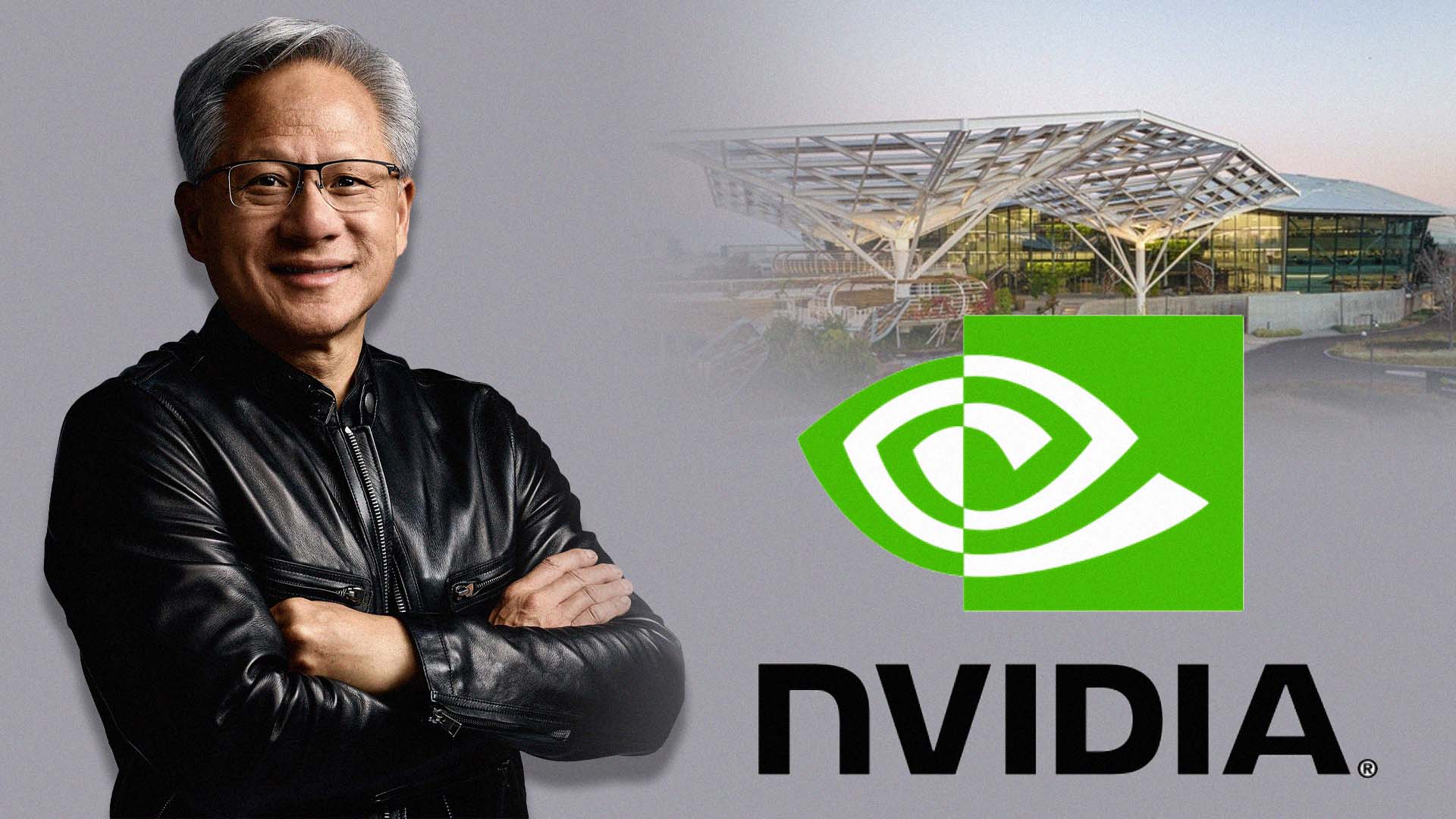
Kathmandu. Nvidia, a tech company that started in 1993 while having breakfast in an American restaurant, is today at the center of the world’s AI revolution. How did this company, which once went bankrupt, become the world’s most valuable technology company? What do you know about its founder Jensen Huang’s struggle, vision and risk-taking ability? How did Jensen, who spent 3 decades building a trillion dollar company, suddenly leave Nvidia?
Today, if you ask a question on ‘ChatGPT, Dipsik, Grok and Cloud’, create a picture with AI or any AI system analyzes millions of data in seconds, Nvidia may contribute to the technology behind it. From large technology companies to research institutes and AI startups around the world, they rely on Nvidia chips. However, this company did not start with a huge office, a state-of-the-art laboratory or an investment of billions of dollars. Its story started from a table in an ordinary restaurant in America. Sitting at the same table, three computer scientists dreamed of starting a company that would change the world’s technology industry in the future. One of those three was Jensen Huang. The other two were Chris Malachowski and Curtis Prim.

Jensen Huang was born on February 17, 1963 in Tainan, Taiwan. His father was a petroleum engineer and his mother was a teacher. His life was not easy from an early age. When he was 9 years old, his parents sent him and his brother to Tacoma in the state of Washington, USA. They stayed there with their relatives. Later, he was sent to study at Oneida Baptist Institute in Kentucky. The institution sent by his relatives thinking it was a prestigious boarding school was actually a school for disciplining troubled children. There he had to face a difficult environment, mistreatment and difficult situations.
He also performed the responsibility of cleaning the school dormitory and toilets. However, these experiences taught him hard work, discipline and self-reliance. He completed his schooling there. He then graduated from Oregon State University with a degree in electrical engineering. For higher education, he went to the prestigious Stanford University and completed his master’s degree in electrical engineering in 1992, and the foundation of his technology journey was also prepared from here.
Another interesting aspect of Jensen’s life is that, as a teenager, he worked at the restaurant that later became the story of the company he founded. At the age of 15, he started working at Denny’s restaurant in America. There he used to wash dishes, clean tables and deliver food to customers. He later said in various interviews that he worked there as a dishwasher, busboy and waiter. Saying that he can carry many cups of coffee at a time, he even remembers his old work in a funny way. Ironically, the same restaurant where he worked as a dishwasher in his youth became a witness to the biggest professional decision of his life in the future.

In the early 1990s, computer technology was developing rapidly. Especially the market of computer games and 3D graphics was expanding. However, there was a need for a powerful processor capable of creating realistic 3D scenes on a computer. Three engineers saw that possibility.
Jensen Huang then worked for a company called LSI Logic. Chris Malachowski and Curtis Prim were working at Sun Microsystems. All three of them were knowledgeable about the future of computer graphics and chip technology. They decided to establish a new company and develop computer graphics processing technology. But how to establish a company? How to run a business? Where will the investment come from? They did not have clear answers to all these questions.
At the same time, they started meeting at Denny’s restaurant in Silicon Valley, America. In 1993, sitting at a table in the same restaurant, the three decided to establish a new company. Huang himself later admitted in an interview that he did not know how to run the company. However, they had a clear idea to build a chip that would make 3D graphics more realistic and intense on a computer. “Nvidia” was born from this thinking of the three people.
Nvidia was officially founded on April 5, 1993. When establishing the company, they initially used the letters ‘NV’. It meant ‘next version’. Later, when the company had to be officially named, they started looking for words starting with NV. Finally, the name Nvidia was created from the Latin word ‘Invidia’. Invidia means jealousy or envy. Thus, an idea born in an ordinary restaurant was named Nvidia. The initial objective of Nvidia’s establishment was to develop 3D graphics technology used in computer games and multimedia. In other words, companies that power AI systems like ChatGPT today were born not from AI, but from the dream of making computer games more attractive.
Nvidia initially developed a multimedia chip named NV-1. It aimed to do 3D graphics, video and sound work from a single chip. This product, released in 1995, also gave the company an opportunity to collaborate with Sega. However, the standard of technology used for computer graphics in the market has changed.

After Microsoft introduced DirectX technology, Nvidia’s first product proved to be a poor fit for the market. Plans with Sega were also affected. As a result, the company had to face a big financial crisis. By 1996, Nvidia was almost in a state of collapse. The number of employees working in the company had to be reduced. Both the investment and the future seemed uncertain. However, Huang and his co-founders did not give up. They accepted the shortcomings of their first product and decided to change the technology based on the needs of the market. Then Nvidia focused on polygon-based graphics technology. This strategic change gave the company an opportunity to rise again. Released in 1997, the Riva 128 chip gave new life to the company. After this product became successful in the market, Nvidia found a way to secure its future.
An important achievement in building the true identity of Nvidia came in 1999. That year, the company released the GeForce 256. It was introduced as the world’s first graphics processing unit or ‘GPU’. A GPU is a special type of processor that performs complex graphics-related calculations on a computer at high speed. A normal CPU has the ability to process different types of work sequentially. However, GPUs can perform many parallel calculations at the same time. This feature made GPUs extremely useful in 3D graphics, video games, and later artificial intelligence. Initially, its main market was computer games. The use of GPUs began to increase in the work of making the scenes of the game more realistic, making the movements of the characters and the environment more vivid, and creating high-quality graphics. With this, Nvidia became an important company in the gaming industry.
However, Jensen Huang’s thinking was not limited to gaming. He made a long-term plan to develop GPU from a computer graphics device to a technology that can be used for scientific research and other complex calculations.
In 2006, the company launched a computing platform called Cuda to implement this plan. This made it easier for scientists, researchers and software developers to perform various types of calculations using the parallel processing capabilities of GPUs. Earlier, GPU was mainly used for graphics processing. After the advent of Cuda, its use began to expand to scientific research, weather forecasting, drug development, data analysis and artificial intelligence.
Its biggest feature was that Nvidia didn’t just sell chips, it also created an environment to develop software based on those chips. It connects developers with Nvidia’s technology. Gradually, a large ecosystem was created that depended on both hardware and software of the company. Today, one of the main bases of Nvidia’s market power is this CUDA platform.
Similarly, the year 2012 became another important year in the history of Nvidia. In that year, a neural network called AlexNet achieved significant success in the ImageNet competition. This proved how powerful GPU capabilities can be in deep learning technology. Nvidia GPUs were used in the development of AlexNet. GPUs were effective in teaching computers to recognize objects by processing large amounts of images. After this, researchers around the world began to increase the use of GPUs to train AI models. This was a great opportunity for Nvidia. Because, the GPU and Cuda technology that the company has been developing for years now started to connect with the future of AI. However, at that time, AI systems like ChatGPT were not yet popular worldwide. Huang continued to invest in technology development with the belief that AI will occupy a large part of computing in the future.
After OpenAI released ChatGPT in November 2022, interest in artificial intelligence increased rapidly worldwide. After that, big technology companies started competing to build their own AI models. Companies like Google, Microsoft, Meta, Amazon and OpenAI began to need a powerful computing system capable of processing huge data. A large number of GPUs are required to train and run such AI models. This is where Nvidia came to the center of the world market.
The company’s state-of-the-art chips such as H100, H200 and Blackwell became important for building AI infrastructure. As these chips can be interconnected and used in huge data centers, the demand for large AI companies has increased rapidly. Along with chips, Nvidia began developing networking technology, software, and the entire computing system needed for data centers.
This made the company not just a typical chip maker, but a major supplier of AI infrastructure. Its impact was also seen in the company’s income. According to the financial statement released in August 2026, Nvidia earned 96 billion 220 million US dollars in the second quarter of the fiscal year 2027. This was 106 percent more than the same period of the previous year. Out of that, 89 billion dollars was generated from data center alone. This shows how important Nvidia’s role has become in the AI industry.
Not only its technology, but also investors’ confidence in the future is a big reason behind the increase in the company’s market value. Nvidia’s long-term research into GPU manufacturing, Cuda software, timely investment in AI research, and relationships with technology companies around the world played an important role in its market expansion. In May 2023, Nvidia’s market capitalization exceeded one trillion US dollars for the first time. After that, the valuation of the company increased rapidly. With the increasing demand for AI, the company’s journey to cross the market value of two trillion and three trillion dollars in 2024 was also in the news.
Likewise, in 2025, its market value reached a historic high of five trillion dollars. This does not mean that the company keeps all its income in the bank and accumulates that much money. Market capitalization is the valuation based on the share price and total number of shares of the company being traded. Nvidia’s success story is therefore not just a story of one company’s financial growth. It is also an example of how a technology that started with computer gaming became the basis of one of the biggest technological changes in the world, the AI revolution.
In this way, Jensen Huang is not only seen as a successful businessman. He is also known as a leader who can predict the future of technology and work with a single goal for a long time. Another characteristic associated with his identity is a black leather jacket. He often attends public events, technology conferences and product launches wearing a black leather jacket. Under his leadership, Nvidia expanded its technology from gaming chips to supercomputing, scientific research, automated vehicles, robotics and generative AI.
In 2017, Fortune declared him the best businessman of the year. Similarly, in 2019, Harvard Business Review gave him the first place in the list of the best CEOs in the world based on his performance throughout his tenure. However, his leadership journey has now reached a new stage. According to a statement issued by Nvidia’s board of directors on November 12, 2026, Jensen Huang has resigned as the company’s president, chief executive officer (CEO) and board member with immediate effect.

Following his resignation, the company’s executive vice president and chief financial officer, Colette Kress, has been assigned the role of interim CEO. She will continue to hold the responsibility of CFO. The company is looking for internal and external candidates for permanent CEO. With Huang’s exit, Harvey C. Jones has been appointed as the first chairman of the company’s board of directors. In the background of Huang’s resignation, news about his personal relationship and controversies linked to national security interests came to light.
The news of his relationship with Alice Huang, a former executive of Singapore-based data center company Megaspeed, was published. He was also suspected of having a relationship with the Chinese intelligence agency. However, the US Department of Justice has not made public the conclusion that the espionage charges against Ellis have been confirmed. Similarly, the news of Huang’s alleged relationship with Nvidia’s vice president, Kimberly Powell, was published. The board of directors of the company had earlier said that it had launched an independent investigation. However, a direct link between personal relationship allegations and national security risks has not been established.
Overall, the dream of three engineers sitting at a table in an ordinary restaurant 33 years ago has today reached the center of the world’s AI infrastructure. Jensen Huang’s personal leadership journey has entered a new phase with his resignation. However, the question of how the future of the company he founded will move forward has become important for the global technology industry.