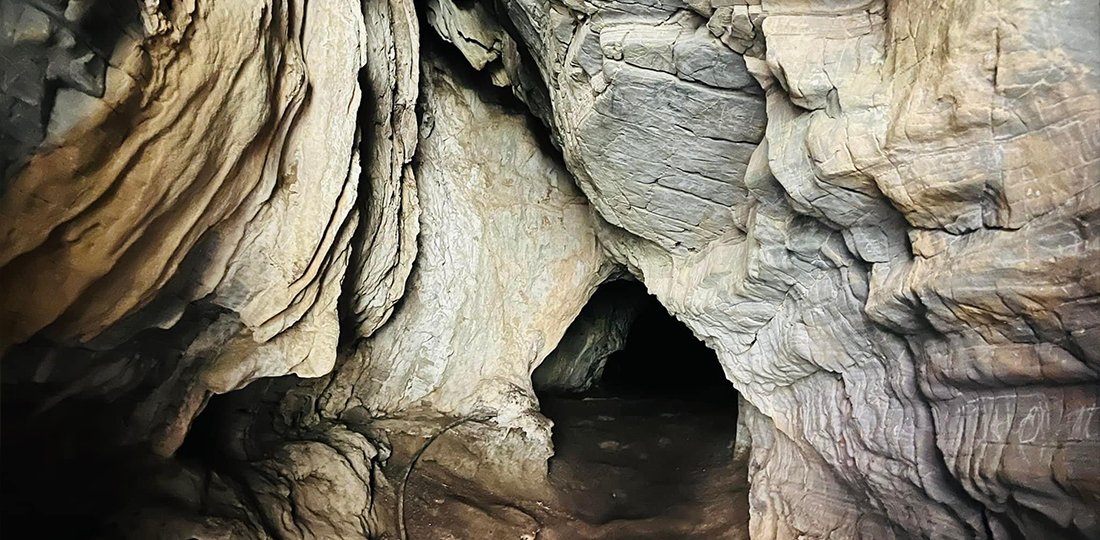
Rasuwa “Sita Gufa” i.e. “Sangtormo” which has historical and religious significance in Gosainkunda rural municipality-6 Bokezhunda of Rasuwa is getting dilapidated due to lack of protection.
Located on the old main road, about 30 meters below the Pasanglhamu highway, which is five kilometers away from the headquarters Dhunche, the cave was covered by bushes and became a ruin due to the lack of attention of the relevant authorities.
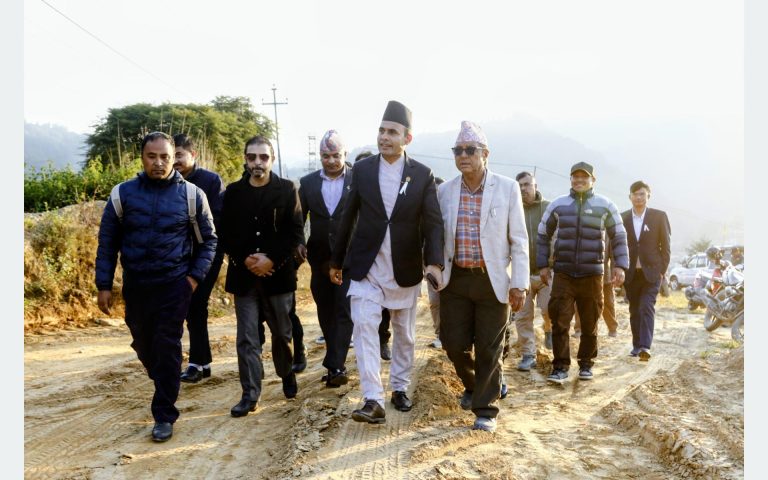
Before the Pasanglhamu highway was built, people used to travel through this old Goretto road. Locals say that although the road has been closed to traffic, the old roads still remain.
According to the local teacher Ramgyalbo Ghale, this was the main route of the Bensi river to exchange salt from Bhot (Tibet) in ancient times.
I have walked this road many times before I know it. The then king Birendra also walked through this road”, Ghale said, “After the construction of the highway, the old road became deserted and the cave also became overshadowed”.
The name of this cave called ‘Sangtormo’ in Tamang language is connected with Buddhist beggar (Ani). According to local expert Ghale, this cave is not related to Sita of Ramayana, but to Sita who came to do penance in search of peace following Buddhist (Lama) scriptures.
There is a legend that in ancient times, three beggars, Dolma, Sonam and Sita, the disciples of Guru Rimpoche, sat in this cave and did meditation and penance. Nathrik, the elder here, says that after meditation, they used to sit at the head of the cave to bask in the sun and bless the devotees who came to visit.
Ghale informed that letters written in long script can still be seen on the smooth stone wall as if sloped inside the cave. According to him, materials such as dhiki, halo, odan, mandro used by the nuns at that time are still preserved around the cave.
The history of the Rana period is connected with the naming of Bokejunda, where the Tamang community resides. During the time of Janga Bahadur Rana, while going to Gosainkund, his army killed a tiger found on the way and hung it on a 500-year-old champ tree there. Locals say that initially it was called ‘Baghjhunda’ but later it became ‘Bokejhunda’ due to corruption in the colloquial language.
Ghale informed that the historic Champa tree fell on its own on June 6. In the same place, the inscription mentioned Vyhora, which is at a distance of 19 koshas from Hanuman Dhoka in Kathmandu, is still alive. In this area, which is 113 km from Kathmandu, the local residents have migrated to the side of the highway after the earthquake of 2072 destroyed the old style houses.
After the formation of the local government, although it is expected that the original culture, agriculture and historical heritage of the village will be protected, no one has shown any interest, complains the local fish farmer Luang Galbo Ghale.
“It is said that Singha Darbar has come to the village, but no one has paid attention to the preservation of such historical heritage”, he said.
After the government authorities blocked it, a group of seven youths under the leadership of local teacher Ram Ghale planned to clean the cave, uproot the bushes and preserve it for future generations by promoting its importance.
Locals believe that if this cave, which is about one and a half kilometers below Chhangamdevi, the center of religious faith, can be protected, local and foreign tourists can be brought in and jobs can be created at the local level.