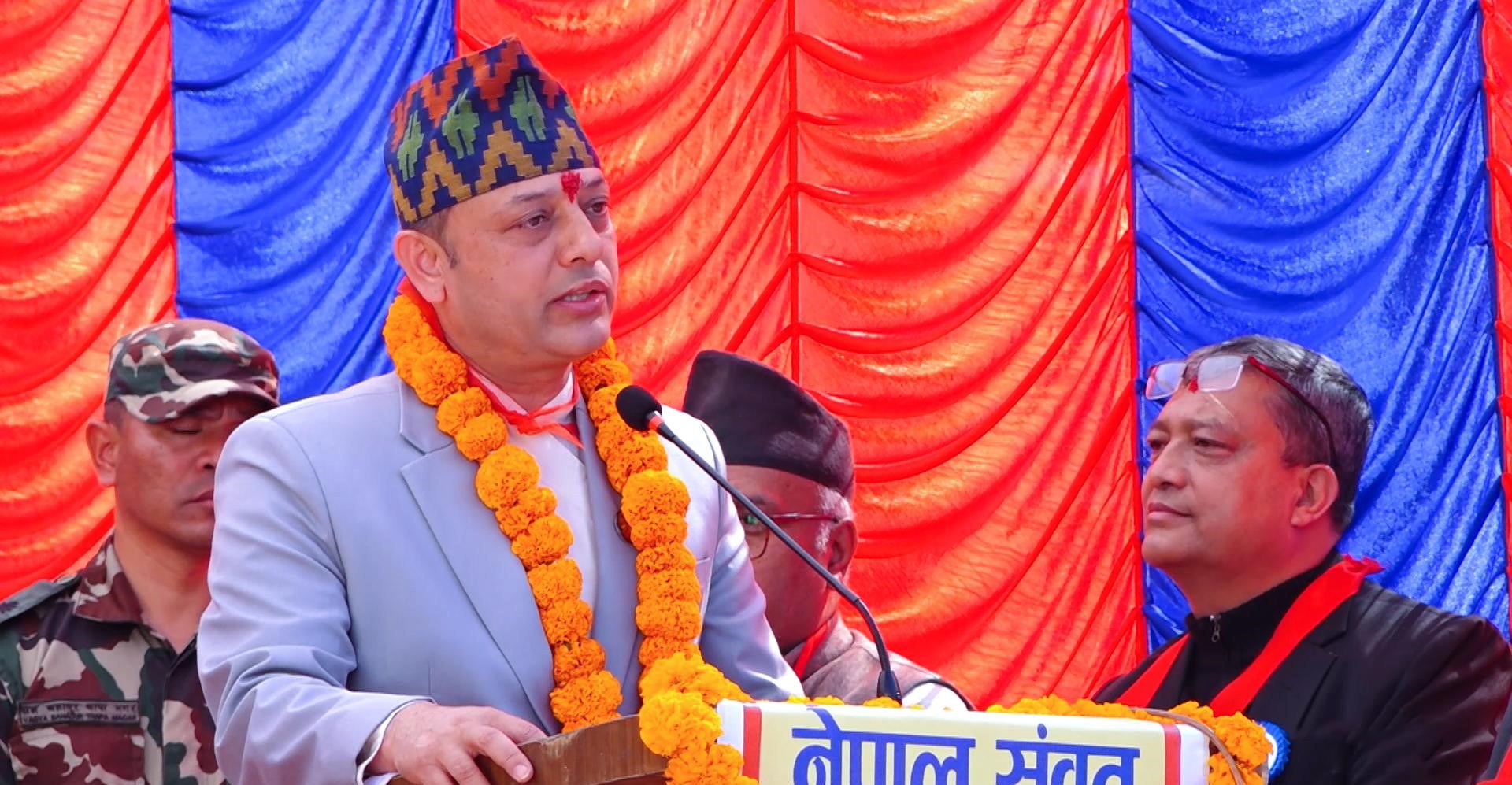
Kathmandu. Speaker Dol Prasad Aryal has said that ‘Nepal Samvat Movement’ is an important chapter of Nepal’s democratic and cultural movement.
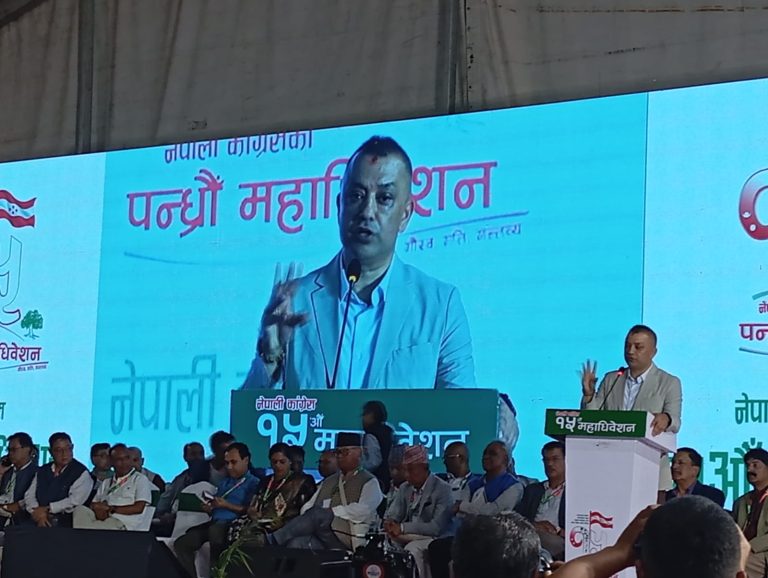
Addressing the program organized by Nhund National Celebrations Committee today at Vasantpur Dabli on the occasion of Nepal Samvat 1147 (New Year), he recalled that the Nepal Samvat campaign raised an important voice for the rights of language, culture, script and identity during the Panchayati regime.
“Declaration of Shankhadhar Sakhwa as a national monument, recognition of Nepal Samvat as National Samvat and the decision to mention it in government documents are important achievements of this movement”, Speaker Aryal said, “now it is necessary to implement these achievements in practice and expand the use of Nepal Samvat in government offices, educational institutions and public bodies.”
He said that the multi-racial, multilingual and multicultural identity accepted by the Constitution of Nepal is our national strength and he said that Nepal Samvat is not the property of any one community but the common national heritage of all Nepalis.
Pointing out the need for the active role of both the state and the society in the protection and promotion of the Nepali language, Ranjana script and the overall original cultural heritage, Speaker Aryal said that its long-term preservation will be possible only if the use of Nepal Samvat can be expanded in education, research, technology and daily life by connecting this campaign with the new generation.
“Nepal Samvat is not only a time-counting character, it is an important heritage of Nepal’s historical civilization, cultural pride and national identity”, he said.
Mentioning that the beginning of Nepal Samvat is connected with the public welfare contribution of National Bibhuti Shankhadhar Sakhwa, Speaker Aryal said that by freeing the people who were in debt, this Samvat which he established gave a message of social justice, philanthropy and collective welfare. “His contribution is not limited to any one community but is exemplary for the entire human society”, said the Speaker.
Stating that the historical, social and cultural significance of Nepal Samvat is deeply connected with the way of life of Nepal Mandal, he said that it has been playing an important role in the continuity of festivals, fairs, rituals and traditions of Nepal.
Bagmati Province Chief Minister Kiran Thapa informed that the Bagmati Province government has been using Tamang and Nepalese languages in government work. He clarified that the provincial government has allocated budget for the establishment of Shankhadhar Sakhwa Foundation in 13 districts of Bagmati province and for the development, protection and promotion of Nepali language.
Minister of Energy, Water Resources and Irrigation Virajbhakta Shrestha said that the promotion of Nepali language and national recognition of Nepal Samvat could be achieved due to the movement by the leaders of Nepal Language Struggle Committee.
Sunita Dangol, the Acting Chief of Kathmandu Metropolitan City, said that although there has been a voice that this Samvat should be recognized as National Samvat since 1100, exactly 47 years ago today, Nepal Samvat has been recognized as National Samvat only by the republican government.
“Even though the Nepalese language movement has been around for five decades, this movement is still moving forward as a reflection of this cultural and political awakening, even today it has its justification”, she said.