Myagdi. Kalpana Shrestha of Beni Municipality-7 Mangalaghat is now interested in making zinnias. As the demand for zinnias increases as Tihar approaches, she has hired one worker to produce them. Children are abroad.
So she and her husband make and sell zinnias during festivals. Kalpana says that during Dasain and Tihar, she earns three to four lakh rupees by selling zinnias.
The demand for zinnias is high during Tihar. That’s why we are producing with only one worker,” she said. “Zinia is sold from Beni market, rural areas of Myagdi, mountains, Baglung to Pokhara.”
Like Kalpana, the family of Hem Bahadur Pun of Mangalaghat is also busy with zinnia production. 10 members of his family are engaged in making zhiniya daily. According to Pun, zinnias equivalent to one sack of rice flour are produced daily.
He says that the demand is high during Dasain-Tihar, so all members of the family work together to produce. According to him, zinnias are sold for two to three lakh rupees during the festival.
Besides the Beni market, the demand for zinnias also comes from Pokhara. If we can produce, there is no problem of sale,” he said. “For the last two months, 10 members of the family have been engaged in making zinnias.”
As the festival of Tihar approaches, the trade of the traditional dish Zhiniya Roti has increased in the Beni market of Myagdi. The entrepreneurs here, who are producing zinnias targeting the festival, have the opportunity to produce according to the demand. They are busy making zinnias by mobilizing labor along with family members.
Zhiniya is also known as Jhilinga Roti, one of the original Nepalese dishes. This dish made from rice flour is specially used during Tihar. As it is attractive to look at, tasty to eat and can be easily prepared and eaten, the demand for it increases as Tihar approaches.
Taksara Rana of Beni Municipality-7 says that zinnia roti is used to exchange intimacy between brothers and sisters and to entertain guests during Tihar. She has been making zinnias for the past 25 years.
“Because it is a traditional culture of making zinnias, we could not leave it,” she said. Other women and sisters will also be inspired.
According to Taksara, the demand for zinnias comes from Beni market as well as rural areas of Myagdi and Pokhara. She says that demand is also coming from abroad. Two years ago, there was a demand for zinnia worth Rs 25,000 from Australia. However, she said that she could only send Rs 13,000 as she could not produce as per the demand.
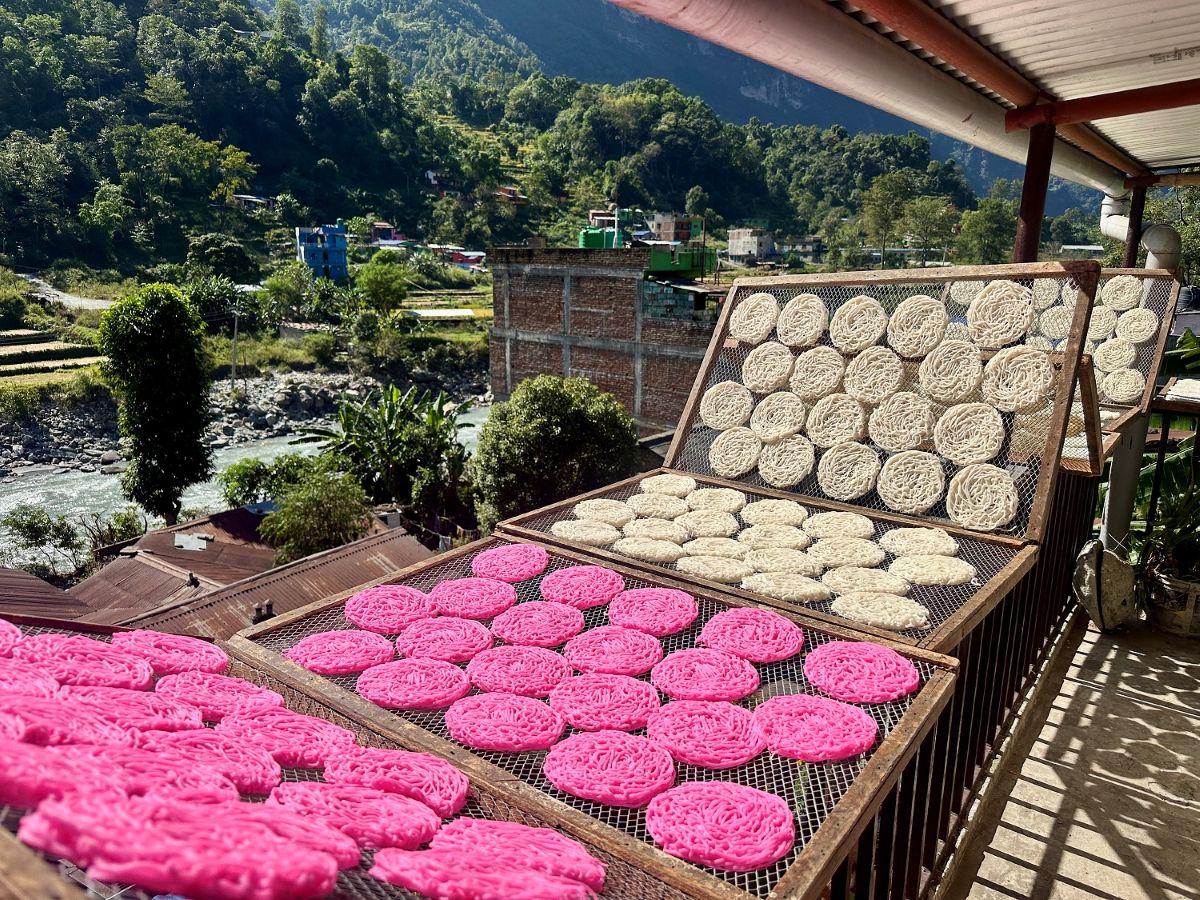
To make zhiniya, after cooking the rice flour and grinding it in a machine, the tyandra is made like a noodle. Zinnia is prepared after drying it in the sun for two days. Kalpana Shrestha of Mangalaghat has been making zinnias using an electric machine.
At least three people are needed to produce zinnias. Entrepreneurs say that three people can make more than 350 zinnias in a day. Prepared Zinnia can be fried in ghee or oil. Currently, the price of 12 zinnias in the market ranges from 140 to 150 rupees.
According to Bel Bahadur Katuwal, outgoing president of Myagdi Chamber of Commerce and Industry, there are about 20 zinnia entrepreneurs in Mangalaghat alone. As Tihar approaches, most of them are busy with production.
The Consumer Committee reiterates that zinnia is a tasty and easy-to-prepare dish that increases its demand during festivals. He says that it is difficult to make it at home, there is a fear of spoiling it after it is made, but consumers buy zinnias because it is easy to take as koseli.
It is customary to take zinnias as koseli when visiting relatives during festivals. It can also be used as a snack. It has become an easy dish even for busy families as it can be fried in ghee or oil and eaten immediately.
Zinnia production has given local women an opportunity to earn income by utilizing the time spared from household work. Entrepreneurs say that the income from this has helped them to run their household.
However, there are also some problems to increase production and manage the business. According to Xinia entrepreneur Harikumar Shrestha, business can be made easier if necessary machines, training and safe storage equipment are arranged for production.
Thus, preserving the traditional flavor of Tihar, the entrepreneurs of Mangalaghat have also made zhiniya a means of income. The increased demand during the festival has given them both busy months and income. -Rasus