
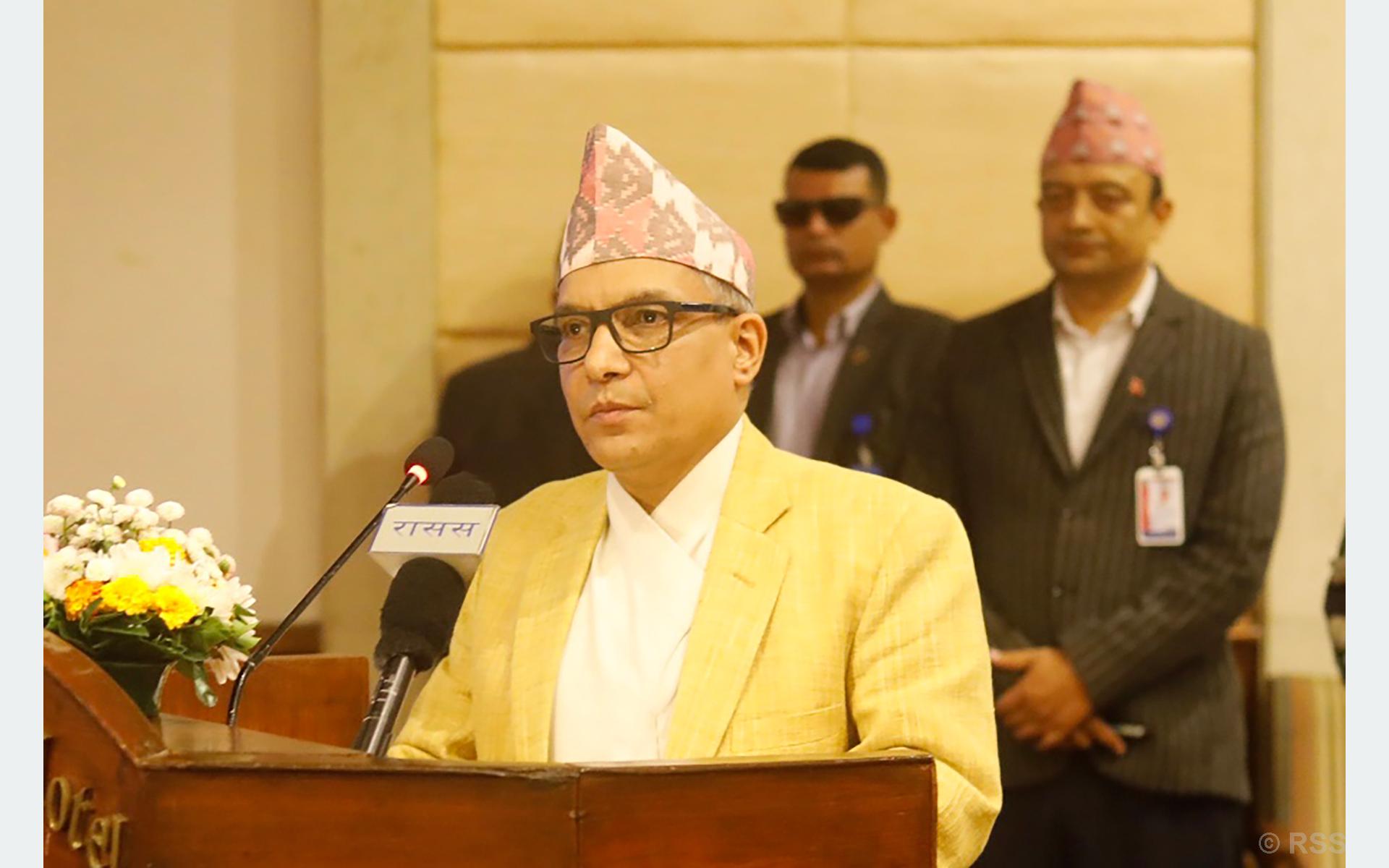
Kathmandu. Chief Justice Dr. Manoj Kumar Sharma has said that people’s faith in the judiciary will increase only if access to justice is made easy and effective. In the ‘Dialogue on Access to Justice’ program organized by the Supreme Court today, he said that only if an environment is created where citizens can get justice easily, trust in the court will increase.
He mentioned that since access to justice is a constitutional right, it is the common responsibility of everyone to ensure it in practice. Emphasizing that the justice system should be made more inclusive, accessible and citizen-friendly, he said that only if the citizens can get the protection of their rights and judicial remedies easily, the actual implementation of the constitutional rights will take place.
Chief Justice Sharma clarified that access to justice is not only the opportunity to go to court or register a case, but also to understand the judicial process, to participate effectively in it, to state one’s case fearlessly and to receive justice within a reasonable time. He informed that the Judiciary’s fifth five-year strategic plan 92081-860 prioritized access to justice, judicial governance and improving service delivery.
Chief Justice Sharma said that services of salaried lawyers, legal aid, simplification of judicial process, use of information technology and customer-friendly system should be made more effective. He emphasized that disability-friendly physical structures, accessible information and communication systems, sensitive human resources and procedural facilitation should be kept as institutional priorities.
Stating that access to justice is not the sole responsibility of the judiciary, he said that the rights and dignity of citizens should be protected at all stages, from criminal investigation to prosecution, legal representation, execution of justice and execution of judgments. He said that coordination between investigating agencies, government lawyers, legal professionals, relevant ministries and civil society can make the justice system more accountable.
Narrating his experience of working as the chairman of the Access to Justice Commission in the past, Chief Justice Sharma said that the problems of access to justice are not limited to the lack of legal system but are also linked to the social conditions of citizens, institutional behavior, procedural complexity and the effectiveness of service delivery. Mentioning that economic poverty, geographical remoteness, language difficulties, social differences and lack of information create barriers to access to justice, he said that people with disabilities have to face more difficulties.
Chief Justice Sharma mentioned that suitable facilitation, accessible infrastructure, communication support including sign language, simple information system and dignified service flow are necessary for people with different needs. He said that formal equality will be transformed into real equality only if the judicial process can be facilitated according to the individual’s situation. .