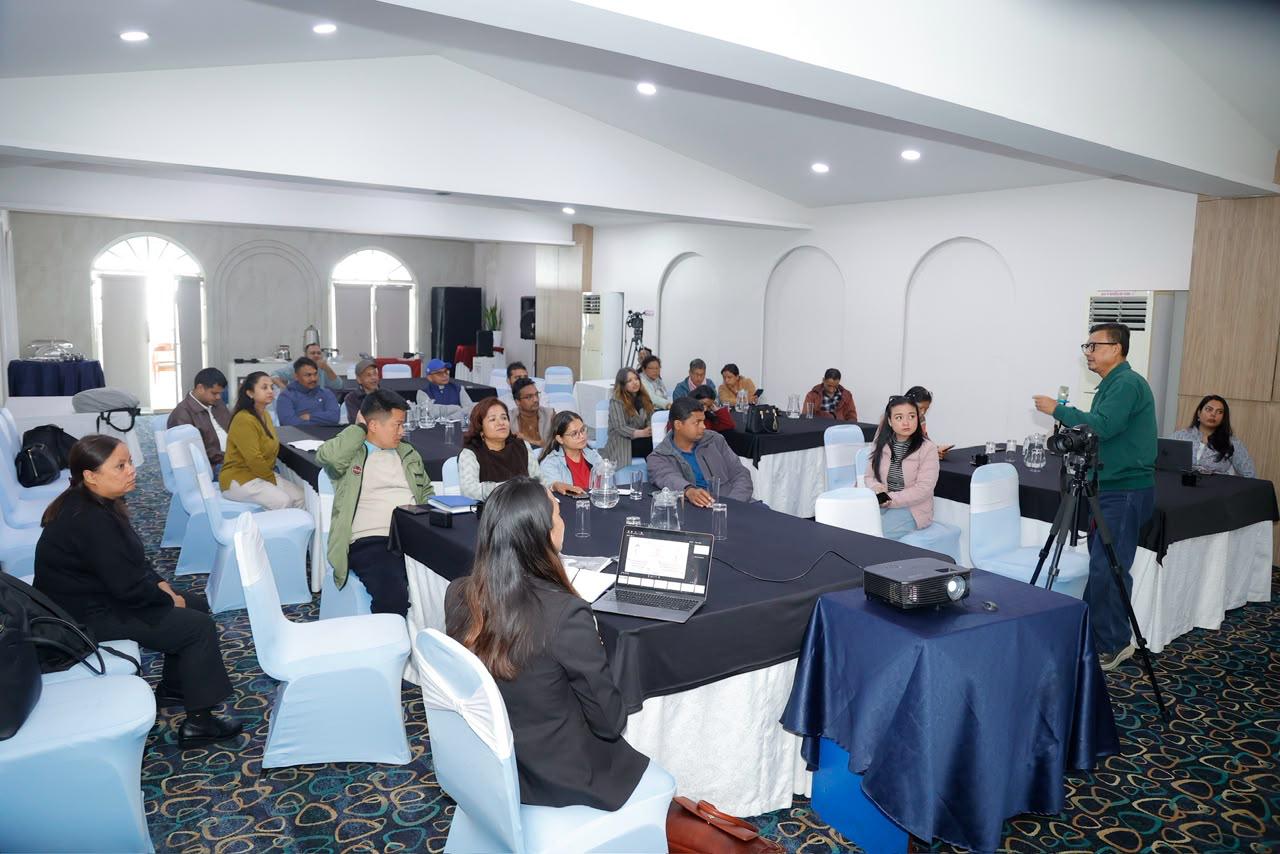
Kathmandu. It has been pointed out that further improvements are needed in the proposed bill on sexual violence prepared by the Ministry of Law, Justice and Parliamentary Affairs. In an interaction program with media persons jointly organized by Women, Law and Development Forum (FWLD) and Equality Now on Monday, suggestions for amendments were presented saying that various provisions of the Bill are insufficient.
Presenting an advocacy letter on sexual violence in the program, Didriksha Singh, advocate of FWD, said that the proposed bill should be improved in five main areas. According to him, amendments are needed in the definition of coercion, definition of consent, exceptions related to close age group, marital rape and limitation provisions.
In the bill prepared by the Ministry of Law, Justice and Parliamentary Affairs, a system has been proposed to consider sexual relations based on disagreement between sexual and gender minorities as rape. However, it has been suggested to modify it in line with the UN Model Rape Law 9 UN Model Rape Law.
The advocacy letter mentions that equal legal protection should be provided to all people without discrimination on the basis of gender or gender identity and non-consensual penetration of a sexual nature using any part of the body or any object in the vagina, anus or mouth should be defined as a crime.
Similarly, it has been suggested that consent should be defined as a voluntary and clear acceptance given by free will. It is said that the provision that consent cannot be presumed based on the victim’s silence, non-complaint, past sexual history, profession or relationship should be clarified in the law.
It is also suggested to amend the wording of ‘not being conscious’ in section 219 920 9B0 of the bill to clearly include the state of unconsciousness, sleepiness and inability to give consent due to alcohol or drug consumption.
In case of consensual sexual relations between teenagers under 18 years of age, it is mentioned in the advocacy letter that there is a need for improvement in the proposed system of determining the punishment based on the age difference. In the proposed bill, it is proposed to be imprisoned for up to one year in case of consensual sexual relations between teenagers with an age gap of two years or less.
Instead, it has been suggested that consensual sex should be completely out of the scope of the crime when both teenagers are at least 14 years old and the age difference between them is not more than two years. However, it is proposed that cases of fear, threat, temptation, exploitation or abuse of power and authority should be kept under the scope of severe punishment without being included in such an exception.
It has been suggested that the proposed system should be modified in the matter of marital rape. In the bill, it is proposed to be imprisoned for three to five years if the husband commits coercion to the wife while the marital relationship is still going on. However, regardless of the marital status, marital rape should be given the same legal definition and punishment as other rapes, according to the advocacy letter.
Similarly, it has been suggested that the statute of limitations should be completely abolished in order to ensure the access of victims to justice in cases of rape and to prevent criminals from escaping legal action.
Noting that a large number of victims of sexual violence do not go to file a complaint, FWD Executive Director Advocate Savin Shrestha said that if all the five issues pointed out in the proposed bill are amended, it will be a comfortable environment for the victims to file a complaint.