turn away Agriculture, Forestry and Environment Minister Geeta Choudhary has expressed her commitment to strongly raise the issue of rights, identity, culture and traditional protection of tribal communities affected by climate change in the national and international forums.
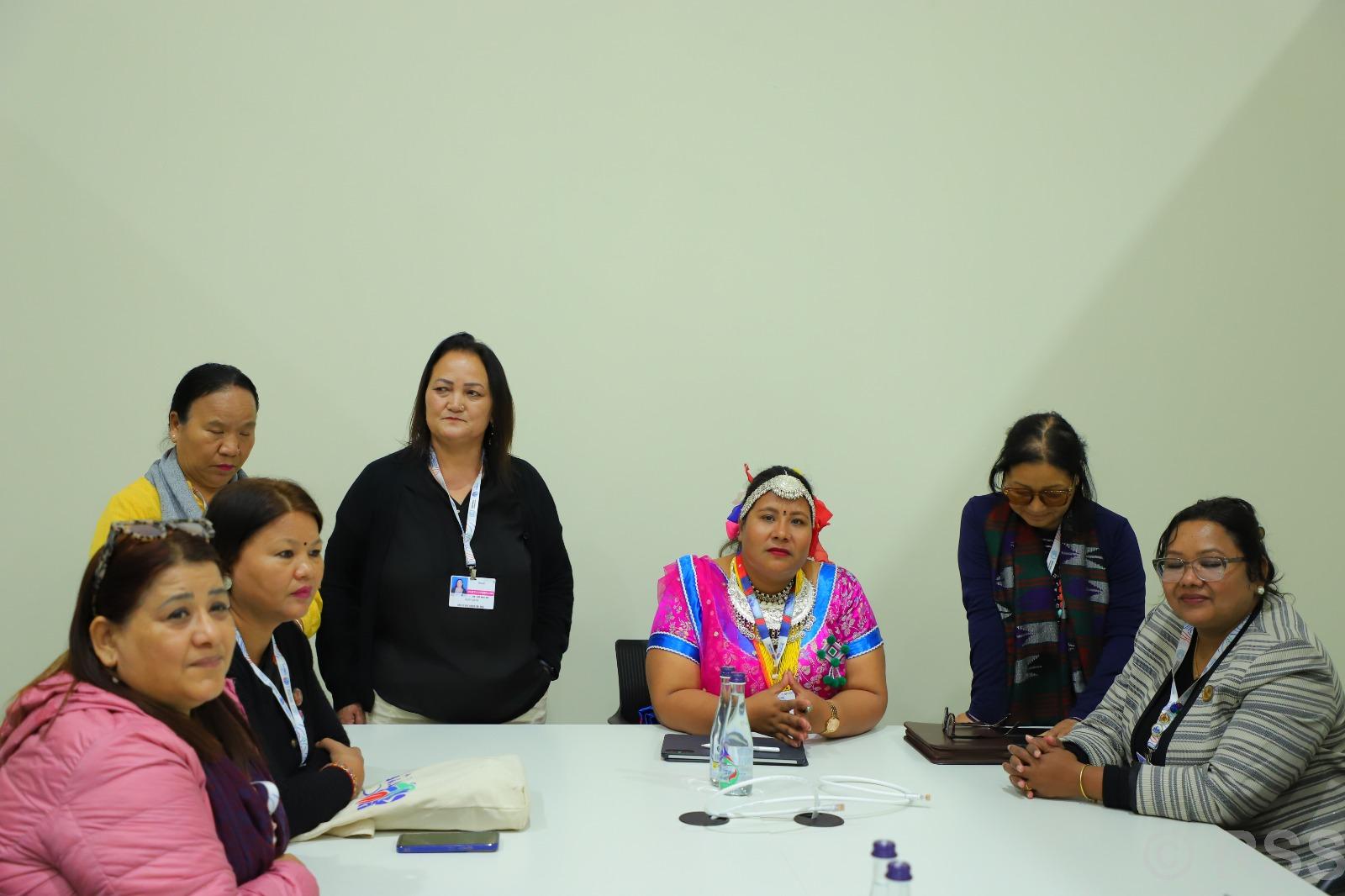
In a discussion organized by the Federation of Nepalese Tribal Tribes regarding COP-31, Minister Chowdhury said that climate change and natural disasters impact on tribal community’s livelihood, culture and traditional lifestyle should be included in the climate adaptation and development plan.
Mentioning that she got the responsibility as an achievement of the movement and struggle for inclusion of the tribal community, she said that she is committed to raise the issues of the community. Requesting that the topics and suggestions to be raised in international talks and high-level meetings be made available on time, she also promised to include those issues in her speech and talks.
The tribal activists and representatives participating in the discussion demanded that the issues of rights, culture, traditional land and livelihood of the communities affected by climate change should be covered with priority in the international climate negotiations and decision-making process including COP-31.
They said that even though the impact of climate change in the Himalayan region is intensifying, the issues of tribal communities that are most affected by it have not been sufficiently raised on the international stage. They also emphasized that the situation of the communities affected by the recent Rasuwa-Bhotekoshi disaster, the protection of their ancestral lands and cultural heritage should be kept as a priority in Nepal’s climate talks.
In the discussion, Abhishek Shrestha, advisor to the Minister of Forests, informed that Nepal and Bhutan have jointly advanced the matter of limiting the increase in temperature in mountain areas to 1.5 degrees Celsius in the process of the United Nations Framework Convention on Climate Change (UNFCCC).
According to him, the initiative includes the establishment of a mountain action program, continuation of high-level political discussions at the United Nations forum, scientific research on temperature rise in the Himalayan region, mitigation of its effects and ensuring climate justice for the tribal communities living in the Himalayan region.
The participants emphasized that when Nepal raises the issue of the Himalayan region in the international forum, it should also present the issues of indigenous tribes, women, youth and disabled people in an integrated manner.