Kathmandu. Director Dhiraj Rajvanshi is coming to the audience with his debut directorial film ‘Himalayan Gold’ from this 4th of November. After studying film direction and producing in Los Angeles, he returned to Nepal and worked as a chief AD in the film ‘Khusma’. After reaching Rukum for the shooting of this film, the way to ‘Himalayan Gold’ was opened for him.
After returning to Nepal, I had the idea of what kind of story to make a film in my mind. The mindset was that if Nepali stories had to be shown to a global audience, which new stories could be shown by taking them outside. We had reached Rukum for the shooting of ‘Khusma’. After the shooting, I found out from the locals that the best yarsagumba can be found in Rukum”, he said. At that time, it was also the season for picking yarsagumba. After reaching there, the people who took Yarsagumba were robbed. How the people of Dolpa used to come to Rukum. I found out that he was going to Manang. The Maoist war also started from Rolpa, Rukum. When I found out how there was robbery without security, I thought, ‘There is a story in this.’ Because I think this story has not been told in the film yet.
Dhiraj said that the film ‘Himalayan Gold’ showed how the communities of Rukum, Dolpa, Rolpa, Manang depend on the season of Yarsagumba. According to him, the film shows the time of 1990s. At that time, when the local residents went to pick Yarsagumba, they were robbed due to the lack of government security. People who used to go to pick up Yarsa monastery, there was a lot of looting at that time. We have shown that in the film”, he said.
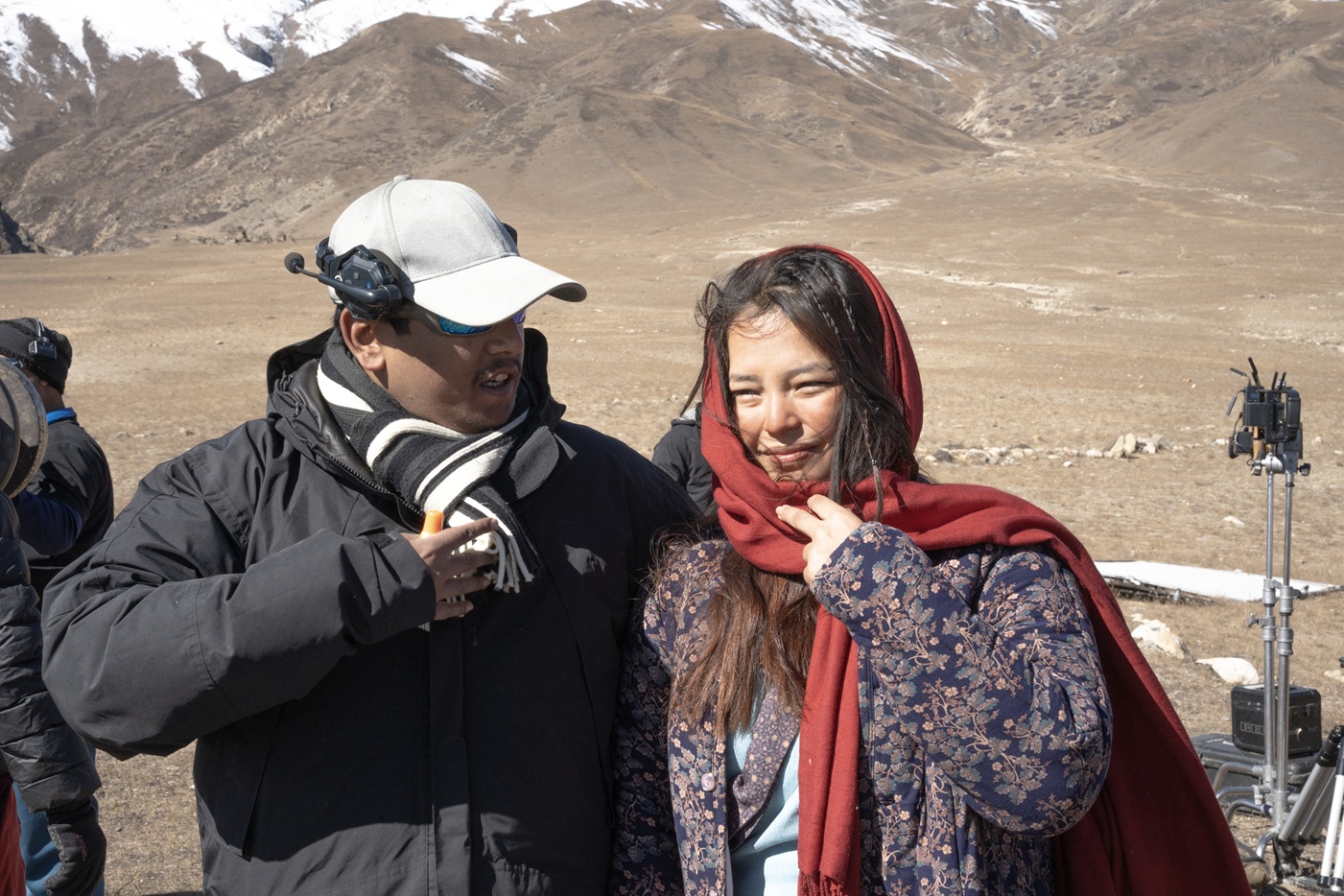
According to Dhiraj, it took him almost a year and a half to prepare its story. He went to Mustang four times before shooting and wrote the script. He reached the Yarsagumba tipping place and made a camp. It took me five hours on horseback to reach there. I especially wanted to shoot in Dolpa. But due to lack of feasibility, lack of road facilities and production costs, I shifted to Mustang, he said, “Even when shifting to Mustang, we did it at high altitude.” We did not shoot below 4800. The film shot commercially in Lomanthang is probably our first. We have also shot above Lomanthang.

Dheeraj revealed that the hero of the film is the examination Limbu. After watching the film ‘Oonko Sweeter’ in which Parikash acted, Dhiraj was impressed by Parikash’s performance. I gave him a loose draft of the film six months before the production, he liked it and signed it. The film has an exam hero and four gangsters. I took Karma Dai as the first goon. Because Karma Dai was in mind since writing the script. Then Sajan Thapa Magar. I said that I would take him in my film after watching ‘Pashupati Prasad’. And he auditioned and got selected. And finally Sunil Thapa was added”, said Dheeraj, “I used to go to the movie Everest from the beginning. What I experienced when I studied in Los Angeles was that most of the students had no way to go after studying film. They do not know how to enter the film industry. So I went to Everest Film Academy and got four to five students to intern in our film. The main villain, the leader of the gang was not being cast in the film. At the same time, I told Sunil dai, “Don’t do this roll bro.” He said I will do it as soon as I read the script.
He has experienced the challenge of shooting the film in the Himalayas. We told each cast and crew in pre-production. We were warming up from the beginning. You should shoot above Muktinath. You have to shoot in Lomanthang. Prepare for health. Carry garlic in Goji. We told you to keep doing all those things. We didn’t want a big challenge. The production manager used to check everyone’s oxygen level daily at night. More checks were done in Lomanthang. “We were saddened by the winter,” he says.
Since ‘Himalayan Gold’ is the story of an underdog, Dhiraj is confident of connecting with the general audience. This is an underdog story. Which is fulfilled by the character exam. His work is a struggle. It’s about how that girl takes revenge. The main plot of this story is four robbers. When four robbers come to rob the Yarsa monastery, Parikash’s family also falls into this trap. And the character of the exam meets everyone,” says Dhiraj.
Dhiraj is happy with the support given by local people and local bodies while shooting in Lomanthang. Above Lomanthang there is a place called Takmar. There were no lights when we went. It is a more difficult place than Lomanthang. We stayed there for 3 days. There is not only Yarsagumba, the environment, the beauty and the struggles of the locals are exemplary in themselves. The tourism board should boost in this area. The people there do not understand what is happening in Kathmandu,” he said.
Dhiraj considers ‘Himalayan Gold’ as a commercial film. But he is sure that the film is made in a different genre. Even now, almost 95 percent of the films are made in the same style. When I worked in the film industry for five years, many people wanted something new and fresh to come. I am sure that Himalayan Gold will fulfill that desire to some extent. I could also make a film about foreign employment on the story of the village. But others have said it and shown it. Yarsagumbako is not even made and as we have shown the story telling, it was very challenging,” said Dhiraj.
Now Dhiraj says one thing with confidence, that is, if he had not reached Rukum for the film ‘Khusma’, ‘Himalayan Gold’ would probably have been made a little late. “Perhaps a film would have been made, but it would not have been made in such depth. Before I went there, I had in my mind that I should do a film. But after reaching there, for the detailing of the script, some of the characters are also the characters of real people there. whom I had met. The events and accidents of the film are also based on hearing the same story. If I had not gone there during Khusma, it would have taken me some time”, said Dhiraj.
Produced under the banner of A White Elephant Motion Picture Production, this film has Sunil Thapa, Karma Shakya, Menuka Pradhan, Parikasha Limbu, Rahul N. Mukhia, Sajan Thapa, Ankit Khadka, Sunil Tamang, Tenzing Thakuri, Sabita Adhikari, Rishikesh Basyal in the lead roles.
This is the last film starring veteran actor Sunil Thapa. This survival thriller film, made in the background of the Himalayan region, has made the struggle of existence, greed and betrayal the main plot of the film.
Meen Bahadur Bham is the producer and the line producer of this film is Shailend D. Karki, the co-producer is Suyash Gyawali and the executive producer is Raju Rajvanshi.
The story of director Rajvanshi is written by Dipend Gauchan and Dhiraj Rajvanshi, DOP by Vishashta Pradhan, editing by Nimesh Shrestha, VFX by Sajal Lopchan and Karun Thapa.
The film will be released in India by AA Films, India’s reputed distributor. AA Films is a famous distribution company of Indian cinema, which distributed films like Bahubali, RRR, KGF. In Nepal, Apple Entertainment has taken responsibility for the distribution of the film, which is being made by Fars Films Motion Pictures in the Middle East distributor. Here is a conversation with director Dhiraj Rajvanshi on this topic:
What is Himalayan Gold? Locals call it Himalayan Gold. We have shown in the film ‘Himalayan Gold’ how the communities of Rukum, Dolpa, Rolpa, Manang depend on the season of Yarsagumba. Our film shows the time of 1990s. At that time, when the local residents went to pick Yarsagumba, they were robbed due to the lack of government security. People who used to go to pick Yarsa Gumba, there was a lot of looting at that time. We have shown that in the film.
How did you come up with the idea of making a film on this story? I have studied film direction and production in Los Angeles, USA. I didn’t want to stay there after my studies. Although I got jobs there, I was not so satisfied. Then I decided to return to Nepal. After returning to Nepal, I had the idea of what kind of story to make a film in my mind. The mindset was that if Nepali stories had to be shown to a global audience, which new stories could be shown by taking them outside.
I already knew about Yarsagumba. He started writing to write something on it. I worked as a chief AD in the film ‘Khusma’. We had reached Rukum for the shooting of this film.
After the shooting, I learned from the locals that the best Yarsagumba is available in Rukum. After shooting, he rode a horse and reached the place where he got Yarsagumba from the locals. It is also the picking season. I went with them. How to go there and rob. How the people of Dolpa used to come to Rukum. I found out that he was going to Manang. The Maoist war also started from Rolpa, Rukum. When I found out how there was looting at that time, the robbers stole everything, I thought, ‘There is a story in this.’ No one has told this story yet. So I decided to make ‘Himalayan Gold’.
How long did it take to prepare the story? It took me almost more than a year.
Did you go to the shooting location before the shooting started? I went to Rukum first. I reached the bookie. Where Yarsagumba is tipped. It took me five hours on horseback to get there. Had to make a camp on top. I especially wanted to shoot in Dolpa. But due to lack of feasibility, road facilities and production costs, I switched to Mustang. Even when we moved to Mustang, we did it at high altitude. We did not shoot below 4800. The film shot commercially in Lomanthang is probably our first. We have also shot above Lomanthang. Before shooting, I had reached this place four times and completed the script.
How did you do the casting? The first audition I cast was Limbu. He is the main lead of our film. Let’s say the hero of the film. I watched the exam film ‘wool sweeter’. I was impressed after watching that movie. I gave him a loose draft of the film 6 months before the production, he liked it and signed it. The film has an exam hero and four gangsters. I took Karma Dai as the first goon. Because Karma Dai was in mind since writing the script.
Then Sajan Thapa Magar. I said that I would take him in my film after watching ‘Pashupati Prasad’. And he auditioned and got selected. And finally Sunil Thapa joined.
I used to go to Everest movies from time to time. What I experienced when I studied in Los Angeles was that most of the students had no way to go after studying film. They do not know how to enter the film industry. So I went to Everest Film Academy and got four to five students to intern in our film. The main villain, the leader of the gang was not being cast in the film. At the same time, I told Sunil dai, “Don’t do this roll bro.” He said I will do it as soon as I read the script.
What challenges did you have to face while shooting in the Himalayan region? There were many challenges. We told each of the cast and crew in pre-production. We were warming up from the beginning. Muktinath should be better than Muktinath. You have to shoot in Lomanthang. Prepare for health. Carry garlic in Goji. We told you to keep doing all those things. We didn’t want a big challenge. The production manager used to check everyone’s oxygen level daily at night. More checks were done in Lomanthang. We were saddened by winter.
How does the film connect with the general audience? Why does this story connect? This story is not only about Yarsagumba and robbery. This is a struggle. This is an underdog story. Which is fulfilled by the character exam. His work is a struggle. It’s about how that girl takes revenge. The main plot of this story is four robbers. When four robbers come to rob the Yarsa monastery, Parikash’s family also falls into this trap. And the character of the exam meets everyone.
While you were writing and directing this film, what kind of support did you think the government should give to the people of that area? We were helped by local people and local agencies. Above Lomanthang there is a place called Takmar. There were no lights when we went. It is a more difficult place than Lomanthang. We went there for 3 days of shooting. There is not only Yarsagumba, the environment, the beauty and the struggles of the locals are exemplary in themselves. The tourism board should boost in this area. The people there do not understand what is happening in Kathmandu.
Is it easy to make a commercial film or a different genre? Our film is also commercial. The difference is in gender. What is the main difference? Many of our films have been made on the same story and on the same subject. Even now, almost 95 percent of films are made in the same style. When I worked in the film industry for five years, many people wanted something new and fresh to come. I am sure that Himalayan Gold will fulfill that desire to some extent. I could also make a film about foreign employment on the story of the village. But others have said it and shown it. Yarsagumbko is not even made and as we have shown the story telling, it was very challenging.
After that, if Rukum was not enough for ‘Khusma’, would Himalayan Gold have been made? Maybe the film would have been made, but it would not have been made in such depth. Before I went there, I had in my mind that I should do a film. But after reaching there, for the detailing of the script, some of the characters are also the characters of real people there. whom I had met. The events and accidents of the film are also based on hearing the same story. If I had not gone there during ‘Khusma’, I would have needed some time.