

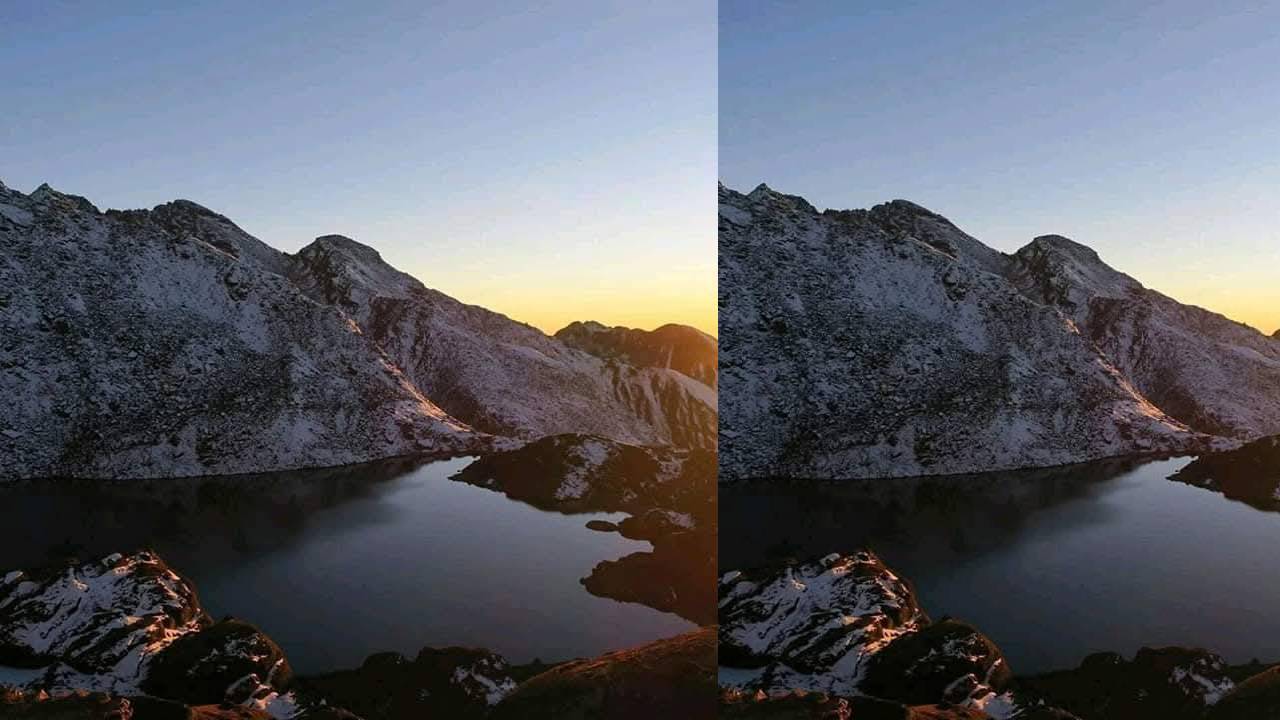
Rasuwa Located in the Gosainkunda area of Rasuwa, Bhairavakunda is a pilgrimage site with a unique identity, different from other kundas due to its religious beliefs, legends and popular beliefs. Among dozens of small and big talalaiyas in the Gosainkunda area, Bhairavakunda is considered as a kunda associated with fear and prohibition.
Below the main Gosaikund (Chokar) and above the Saraswatikund (Wanglatti) lies Bhairavakund in the high Himalayan region above sea level. The local Tamang community has known it as ‘Chhona’ i.e. black hole.
Gosainkunda is considered as a symbol of purity, life and blessings while Bhairavakunda is considered as a symbol of fear and prohibition. Because of this religious belief, pilgrims who come to visit Gosainkunda do not bathe in Bhairavakunda. There is a popular belief that when returning after circumambulation of Gosaikund, one should not even look back towards Bhairavkund.
According to Dolma Yangjen Tamang, Acting Ward President of Gosainkunda Rural Municipality-5, it is a tradition that pilgrims who bathe in Gosainkunda with reverence go to Bhairavkunda without looking or bathing. She said that the Ward Office has made a plan to build a safe footpath and put up an information board to inform the visitors while continuing the tradition.
The origin of Bhairavkund is connected with various legends and legends of Hinduism and Buddhism. According to Hindu religious beliefs, in the Satya Yuga, Lord Shiva did penance by building this kunda below Gosainkunda to remove the guilt caused by piercing Brahma’s head and to soothe physical pain.
According to another statement, Mahadev drank the poison released when the gods and demons churned the sea to protect the creation. It is believed that Bhairavkund was formed by the sweat flowing from Mahadev’s body as he could not bear the poison stuck in his throat. Due to the belief that the pool was made from poisonous sweat, it is believed that poisonous snakes live here and its water is impure.
According to the folklore related to Buddhism, Mahadev’s brother ‘Chhona’ built Bhairavakunda. As mentioned in the book ‘Biodiversity Conservation, Religion-Culture in Tourism Development’ written by the author of Rasuwa, Phurpa Tamang, among the brothers who went out in search of a clean place, the brother forgot his brother after finding a suitable place. It is said that Mahadev, who was angry with his brother’s behavior, cursed that ‘since your heart is black, let the tank you made be black too’.
It is mentioned in the book that there is a popular belief that because of that curse, the pool made by Chhona is called Kalokunda i.e. Bhairavkunda and the pool made by Mahadev is called Setokunda i.e. Gosainkunda.
According to Dhunche resident and Lama Guru Rinjen Ghale, in Buddhist and Tamang traditions, Gosaikund is understood as ‘Chokar’ i.e. pure white kund and Bhairavkunda as ‘Chhona’ i.e. black kund. He says that it is forbidden to bathe there and even look back due to the religious belief that the energy of anger and immersion resides in Bhairavakunda. He says that such recognition also reflects discipline towards nature and religious beliefs.
Bhairavkund is also associated with the specific clan tradition of Gole people of the Tamang community. According to Pukhryauli, in ancient times, a Jhankri of Gole tribe reached Gosaikund area with his wife. With the aim of subduing the poisonous snake in Bhairavakunda, he asked his wife to play the drum continuously and scatter Akshata as long as he stayed inside the kunda. Then he entered the tank to fight with the serpent.
After a long struggle, when Jhankri was about to come to the surface after defeating the nag, his wife was horrified to see the terrible condition of the tank. Legend has it that after he stopped playing the drum and sowed Akshata and ran away, Jhankri’s power weakened and a snake wrapped him and killed him. It is believed that due to this incident, people of Gole caste have maintained the tradition of not going to Bhairavkunda and in some cases even Gosainkunda.
According to Babulal Tamang, President of Civil Society Rasuwa, Gole caste people still maintain the custom of not going to Bhairavkund, keeping in mind the ancestral tradition. He said that if such oral history, religious beliefs and intangible cultural heritage can be documented and preserved, a new dimension will be added to the promotion of Rasuwa’s religious and study tourism.



