turn away A demand has been made to ensure a fair energy transition for countries dependent on fuel imports. Speakers at the 31st Conference of the United Nations Parties to Climate Change in Antalya, Turkey, emphasized the need for accessible climate finance based on international grants.
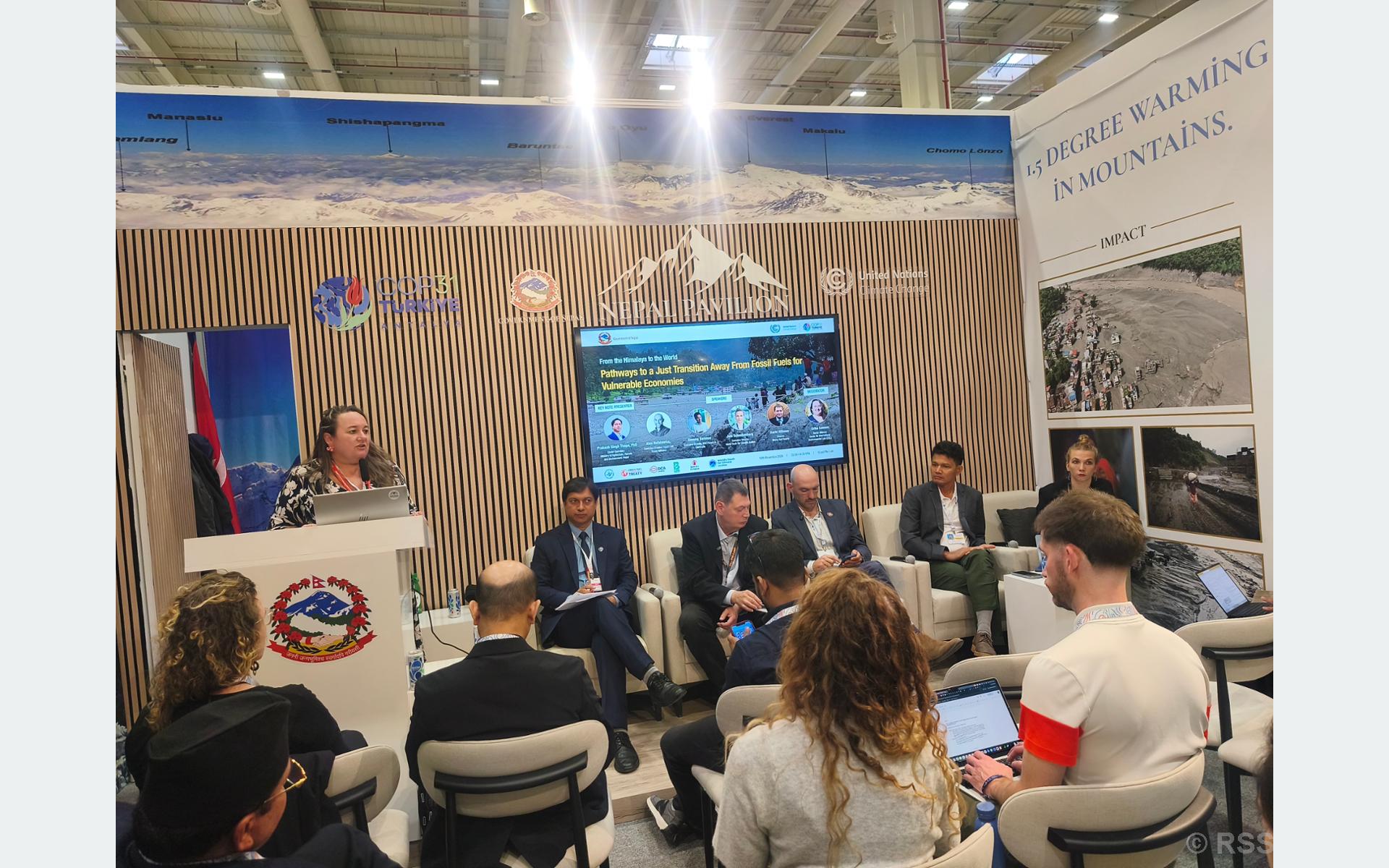
(COP-31) organized today at the Nepal Pavilion in the program titled ‘From Himalayas to the World: A Roadmap for Just Transition from Fossil Fuels for Economies at Risk’, Dr. Deputy Secretary of the Ministry of Agriculture, Forestry and Environment from Nepal. Prakash Singh Thapa presented his presentation.
In the program, Dr. In his presentation, Thapa said that economically and socially weak communities, workers and countries that are at risk of climate should not be left behind during the transformation towards clean energy.
He mentioned that even though Nepal contributes less than 0.1 percent to the global greenhouse gas emissions, it is facing great risks of melting glaciers, flash floods, landslides and other climate-related disasters.
He said that agriculture, para-tourism, construction and forest sectors of Nepal’s economy are being affected by climate change and the livelihood of workers working in these sectors is also at risk.
He presented the loss of life caused by the Bhotekoshi flood on August 26 and the impact on the hydropower infrastructure as an example of climate risk.
It was estimated in the presentation that 14 hydropower projects were damaged due to the disaster and about four billion 700 million US dollars are required for reconstruction and restoration.
Deputy Secretary Dr. Thapa informed that Nepal has committed to achieving the goal of net zero green gas emissions by 2045 and said that the goal is to reach 28,500 MW of renewable energy capacity by 2035.
He informed that for the implementation of Nepal’s Nationally Determined Contribution (NDC 3.0), it is estimated that 73.74 billion US dollars will be required in the area of emission reduction by 2035 and 85 percent of that, i.e. 62.92 billion US dollars, will have to be raised through international assistance.
He pointed out that Nepal’s need to import petroleum products and most of coal has created a huge financial burden on the economy and emphasized that fuel import dependency should be reduced through clean energy production and consumption expansion.
He clarified that the just transition is not only the process of moving from fossil fuels to renewable energy, but also the process of ensuring employment, social security, decent work, gender equality and economic rights of workers and communities affected by it.
Nepal has taken COP-31 as an opportunity to implement international commitments on just transition, ensure climate finance and establish the concerns of climate-vulnerable countries in global climate talks.
In the group discussion held on the occasion, the speakers emphasized on the need for a just transition from fossil fuel-based economy to clean energy, keeping in mind the needs and conditions of economically weaker countries that are more vulnerable to the effects of climate change.
Speakers participating in the program were of the opinion that energy transformation should be addressed not only as an environmental issue but also as an economic, social and development issue.
They opined on the need to strike a balance between clean energy promotion, economic development and climate justice for countries like Nepal that are at risk of climate change.
Alex Rafalovich, Executive Director of the Fossil Fuel Treaty Initiative, Soung Saroun, Executive Director of the Cambodian NGO Forum, Jule Schnakenberg, Executive Director of World Youth Climate Justice, David Hillman, Director of Stamp Out Poverty, and Erika Lennon, Senior Legal Officer of the Center for International Environmental Law (CIEL), presented their views on the matter.
In the program, economic and social challenges faced by developing countries in the process of gradually reducing the use of fossil fuels and expanding clean and renewable energy, necessary investments, international cooperation and policy aspects of just transformation were discussed.
Equally important is addressing the impact that the transition from fossil fuels to clean energy will have on the workers, communities and economies that depend on them.
The need for international cooperation was given importance in the program as the burden of energy transformation may fall on countries and communities with weak economies without adequate financial and technical support.
In the context of Nepal, expanding clean energy production and consumption using the potential of hydropower, solar and other renewable energy sources can become an important basis for energy transformation. Himalayan countries like Nepal, which have contributed little to climate change, are facing climate-related disasters and environmental risks.
In this situation, the international effort of energy transformation needs to address climate justice, equality and the special situation of developing countries.
The program provided an opportunity to present the common concerns of developing and vulnerable countries on the international stage by connecting the climate challenges of the Himalayan region with global energy transformation and climate justice debate.