Lalitpur. The book ‘The Sunshine Flood’ has been published covering the flood that occurred on the 10th of August in the Bhotekoshi-Trishuli river corridor including Rasuwa, Nuwakot, Dhading and the human and physical damage caused by it, the rescue and search experience and the relief and reconstruction efforts after the disaster.
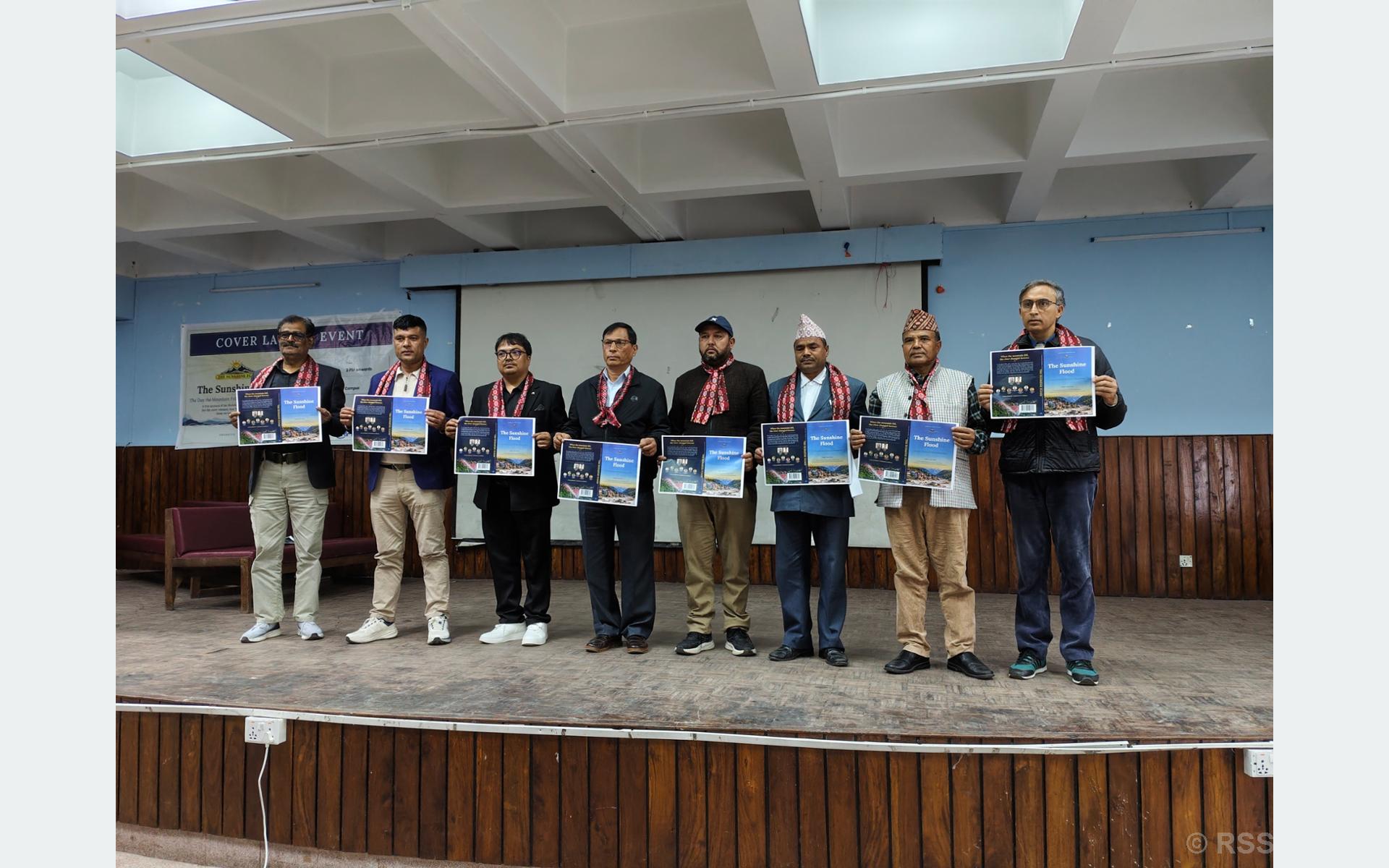
The cover of the book was announced at an event organized by Tarang Nepal in Lalitpur on Saturday. Disaster management, engineering, research and development experts, representatives of various organizations, writers and editors were present in the program.
Engineers, researchers, technicians and other experts have collaborated in the book written by Dr. Ishwar Thapa and Engineer Rajan Thapa along with seven co-editors. The book covers the origin and effects of floods, human losses, rescue and search experiences, the condition of affected communities and measures to reduce the risk of such disasters in the future.
The name of the book is ‘The Sunshine Flood’ which means ‘The flood without a cloud in the sky’. The book presents the events of floods that occurred in the Bhotekoshi and Trishuli rivers through the Lhende River on the 10th of August (August 26) when snow and rocks fell in the Himalayan region.
The flood which came without any sign of rain, clouds or rise in the level of the river, which is usually seen before the flood, caused great damage to the settlements, infrastructure and people’s lives in the river coastal areas including Rasuwa, Nuwakot.
In the book subtitled ‘The Day the Mountain Fell Without a Cloud in the Sky’ (the day the mountain fell suddenly when there was no cloud in the sky), how did avalanches and rock falls cause floods? The incident has been presented based on the experiences of eyewitnesses, statements of victims, records and scientific studies.
According to the book, after the snow and rock fell and reached the Lhende valley, within a few minutes, the flood with water, mud and large stones spread to the Trishuli river area through Rasuwagadhi, Timure and Syafrubbensi. Rains and floods that came without prior warning caused damage to local settlements, schools, bridges and other infrastructure and affected people’s lives.
The book prepared in the genre of ‘narrative non-fiction’ contains the experiences of the people involved in rescue during the disaster, the community involved in search and support and the affected families. In the book, the author Dr. also analyzed the challenges seen during disasters and the necessary changes to reduce the damage caused by such incidents in the future. God informed.
According to him, the book covers the relief, rehabilitation and community support activities conducted by Nepal in the flood-affected areas. The book details how the organization, with the help of Peace Winds Japan and Mercy Malaysia, mobilized a technical team to assess the damage, identify the needs of the affected families and distribute relief.
As mentioned in the book, the organization provided relief and support to 1,448 families through various programs. Similarly, 306 teachers and students, two health institutions and one ward office were also supported.
As part of the relief distribution, electric heaters, electric kettles and thermoses used in winter were distributed to 501 households of Uttargaya rural municipality-5 of Rasuwa. It is mentioned in the book that 195 households of Vidur Municipality-1, 50 households of Ward No. 7 and 252 households of Ward No. 10 of Nuwakot have been provided with necessary tools for household and reconstruction.
Similarly, 350 households of Rasuwa’s Gosainkunda Rural Municipality-5 were given kitchen supplies including induction stoves and 100 households of Vidur Municipality-10 of Nuwakot were distributed kitchen supplies along with gas cylinders.
Medicines and health materials were supported to the Ayurvedic Hospital located in Vidur Municipality-5 and the Urban Health Center located in Ward No. 10 to maintain health services. Alternative power supply was arranged by installing solar energy and inverter system in the ward office of Vidur Municipality-10.
306 teachers and students of Bhimsen Secondary School located in Vidur Municipality-2, Battar are also included in the book.
The book does not limit the relief distribution to the transfer of materials, but prioritizes identification of the needs of the affected families, on-site studies, coordination with the local level, documentation of materials, transparency in distribution and rehabilitation of the community.
Along with post-disaster reconstruction, the book has also given importance to measures to reduce the damage that may occur in the future. Reuse of Gegran and stone soil washed away by the river, protection of riverside buildings, development of early warning system in Bhotekoshi-Trishuli corridor and food security of Rasuwa have been presented as priorities for the coming days.
Due to the fact that only one building is safe in flood-affected areas, river flow and Gegran management and precautions to be taken while building infrastructure in risk areas are discussed in the book. In the book, priority has been given to the experiences of the residents of the affected areas. According to the author, the book has been prepared from the collection of field studies, direct experience and events.
Senior geologist engineer Sanmukesh Chandra Amatya said the book documents the story of the disaster and the resilience of the community. According to him, the book not only presents the details of the destruction caused by the flood, but also highlights the contribution that can be made to the restoration by the cooperation between the community, volunteers, technical personnel, local government and national and international supporting organizations.
He said that the book dedicated to the residents of Rasuwa and Trishuli valleys is expected to document the history of natural disasters and provide important reference material to agencies and stakeholders working in the fields of risk reduction, preparedness and humanitarian aid.
Amit Prasad Timalsena, executive director of Tarang Nepal, gave a presentation on the topic of ‘Behind the Scenes’ at the event and shared his experience of post-disaster field studies, humanitarian aid and interaction with the affected communities in helping to prepare the book.
As soon as the news of the flood was received, Tarang Nepal started coordination with the local contact person in the affected area, technicians working in the hydropower project and other stakeholders. He informed that since it is difficult to be directly involved in rescue and search, the organization has decided to support through relief and recovery activities.
By integrating the manpower working in the fields of engineering, research, social services and volunteering, the organization has been helping communities at risk through technical knowledge, humanitarian aid and knowledge development. The book, divided into 6 parts and 31 chapters, covers the condition of the Bhotekoshi river corridor before the flood, events on the day of the disaster, rescue and life-saving experiences, human losses and grief, economic and environmental effects and necessary lessons for the future.
Similarly, risk assessment of mountain disaster, strengthening of early warning system, possibility of using Gegran accumulated from flood as reconstruction material, safety of hydropower project and the effect of climate risk on Rasuwa food security have been analyzed from research and policy point of view.
The book is characterized by presenting the experiences of the affected communities and scientific and documented facts in one place. Official reports, published research and journalism-based material have been used in the book for details on statistics and events. According to the authors, a distinction has been made between proven facts, personal experience, analysis and topics that are not yet clear.
The book suggested that the early warning system should be restored and strengthened in the upper Bhotekoshi area, information exchange across borders, risk assessment before reconstruction, protection of hydropower infrastructure and the process of identification of missing persons should be accelerated.