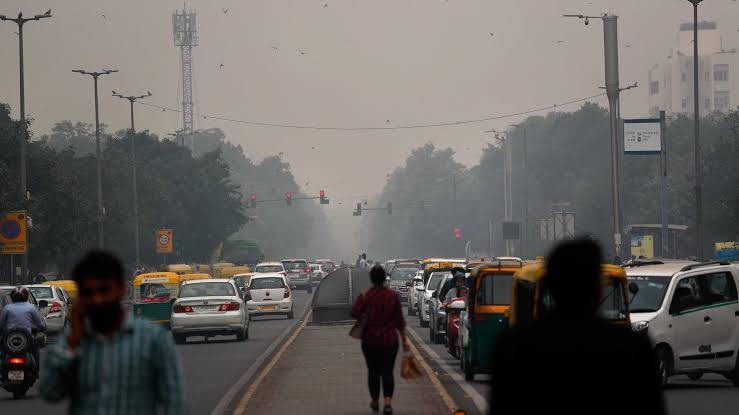
New Delhi. After the increase in air pollution in Delhi, the capital of India, the federal government has implemented strict pollution control measures in Delhi and surrounding districts from Friday.
After the level of air pollution continues to increase, the review meeting decided to implement the measures of the third phase of the ‘Graded Response Action Plan’ (GRAP).
According to a statement issued by the Commission for Air Quality Management (CAQM) set up in the capital and surrounding areas, Delhi’s Air Quality Index (AQI) reached 382 on November 6 as pollutants could not spread in the atmosphere due to adverse weather conditions. This level is very bad.
The Commission has announced that the third phase of GRAP will be implemented immediately in the entire National Capital Region (NCR). Besides, the pollution control agencies of the respective areas have been instructed to strictly follow these measures.
Under the third phase, all non-essential construction and demolition activities have been banned. It includes excavation, earthmoving, boring, drilling, piling, bricklaying, masonry, road construction and major maintenance works.
Similarly, the operation of four-wheeled vehicles running on BS-3 standard petrol and BS-4 standard diesel has been banned in Delhi and the surrounding districts of the National Capital Region. BS i.e. Bharat Stage is an emission standard set by the government to control pollution caused by vehicles.
Health experts have advised local residents not to go out early in the morning and after sunset, and to avoid long-term or heavy physical work. People with respiratory problems have also been asked to stay away from all types of physical activity outside the home.
Delhi is one of the most air polluted cities in the world. Industrial activities, vehicular traffic and extensive construction work are the main causes of air pollution here. In previous years too, the air quality of Delhi has reached extremely bad conditions before the onset of winter season. Rasas