

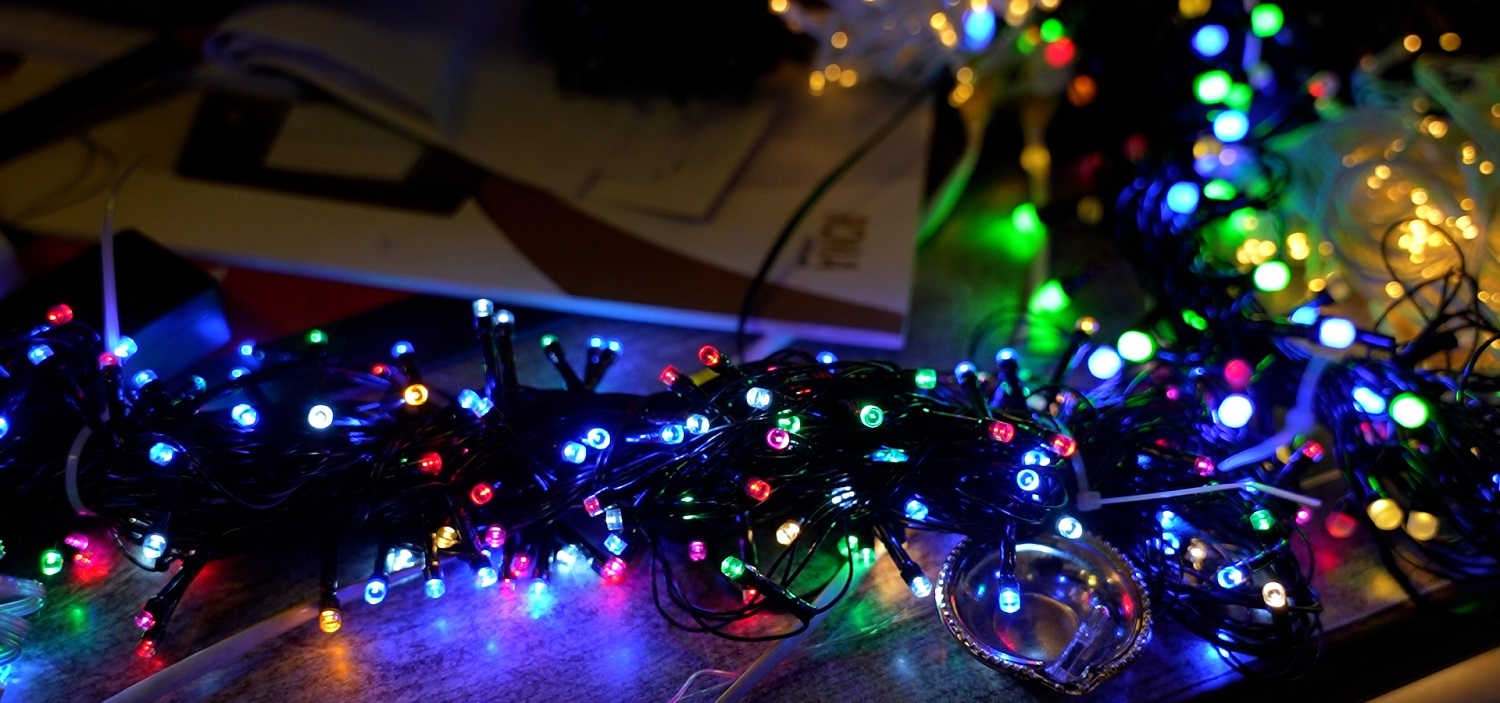
Kathmandu. Tihar means festival of light and glitter. As preparations are being made to decorate the houses to the streets with twinkling lights, the market has also increased in activity. However, this year compared to last year, the business has not been as encouraging as expected, businessmen said.
According to them, this year due to floods and landslides, the trade of flickering lights has been affected by the disruption in imports, limited availability of goods and the decreasing purchasing power of consumers. They complain that there is a problem in the import of goods from the Tatopani and Rasuwa border crossings, and some goods are stopped in the border area, so that sufficient materials are not available in the market.
According to Resham Prasad Devkota, the outgoing president of the Federation of Nepal Electricians and the owner of Nepal Light Center, this year the business of flickering lights has increased in terms of price, but the sales volume has decreased. He said that compared to last year, the buying enthusiasm of the consumers is a little less.
According to him, the problem seen in Bhotekosi area has also affected the psychology of consumers. Likewise, the supply in the market has been affected due to the disruption in imports and the stopping of some goods in the border area. Businessmen say that there is also a problem in bringing goods because the containers are stuck in Singapore.
In addition, this year, the import quantity of flickering lights may have decreased by 40 to 65 percent compared to last year, according to preliminary estimates of businessmen. However, the actual decline in imports is yet to be confirmed from the customs data.

Kamal Pokharel, president of Pukar International, also says that although the business is a bit slow at the beginning of Tihar, the sale of lamps will gradually increase as Diwali approaches. He said that as Tihar approaches, both the activity of customers and sales in the market will increase. Now there are new and new design lamps coming in the market. Due to this, the business will be slow in the beginning, but it is expected that the business will gradually increase.
Similarly, Pukar International’s Managing Director Pushpa Sigdel also said that the demand for flickering lights has decreased this year compared to last year. He said that even though the purchasing ability and enthusiasm of the consumers have been affected due to floods and landslides, the attraction of the customers towards the new design lamps is still there.

According to Keshav Khadka, owner of Smart LED Tape Mart, the business of flashing lights this year is a bit slower than last year. He said that as imports from Tatopani and Rasuwa crossings were affected, goods had to be brought only through Birgunj crossings and the trade was affected due to lack of availability of sufficient materials in the market. Businessmen say that despite the problems seen in price increase and import, new designs and different types of lamps are attracting consumers in the market.
15 to 25 percent price hike on flickering lights
Businessmen have said that due to the increase in the price of raw materials in the international market, the weakening of the Nepali currency compared to the US dollar and the increase in transportation costs, the price of flickering lights has also increased this year.
According to Devkota, the outgoing president of FIN, the prices of some types of lamps have increased by 15 to 25 percent compared to last year. However, he clarified that the prices of all types of lamps did not increase at the same rate.
A growing fascination with waterfalls and warm lights
This year, there has been a change in consumer preferences in the flickering light market. In the past, ordinary lights of 100, 200 and 300 LEDs and multi-colored lights were sold more, but recently, the attraction towards waterfall, pipe lights, warm and golden lights is increasing, business people say.

According to Sigdel, managing director of Pukar International, the demand for waterfall lamps has increased this year compared to the previous year. He said that the warm waterfall light that gives a warm light that affects the eyes less is the choice of the customer. He says that there is a good demand for large-sized waterfall lights that can decorate the exterior of the house and two to three floors. “Especially, the interest of customers has increased towards waterfall lamps of 20 by 20 and 20 by 30 sizes,” he said.
Similarly, according to Devkota, the price of waterfall light with three waves is around 1000 to 1000 rupees in the market. Depending on the size, design and quality, flickering lights are also available in the market ranging from Rs 2,500 to Rs 4,500.
According to businessmen, recently, the young generation has started choosing warm, golden and attractive design lamps over the traditional multi-colored lamps. They say that with the increasing tendency to get information about new designs and decoration materials through online and social media, there has also been a variety in consumer choices.

Devkota said that social media has helped to increase consumer attraction towards new design lamps. However, he informed that some consumers continue to reuse old lamps.
Along with the use of flickering lights, businessmen have asked consumers to pay attention to electrical safety. They suggest that special attention should be paid to quality while purchasing materials as there may be risk of short circuit and fire due to poor quality lights and unsafe connections.
Businessmen have requested to check the condition of the MCB, wires and sockets of the house before lighting the lights, to use quality materials and to pay special attention to the safety of lights installed outside during frost or rain.

How does the electricity authority handle the load of Lakshmi Puja?
The Nepal Electricity Authority has estimated that the electricity demand will reach a maximum of 1,900 to 2,000 megawatts during this year’s Tihar. Last year, the demand for electricity on the day of Lakshmi Puja was about 1,700 megawatts, and the demand is expected to increase this year.
According to the authority, household electricity consumption will increase due to the increase in the use of flickering lights and electronic decorations in homes during Tihar. However, due to the closure of some industries during Tihar, it is estimated that the industrial electricity demand will decrease and it will balance the domestic demand.
Dirghayukumar Shrestha, executive director of the Electricity Authority, said that since the authority can currently supply electricity from 2,800 to 2,900 megawatts, there will be no problem in managing the increasing demand for Tihar. Last year, on the day of Lakshmi Puja, the demand for electricity was about 1,700 megawatts. This year, the authority estimates that the electricity demand will reach 1,900 to 2,000 megawatts. Not so bad now. We have 2,900 MW of supply. Due to this, we can easily manage the load of Lakshmi Puja, he said.
He said that the authority started preparations 10 days before Tihar to ensure regular and quality electricity supply. “Inspection and monitoring of the distribution line, load testing of the transformer and transferring the load of the overloaded transformer to another place have been completed,” he said.
In case of interruption or tripping in power supply, ‘No Light’ staff have been kept on standby at various locations to solve the problem immediately. He said that the authority has made arrangements to mobilize staff to resume power supply within 20 to 25 minutes in case of interruption.
Meanwhile, Shrestha, the executive director of the Authority, urged the consumers to pay attention to the capacity of the home meter and MCB when excessive use of flickering lights and electrical equipment during Tihar, as there is a risk of short circuit and fire when installing flickering lights.



