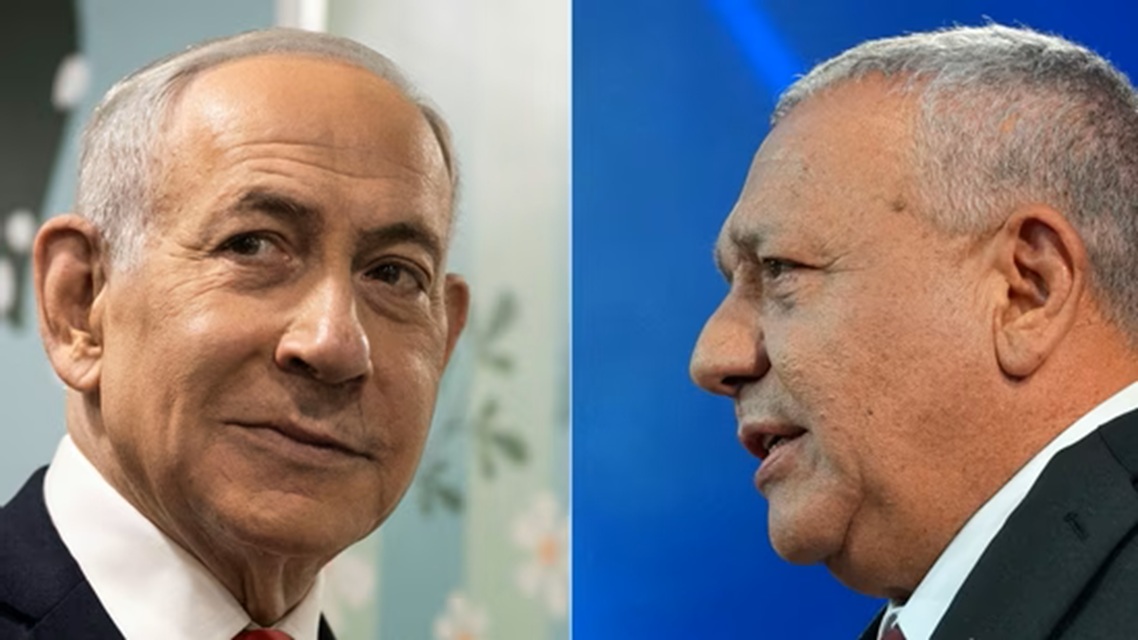
Jerusalem. Israel’s Central Election Committee has rejected Prime Minister Benjamin Netanyahu’s allegations of rigging in the election against the Arab parties. The committee said that during the audit of 9,069 polling stations, no evidence of irregularities was found in the election results.
According to the committee, the declared results have accurately reflected the will of the voters. Meanwhile, President Isaac Herzog will decide on Wednesday whether to give Netanyahu or opposition leader Gadi Eisenkot the first opportunity to form a government after receiving the official election results.
Netanyahu accused Arab parties of distributing cash and receiving funds from Qatar on election day. But Attorney General Gali Bahrao-Miara has said that no one can be questioned without evidence. Netanyahu’s Likud party accused him of obstructing the investigation.
Opposition leader Eisenkot is trying to end Netanyahu’s long rule by uniting centrist and center-right parties. He warned Netanyahu not to start another war against Iran and said that a unity government should be formed in Israel. Former Prime Minister Yair Lapid also said that after the defeat of the Republican Party in the US mid-term elections, the possibility of forming a unity government under the leadership of Netanyahu is weak.
61 seats are needed for a majority in Israel’s 120-member parliament. In the election, Netanyahu’s coalition won 53 seats and Eisenkot’s party won 48 seats. If the Arab minority party gets the support of 19 seats, the opposition party can get closer to the majority. But some parties of the opposition coalition have been refusing to form a government with the support of non-Jewish MPs.
President Herzog will consult with political parties for two days after receiving the election results. The leader who will be responsible for the formation of the government will have to gather the majority within 28 days. Additional 14 days time will be given if necessary. If the first attempt fails, another leader will be given an opportunity. If that is not successful, the country will have to go to new elections if the majority members of the parliament cannot choose a candidate for the prime minister within 21 days.
Previously, between 2019 and 2022, elections were held five times in Israel due to political deadlock. It took Netanyahu 58 days to form a government after the 2022 election. He will lose power and face the risk of corruption charges and jail time.
Meanwhile, Youssef Zabrin, the leader of the largest Arab-dominated party in the upcoming parliament, urged the opposition parties to make a joint effort to remove Netanyahu from power. Although Netanyahu has been accusing the Arab parties of being supporters of Hamas, the leaders of the Arab-Israeli parties have condemned the attack by Hamas on October 7, 2023. -AFP