Kathmandu. As Tihar approaches, the potter community of Bhaktapur is invited to make clay pots. The second biggest festival of Nepalese is Tihar, the day of Lakshmi Puja, as there is a tradition of burning earthen palas.
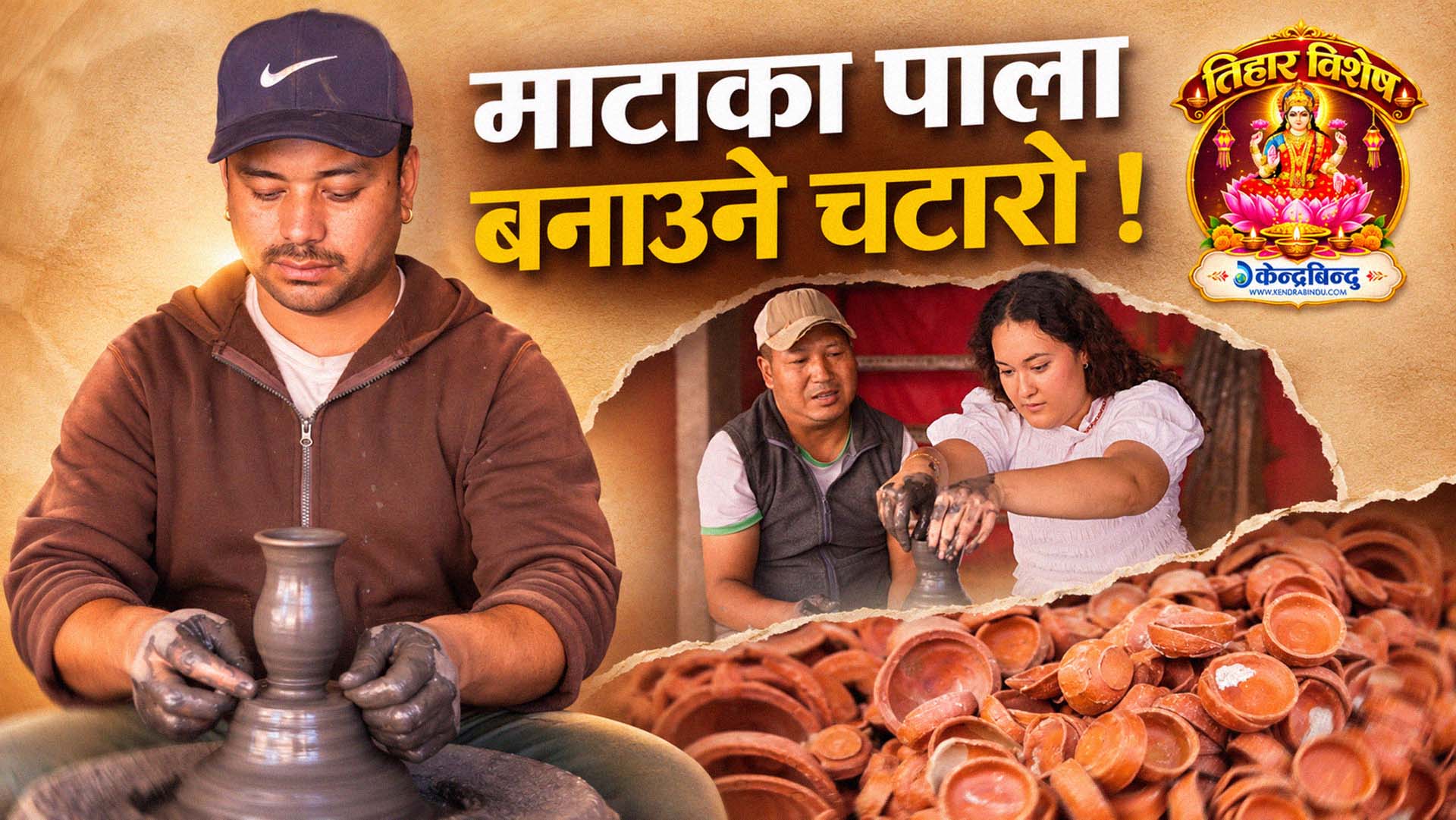
In the potter’s village, some are kneading the clay and some are shaping the bowls by placing the clay in the circle. Some are drying the prepared rice while others are preparing to burn it in the furnace and send it to the market. Most of the families here are engaged in making pala from morning till evening as pala is sold more during Tihar.
Mataka Pala produced in Bhaktapur is popular not only in the valley but also in the districts outside the valley. Because of its originality and quality, traders and consumers from various places including Kavre, Sindhupalchok, Pokhara, Dharan, Chitwan and Hetauda come to Bhaktapur to buy pala.
Businessmen say that one mata pala is currently being sold for around two rupees. As Tihar approaches, they expect that the demand will increase and the price will also increase. It is a tradition to decorate the courtyard during Tihar and on the day of Lakshmi Puja, to light clay pots on the doors, windows, doors and balconies of the house. Similarly, earthenware has a special religious and cultural significance in the Chhath festival. Due to this tradition, the demand for earthenware increases during Tihar and Chhath.
With time, the use of technology in the traditional profession of pottery making is increasing. Potters who used to knead the soil with their feet and turn the wheel with their hands to make pots, have now started using machines to prepare the clay and motors to turn the wheel. Similarly, modern ovens have started to be used for cooking dishes. It has made the production process easier and also saved time and labor.
But with the development of technology, the lack of soil has become a major challenge for them. According to businessman Vivek Prajapati, soil used to be easily available in Bhaktapur. Nowadays, with the increase in urbanization and house construction, it has become difficult to get soil in the local area. Therefore, there is a compulsion to buy soil from other places at a high price.
“Earlier, soil was available in Bhaktapur. Now, after building a house, we have to buy soil from other places. We have to pay 20 to 50 rupees per kg,” he said.
According to him, efforts are being made to transfer the skill of making paala to the new generation. But if the income is not as expected, there is also concern about the attraction of the new generation towards this profession. He said that even though there is no big income from the business, they continue to protect their ancestral profession and identity.
According to businessman Ganesh Kumar Prajapati, the more pala can be produced during Tihar, the more it is sold. But recently, with the increase in the use of electric flickering lights, the demand for clay is decreasing compared to before. “Earlier, because there was no electricity facility, only clay palas were lit in every house. Now the use of electric lights has increased. Because of this, the sale of palas has been affected,” he said.
According to him, until a few years ago, the potter community used to get free soil from Taleju temple in Bhaktapur. Now they have to buy and bring soil from Sankhu, Duwakot and other places. It has also increased the production cost.
At present, about 30 to 40 Prajapati families are involved in this profession in Bhaktapur, he informed. He demands that the local government should make arrangements to provide soil easily to protect the traditional profession.
According to businessman Ranjana Prajapati, Tihar is the time when Mataka Paala is sold the most throughout the year. During this time, the activity of wholesale and retail traders increases. Therefore, in order not to miss this opportunity, the family members of the Kumale community are working from morning to night to make paala.
According to him, the new generation has also started joining this profession. She said that her own son is also involved in the making of pala. But he says that the attractiveness of many young people is decreasing because they do not believe that they can earn good income from this profession in the future.
“Tihar is the time to get good income throughout the year. Therefore, during this time, all the family members are busy with soil work,” she said.
Roshan Prajapati, who has been involved in the making of mataka pala for about 30 years, says that recently the profession is not as easy as it used to be. According to him, compared to the previous year, the demand for rice during Tihar is also less this year. He said that due to the lack of soil, soil had to be brought from far away and the increasing use of electric lights affected the market of clay pots. “When I started this profession, there were many customs of the clay era. Now there is no demand like before. The demand is less this year compared to the previous year. Even the new generation has not shown much interest in this profession,” he said.
For the potter community of Bhaktapur, clay pot production is not only a means of income but also a profession, skill and cultural identity passed down from generations. Although the use of modern technology has made the production process easier, this profession has been challenged by the lack of raw materials, rising costs, competition from electric lights and the declining attractiveness of the new generation.
Although the demand for pottery increases during festivals like Tihar and Chhath, there is no guarantee of sufficient market and income to continue the profession throughout the year. Businessmen have pointed out the need for the local government to support the easy availability, production and marketing of soil to preserve the ancestral skills and culture.
Continuing the use of traditional pottery and pottery is not only to preserve a profession but also to keep alive the original Nepali art, culture and identity that has been handed down from generation to generation.