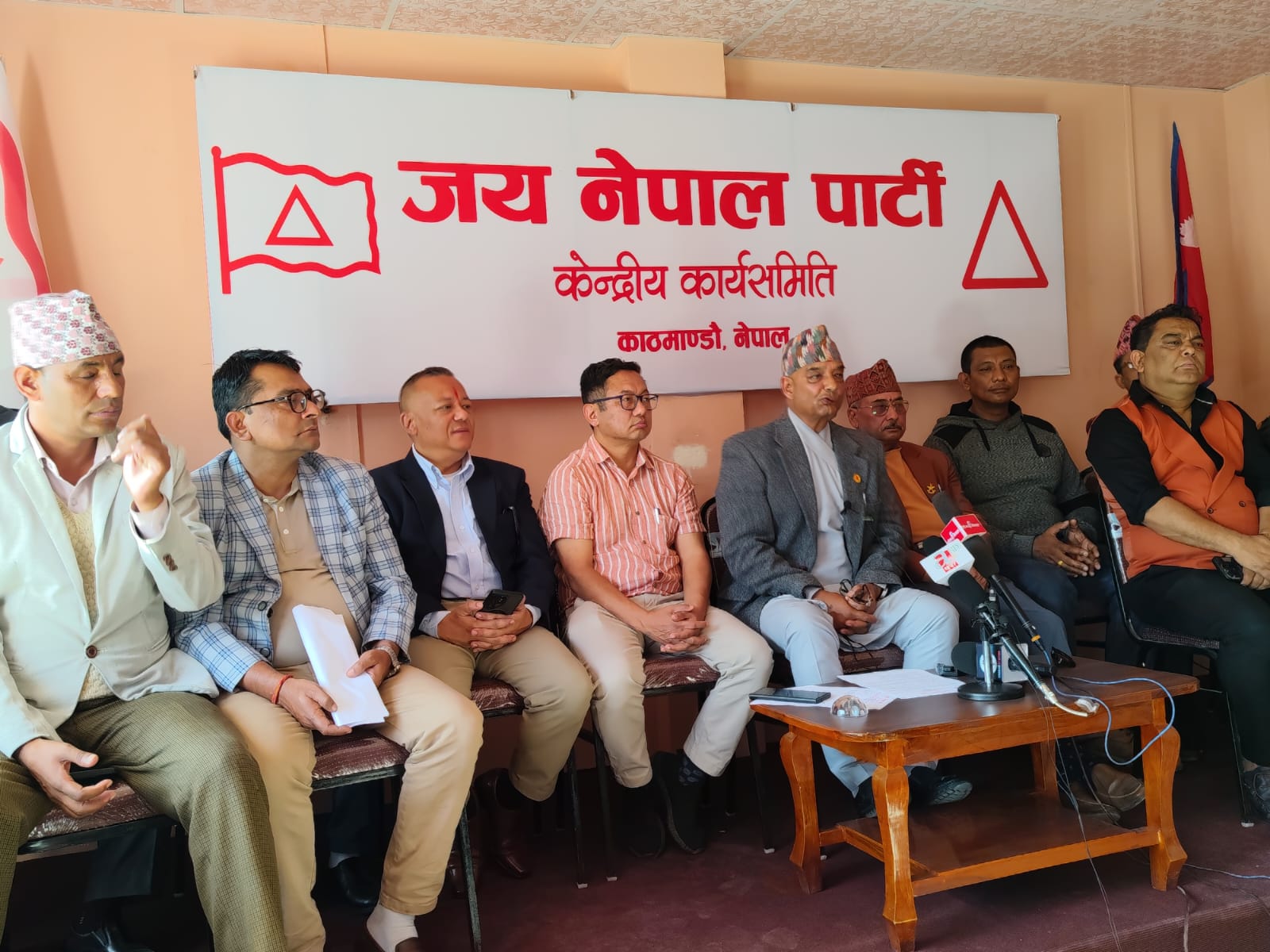
Kathmandu. The Jai Nepal Party has announced an eight-point resolution along with the amendment of the constitution and has warned that if the demands are not met, they will stage a protest.
Chairman of the party, Dhawalshamsher Rana, issued a statement on Tuesday and said that issues such as nationalism, democracy, constitutional monarchy and religious identity should be prioritized in the amendment of the constitution.
“If the presented priorities are not addressed by the state in time, we have vowed to carry out the activities of the peaceful movement in a phased manner,” he said in a statement.
The party has accused the Balen Shah-led government of not being able to build a reliable foundation for good governance, prosperity and corruption control.
The party has criticized the government for failing to give justice to the youth, security personnel and other citizens who lost their lives during the Genji rebellion and for failing to bring the perpetrators of arson to government structures to justice.
Similarly, the party has demanded to make public the details of the relief materials and funds received in the Bhotekoshi-Trishuli flood-affected areas. It has also drawn the attention of the government to publicize the updated details of where and how the money collected in the Prime Minister’s Disaster Relief Fund has been spent and to inform about the progress of restoration and reconstruction.
The eight-point resolution announced by the party includes the demand to amend the constitution for a strong nationalism and meaningful democracy, to control skyrocketing market prices and inflation, and to maintain the eternal Hindu dominion of Hindus, Buddhists and Kirats along with the constitutional monarchy.
Similarly, the party demands that conversions, cow slaughter and sale of beef should be banned, youth and women-friendly economic development and a developed Nepal should be built based on technology.
It is mentioned in the resolution that justice should be given to co-operatives and microfinance victims, a referendum should be held on empowered local bodies and provincial structures, and voting rights should be ensured with the recognition of ‘one-time Nepali, forever Nepali’.