
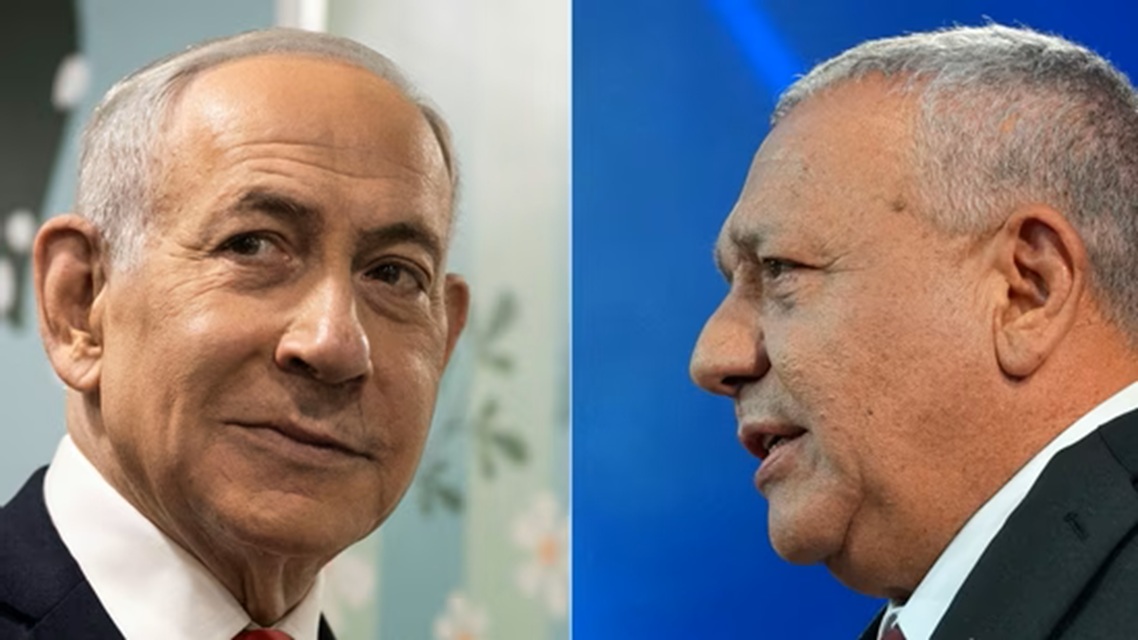
Jerusalem. United Torah Judaism, an ally of Prime Minister Benjamin Netanyahu in Israel, has proposed opposition leader Gadi Eisenkot as prime minister. This party won a total of 7 seats in the elections.
According to a Channel 12 report, the party has demanded an exemption from compulsory military service for members of the Haredi community in return for its support. Military service is generally compulsory for citizens in Israel. However, religious students from the Haredi community are largely exempted.
While the Netanyahu government is in favor of continuing this exemption for the Haredi community, Eisenkot is against it. He also wants men from the Haredi community to serve in the army. United Torah Judaism proposed not to join Eisencott’s government, but to support it from outside. Under this, the party may not participate in voting against the government. which could help Eisencott run the government.
Military service is mandatory for most Jews in Israel. After the establishment of Israel in 1948, 400 members of the Haredi community were exempted from military service to study at Jewish institutions.
Its purpose was to preserve the teachings and traditions of religious scholars. However, the scope of this exemption gradually expanded. This exemption is currently the subject of controversy in Israel. Religious groups argue that everyone should serve in the military when the country is at war. Netanyahu is supported by the Haredi community. So he wants to maintain this exemption.
On the other hand, the Gadi Eisenkot Haredi community also believes that they should participate in military or civilian service. Meanwhile, opposition leader Yair Lapid has claimed that the anti-Netanyahu coalition won the election. He has asked for more time to form the government.
According to The Times of Israel, anti-Netanyahu parties won a total of 67 seats out of 120 in parliament, while Netanyahu’s coalition won only 53 seats. His Likud party became the largest party with 27 seats.
But three of the four Jewish-led parties to form a government – Yasher, Biachad and Israel Beitenu – have refused to form a coalition with the Arab-dominated Joint List and Ra’am. Without their support, it will be difficult for the opposition to secure a majority.
Meanwhile, foreign interference is suspected in Israel’s October 27 parliamentary elections. Therefore, the Election Commission has ordered the Sinn Bet Investigation Agency to investigate the matter. According to The Times of Israel, the agency will submit its report within a week.
Prime Minister Benjamin Netanyahu’s Likud party suspects that money has been sent from Qatar and Turkey to Israel and the West Bank. This money was used to finance Arab citizens.
Eisencott accused Prime Minister Benjamin Netanyahu and his Likud party of trying to discredit the election results. He said, “Netanyahu is doing that because he did not win the majority.”
Eisencott said that the swearing-in process of the Knesset, the Israeli parliament, will not be disrupted. He said, “There is a rule of law in Israel and the parliament will be convened at the appointed time.”