

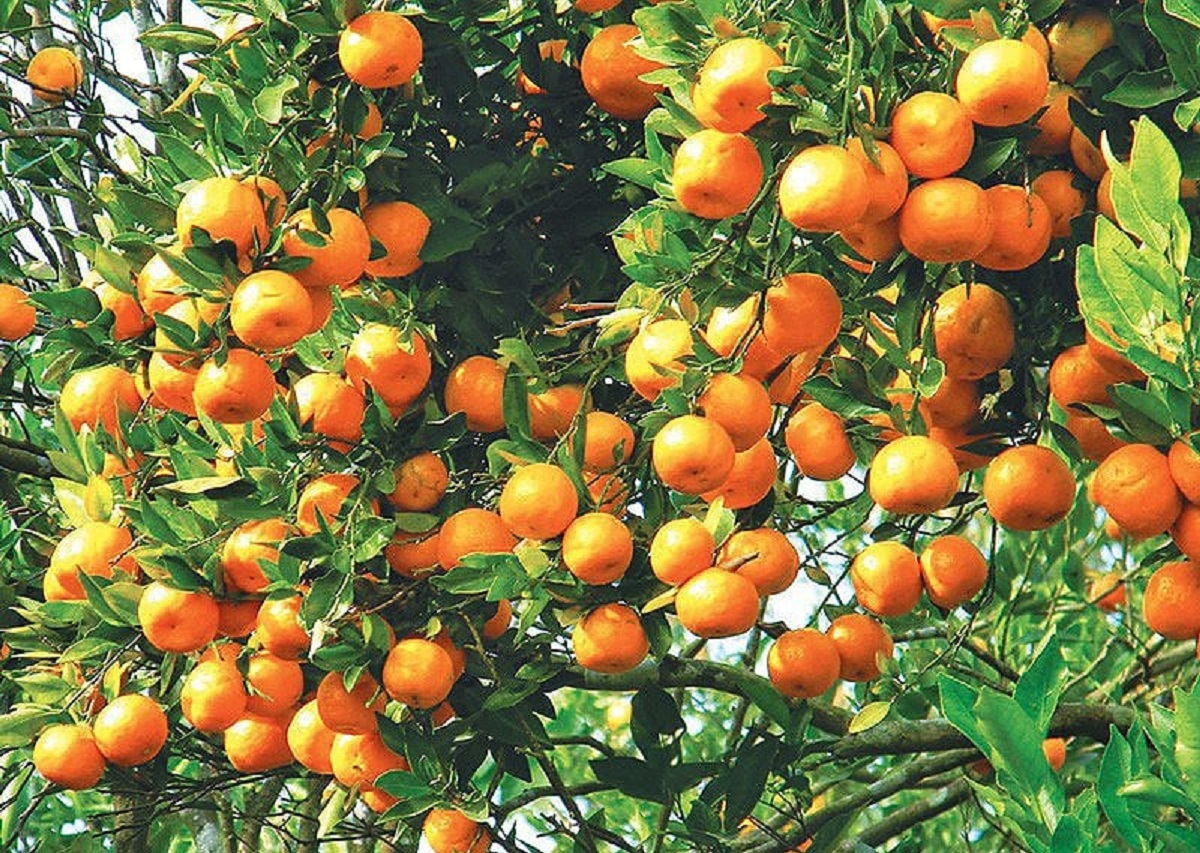
Jhapa. In Salakpur located in Rong Rural Municipality-6 of Ilam, the annual income from orange cultivation is 30 million to 40 million rupees. Along with the production and sale of oranges, the number of tourists who come to see the plantation and taste fresh oranges is also increasing.
Oranges are being cultivated on an area of about 90 hectares in Salakpur, which is about 30 km north of Kankarvitta in Purvina. At the moment, the oranges that have grown in abundance in the garden have ripened and become Pahelpur. Domestic and Indian tourists come here to taste the oranges, pick them from the tree and take pictures in the garden.
According to Ward President Satyam Rai, around 100 tourists come to Salakpur every day. According to the estimate of the ward office, an average of 450 to 600 metric tons of oranges are produced here annually. In the year when the weather is favorable and the incidence of diseases is reduced, the production increases even more.
An annual income of Rs 3 crore to Rs 4 crore is generated here only from the sale of oranges. More than one hundred families of the village are involved in orange cultivation. After old plants die due to disease, the process of expanding new plantations has also increased.
Because the oranges produced here are tasty and juicy, they are sold straight from the plant. Oranges from here reach the markets of Kankarvitta, Birtamod and Damak in Jhapa and Biratnagar in Morang. It is also being promoted and sold as Salakpur orange in the border Indian markets of Siliguri and Naxalbari.
Along with tourists from Elam, Jhapa, Morang and Sunsari, tourists have also started coming from India’s Siliguri, Darjeeling and Kolkata. According to local Deben Khadka, the number of guests increases on Fridays and Saturdays at Gharbas, which is run in about 30 houses in the village.
There are 30 large orange groves in Salakpur. According to Khadka, while the price of oranges in the market ranges from Rs 210 to Rs 220 per kg, tourists who reach the plantation can buy fresh oranges at Rs 130 per kg. Along with tourists, traders also go directly to the plantation and buy oranges.
On Fridays and Saturdays, there is an increase in the traffic of tourists on foot and by vehicles through Ninda-Salakpur (Kadam Padmarg). Khadka said that 300 to 500 tourists reach Salakpur on those days from Birtamod, Damak and Dhulabari in Jhapa, Urlabari in Morang and even from India.
He has also planted an orange plantation on 10 plantations of land. He said that the production of oranges this year is better than in the past. Tourists who come to enjoy the garden enjoy the taste of oranges and also watch the sunrise from the nearby Gurdhum hill.
Orange farming started in Salakpur by Gaurilal Lama who migrated from Darjeeling in 2004 has now taken a commercial form. Initially, seedlings brought from Darjeeling were planted, but now advanced varieties brought from Palpa are giving good yield.
Along with oranges, Salakpur, Kuwapani and Joubari areas are also known for the production of cardamom, Akbare chillies, amliso and honey. The oranges produced here are also taken for display and sale at the Orange Festival held in Kolkata, India every year.



